

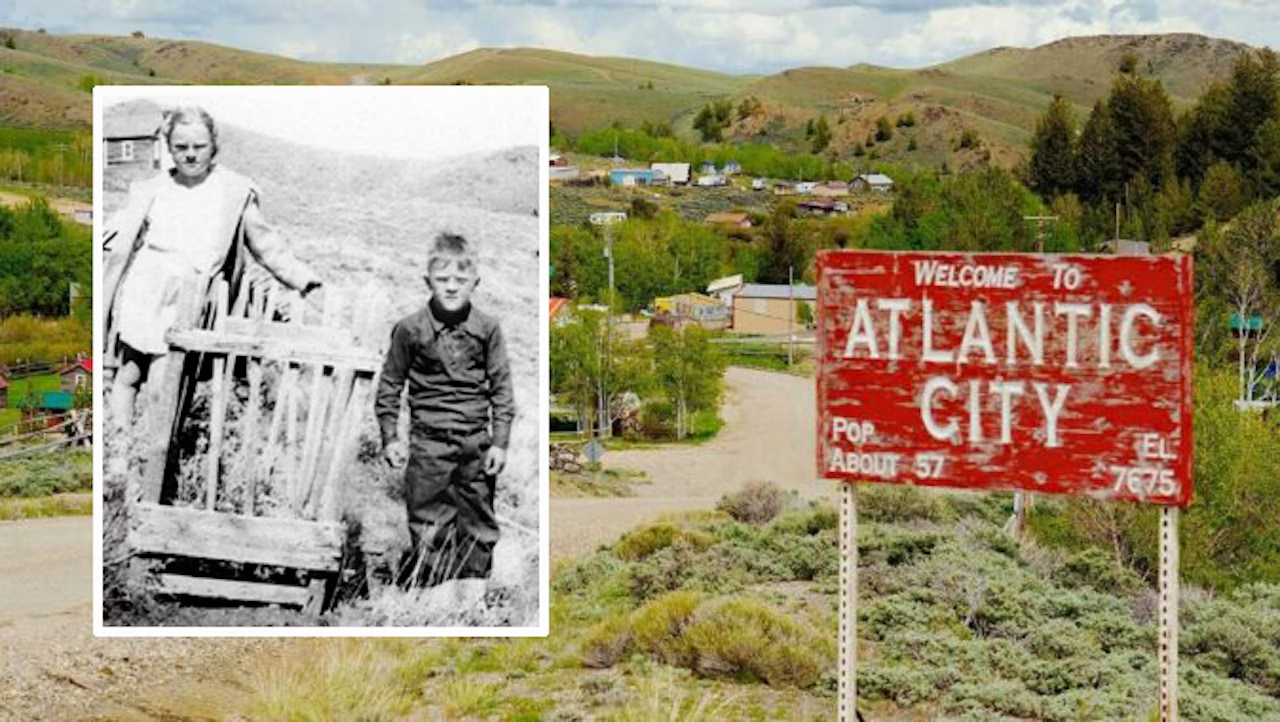



No Childhood, Only Survival: How Wyoming’s Atlantic City Raised Tough Frontier Kids

Life in Wyoming’s gold rush town of Atlantic City was never meant to be easy—especially for children, who were expected to grow up fast in one of the harshest environments of the American frontier.
Founded in 1868 during a surge of gold discoveries along the Continental Divide, Atlantic City quickly drew hundreds of fortune seekers. But behind the promise of riches was a reality defined by danger, isolation and relentless work.
Unlike romanticized images of the Old West, the town offered little comfort. Winters were brutal, the terrain unforgiving and the landscape riddled with abandoned mine shafts that posed constant угрозы—even to adults. Survival, not leisure, shaped everyday life.
Children were not shielded from these conditions. In fact, they were expected to contribute as soon as they were physically able. “Childhood ended as soon as a kid could swing an axe,” according to historical accounts, reflecting a culture where labor began early and necessity outweighed sentiment.
Despite its rough reputation, Atlantic City was not just a rowdy mining camp. Census data from 1870 shows that out of roughly 332 residents, 62 were children—nearly one in five. Families lived alongside miners, creating a community where young people were deeply embedded in the daily struggle for survival.
Education existed, but it was far from nurturing. School terms were short, conditions were harsh and discipline was strict. There was no concept of recess or playtime—students spent long days studying in cold, wind-beaten buildings. Even the schoolhouses themselves were unstable; one reportedly slid down a hillside and had to be rebuilt.
The environment left little room for innocence. Between dangerous labor, extreme weather and the constant risk of accidents, children in Atlantic City developed resilience at an early age. Their upbringing was shaped not by structured childhood experiences, but by the demands of frontier life.
Yet that hardship forged a lasting identity. The toughness required to survive in Atlantic City became a defining trait passed down through generations, contributing to the town’s enduring legacy.
Today, with only a handful of residents remaining, Atlantic City stands as a quiet reminder of a time when survival came first—and when even the youngest members of society were expected to carry their share of the burden.



The latest news in your social feeds
Subscribe to our social media platforms to stay tuned