


Europe pushes back as US seeks support for Iran war


European allies are drawing clearer lines as the United States ramps up requests for support in its military campaign against Iran — and increasingly, those requests are being refused.
The latest example came from Italy, where authorities denied a US request to land aircraft at a military base in Sicily. According to Italian broadcaster RAI, the flights were not considered routine or logistical and therefore fell outside the scope of existing agreements. The defence ministry confirmed the decision without elaborating.
The move is notable given Italy’s political alignment with Washington. Prime Minister Giorgia Meloni is seen as one of Trump’s closest allies in Europe, but her government has still framed the war as “outside the scope of international law” and limited its involvement to defensive support.
That distinction — defensive versus offensive — is becoming a common European position. Countries including the UK, France and Germany have contributed air defence assistance to Gulf partners, while stopping short of backing direct military operations against Iran.
Legal concerns sit at the centre of that hesitation. As analyst Kamil Zwolski put it, European governments see the conflict as lacking a clear mandate.
“What Europeans mean when they say that this war has no legal basis is that the United Nations has not approved it – there was no resolution. They also mean that this is not a war of self-defense, because there was no evidence of imminent attack of Iran against the US or Israel.”
“At the minimum, what they also mean is that this war was not agreed by NATO allies. They were not consulted,” Zwolski told CNN.
Spain has taken one of the firmest positions. Prime Minister Pedro Sánchez has refused to allow the use of Spanish bases or airspace for operations linked to the war, while Defence Minister Margarita Robles Fernández described the campaign as “profoundly illegal and profoundly unjust.”
Elsewhere, Poland has declined US requests — reported in local media — to redeploy Patriot missile systems to the Middle East, citing its commitments on NATO’s eastern flank amid the war in Ukraine.
The UK has tried to balance its position, offering additional air defence systems to Gulf states while avoiding direct participation in offensive operations. Even so, it has faced criticism from Washington.
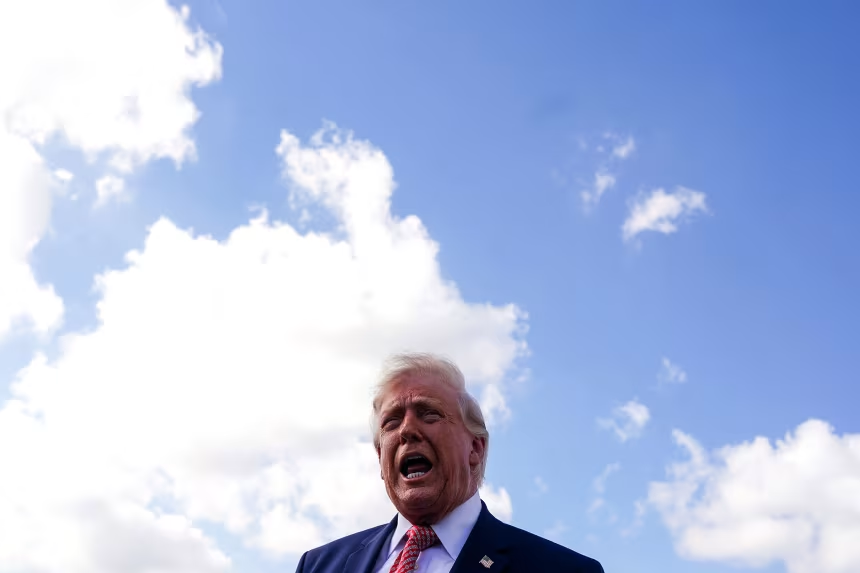
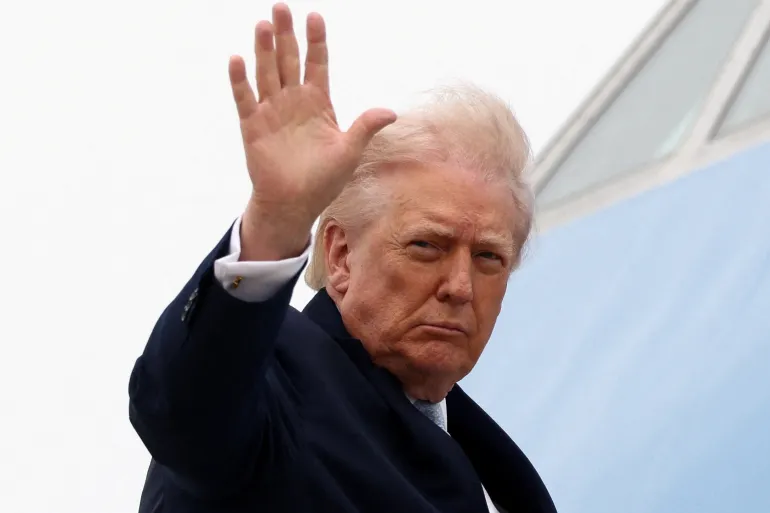
Trump has responded with increasingly sharp rhetoric. In a post on Truth Social, he criticised allies for staying out of the conflict and warned that US support could not be taken for granted.
“All of those countries that can’t get jet fuel because of the Strait of Hormuz, like the United Kingdom, which refused to get involved in the decapitation of Iran, I have a suggestion for you: Number 1, buy from the US, we have plenty, and Number 2, build up some delayed courage, go to the Strait, and just TAKE IT. You’ll have to start learning how to fight for yourself, the USA won’t be there to help you anymore, just like you weren’t there for us,” he said.
“Iran has been, essentially, decimated. The hard part is done. Go get your own oil,” Trump said.
He also singled out France, accusing it of being “very unhelpful” for restricting the use of its airspace for military logistics.
The tone has added strain to an already complicated transatlantic dynamic. Zwolski noted that Trump’s messaging has shifted between dismissing the need for European support and criticising allies for not providing it.
“Trump has been astonishingly inconsistent in his criticism,” he said.
Beyond rhetoric, the episode is feeding deeper questions about NATO’s role. European officials point out that the alliance is designed for collective self-defence, not for supporting unilateral military campaigns.
“The only country that has directly benefited from NATO military action is the United States, when NATO’s Article Five was invoked for the first time after the September 11 attacks,” Zwolski said.
“The rhetoric coming out of Washington is not really reassuring for the Europeans,” said Riccardo Alcaro of the Institute of International Affairs, adding that some governments are beginning to question long-standing assumptions about US security guarantees.
Not all European countries are aligned. States closer to the war in Ukraine remain cautious about openly opposing Washington, while others continue to walk a diplomatic line.


The latest news in your social feeds
Subscribe to our social media platforms to stay tuned