

Frost in Moscow: Pashinyan’s Visit to Russia Met with Cold Optics
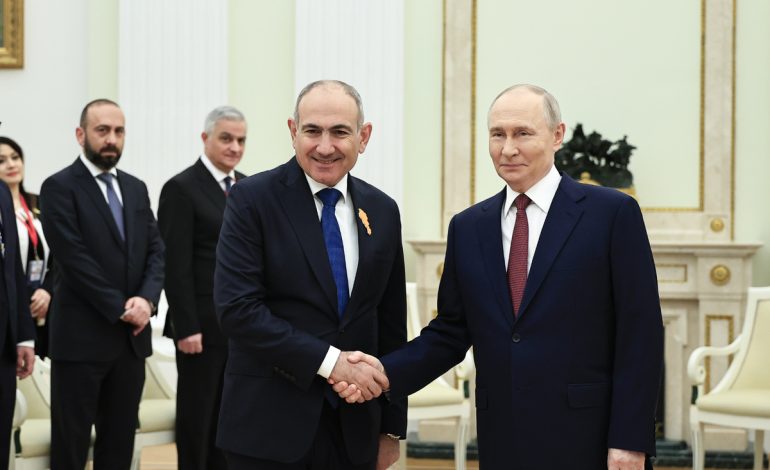

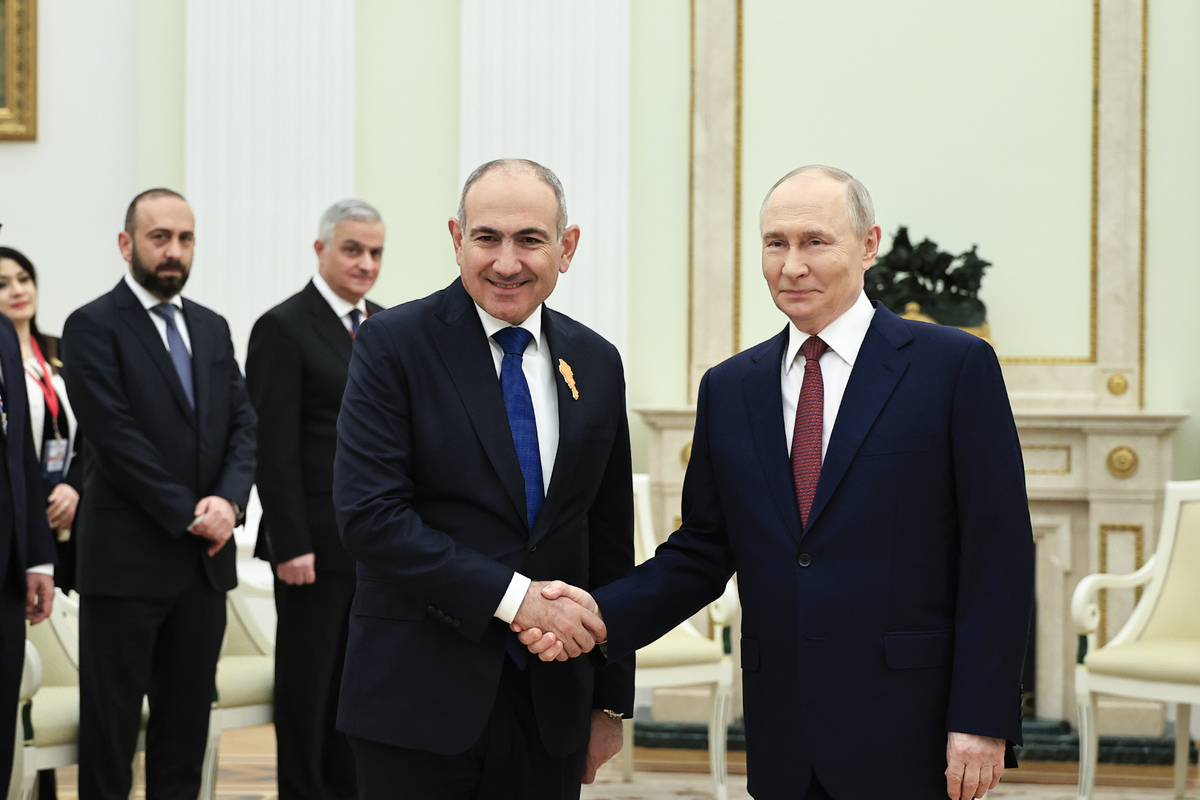
Nikol Pashinyan’s trip to Moscow looked, on paper, like a routine working visit. In practice, it landed more like a stress test. He arrived in Russia on April 1, was met at Vnukovo by Deputy Foreign Minister Mikhail Galuzin, and then sat down with Vladimir Putin at the Kremlin for talks that were officially framed around strategic partnership, Eurasian cooperation, and South Caucasus transport links.
But the tone around the visit was anything but routine. Russian state-linked coverage, especially an NTV segment summarized by News.am, cast Pashinyan as a leader heading to Putin with his domestic position weakening ahead of Armenia’s June parliamentary election, while also stressing that many Armenians had not forgiven him for Nagorno-Karabakh. That is a pretty loaded way to introduce a visiting head of government, and it set the mood before the first handshakes were over.
The public reaction in Moscow was even rougher. News.am reported that Pashinyan was met at arrival by someone shouting, “Mr. Pashinyan, you are a traitor!” while ArmInfo reported that hundreds of Armenians gathered outside the Armenian Embassy in Moscow to protest the visit, backing the Armenian Apostolic Church and unloading on Pashinyan with hardline slogans and hostile imagery.
Maybe the most notable episode unfolded in the lobby of the Moscow hotel, where a former resident of Artsakh asked the Prime Minister to take a photo with his child, to which Pashinyan agreed. However, the photo-op quickly turned sour when the man added:
“I want my child to be photographed with you, so that she knows who was in power when Artsakh was surrendered.”
This was not the kind of diaspora reception that helps a leader project popular support.
The Kremlin, however, did not slam the door on Pashinyan. Putin used the meeting to say Moscow was relaxed about Armenia’s interest in closer ties with the European Union, but he also reminded Pashinyan that Armenia could not sit inside both the EU and the Eurasian Economic Union at the same time. This kind of “understanding” comes with a warning label attached.
Putin also spoke on the energy and agriculture sectors. He noted that of the $6.4–6.5 billion in Russian trade with Armenia, about $1.2 billion are agricultural products, including vegetables, fruits, and wine – key exports from Armenia. Russia and the European Union have entirely different, markedly divergent requirements concerning phytosanitary matters, which can significantly limit what Armenia can and cannot export to the EU.
The other warring metric for Armenia is cheap Russian energy. The difference in gas prices for the EU members and Armenia is night and day – $600 compared to $177.5 per 1,000 cubic meters. Loosing this advantage may prove devastating for the whole Armenian economy.
Karabakh was the sharper edge. Pashinyan told Putin that Armenia should move on from the Karabakh issue and that Yerevan and Baku had already mutually recognized each other’s territorial integrity, while Putin replied, through the Armenian reporting, that the CSTO could not intervene because Armenia itself had recognized Karabakh as part of Azerbaijan.
Pashinyan for his part used the meeting to put the diaspora in its place. He told Putin that only Armenian citizens can run in Armenian elections, meaning Russian passport holders cannot stand for parliament or prime minister in Armenia. That sounds like a technical point, but politically it is a statement of intent: if you want representation – come home. A slap to the face of Armenia’s most trusted geopolitical tool.
The other thread running through the visit was the rail question. Pashinyan has recently signaled caution about ending Russian management of Armenia’s railway network, but the debate itself shows how brittle the relationship has become.
For now, both leaders are managing the relationship rather than redefining it. There’s still dialogue. There are still meetings. But the warmth is gone, replaced by cautious, sometimes uneasy engagement. And judging by the scenes in Moscow, the margin for missteps is shrinking.

The latest news in your social feeds
Subscribe to our social media platforms to stay tuned