



With input from Business Insider, Benzinga, and the New York Times.
The pipeline bringing skilled foreign workers into the US tech industry is starting to narrow – and some of the people it once attracted are now thinking twice about staying.
Fresh federal data shows a sharp drop in H-1B visa filings from major tech companies late last year, a shift driven by tighter rules out of Washington and a cooling hiring appetite across Silicon Valley.
The pullback is hard to miss. Amazon, still the biggest sponsor, saw its certified applications fall from 4,647 to 3,057 in just a year. At Google and Meta, filings were cut roughly in half. Microsoft, Apple, and others followed the same downward trend.
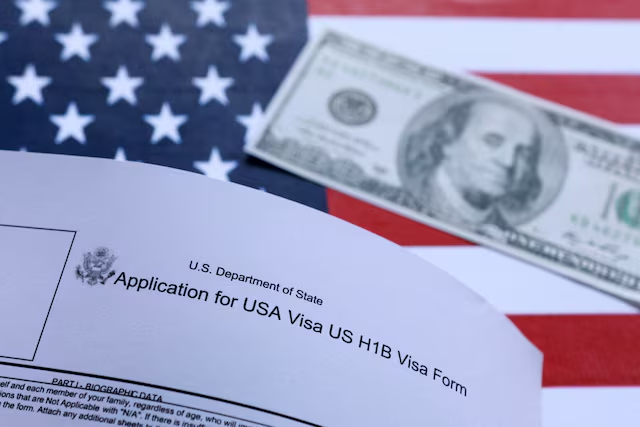
This isn’t happening in a vacuum. Since late 2025, the Trump administration has overhauled the H-1B program, making it more expensive and harder to navigate. A new $100,000 fee for overseas applicants, combined with stricter screening, has raised the stakes for companies and workers alike.
The system itself is also shifting. Visa lotteries are now tilted toward higher-paid applicants, a move officials say is meant to prioritize top talent and reduce abuse. In practice, it’s giving large firms an edge – but also forcing them to be far pickier about who they sponsor.
That selectiveness is showing up in the numbers. Immigration lawyers say companies are sponsoring fewer candidates and focusing on niche roles or workers already in the US The era of bulk hiring from abroad looks to be fading, at least for now.
At the same time, tech giants are simply hiring less. After years of aggressive expansion, companies are trimming teams and running leaner operations. Layoffs have hit across the board – tens of thousands of roles cut at firms like Amazon and Microsoft, with smaller but steady reductions at Google and Meta.
That combination – tighter rules and fewer jobs – is squeezing demand from both sides.
There are exceptions. Nvidia actually increased its filings, underscoring how demand for specialized AI talent can still buck the broader trend. CEO Jensen Huang has made clear the company plans to keep hiring globally despite rising costs.
Still, the broader direction is clear. The H-1B program is becoming more selective, more expensive, and more uncertain. For foreign workers who once saw the US as the default destination, that calculus is changing.
Some are exploring options elsewhere. Others are reconsidering whether the hurdles are worth it.
And for an industry built on global talent, that shift could have lasting consequences.



The latest news in your social feeds
Subscribe to our social media platforms to stay tuned