





AP, CBS News, and CNN contributed to this report.
Oil is running hot. Markets, not so much.
Crude prices surged again Friday as fears of a drawn-out Iran war tightened their grip on global energy markets. At the same time, most Asian stocks that were open managed to climb – though the gains felt careful, almost hesitant.
It’s a split-screen moment. Energy markets are flashing alarm. Equity traders are moving, but slowly.
Benchmark US crude shot up more than 11%, pushing past $111 a barrel. Brent, the global benchmark, wasn’t far behind, jumping nearly 8% to around $109. The rally has been relentless over the past few days, driven by one core concern: this conflict isn’t ending anytime soon.
And the longer it drags on, the worse the disruption gets.
Analysts are starting to sketch out that scenario in blunt terms. A prolonged war doesn’t just keep oil prices elevated – it raises the risk of damage to infrastructure, keeps the Strait of Hormuz under pressure, and stretches out the recovery timeline well beyond the fighting itself. The ripple effects could last months, even after the shooting stops.
That’s the part markets are still digesting.
In Asia, trading was thinner than usual. Several major markets – including Hong Kong, Australia, and India – were closed for the Good Friday holiday. Europe was largely offline too, with France, Germany, and the UK shut down. Even Wall Street was dark, though futures trading continued in the background.
What activity there was felt cautious.
Japan’s Nikkei climbed about 1.3%, while South Korea’s Kospi jumped nearly 3%. Those are solid moves, but they come after days of volatility and against a backdrop of rising energy costs. China stood out in the other direction, with the Shanghai Composite slipping around 1%.
Investors aren’t exactly charging in – they’re picking their spots.
Part of that caution comes down to geography. The impact of a disrupted Strait of Hormuz looks very different depending on where you sit. The United States imports relatively little oil from the Persian Gulf, even if it still feels the price shock through global markets.
Asia doesn’t have that luxury.
Countries like Japan rely heavily on oil flowing through that narrow corridor. If shipments slow or stop, alternatives aren’t easy or quick to arrange. That’s why some analysts believe regional governments are quietly betting on some kind of arrangement with Iran to keep fuel moving, even if tensions remain high.
It’s a fragile assumption.
Back in Washington, the tone hasn’t helped calm things down. President Donald Trump has made it clear the US campaign will continue, offering no clear timeline for an end to the conflict. That uncertainty is feeding directly into oil prices, which have become the main driver of market swings.
Stocks follow oil right now. Up or down, it sets the tone.
Currency markets were steadier. The US dollar edged slightly higher against the Japanese yen, while the euro ticked up marginally against the dollar. Nothing dramatic – just another sign that traders are waiting for clearer signals before making bigger moves.
But outside the trading floors, the impact is already hitting harder.
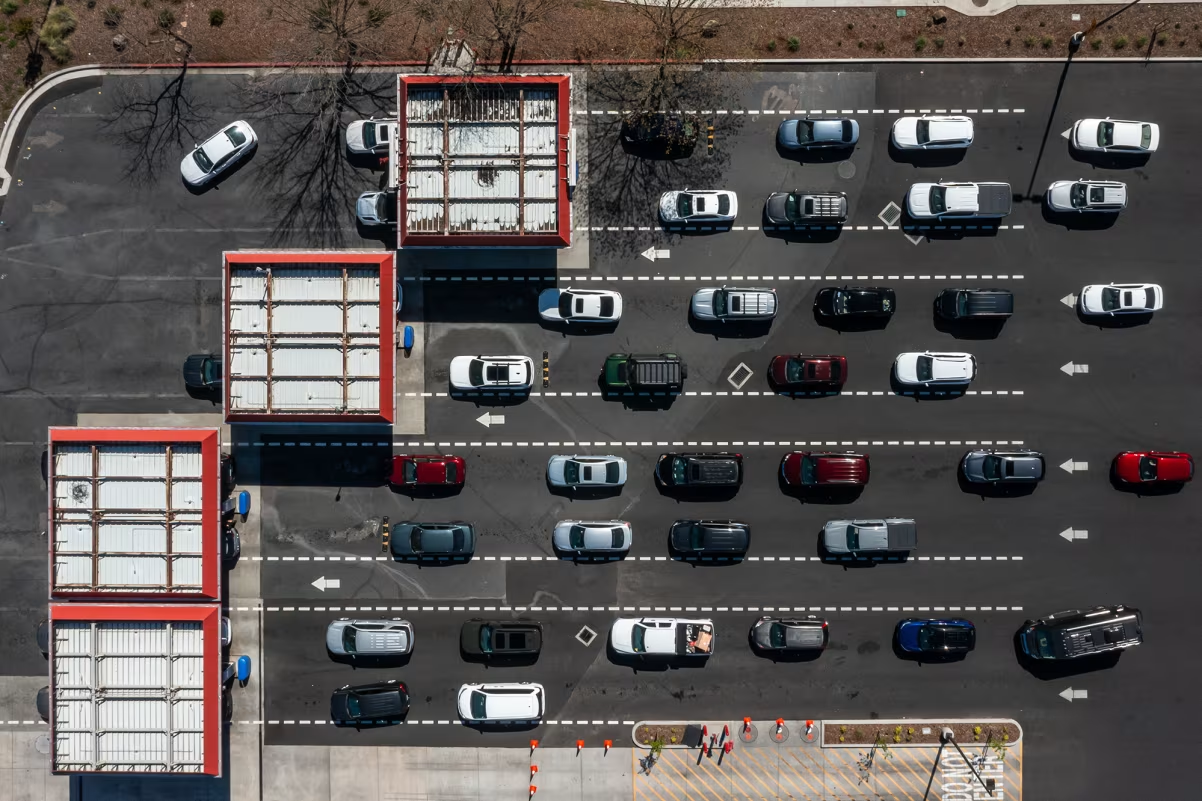
Higher oil prices are working their way into everyday costs, especially in places with tight or complicated supply chains. California is a prime example. Gas prices there have surged past $6 a gallon, far above the national average, exposing how vulnerable certain markets are to global shocks.
It’s not just about crude prices. State-specific factors – taxes, environmental rules, and a shrinking number of refineries – have created a system that’s more exposed to disruptions. As local refining capacity drops, reliance on overseas supply increases. That adds time, cost, and risk.
When global supply tightens, places like California feel it faster.
The broader lesson is hard to ignore. Oil may be produced in specific regions, but its pricing power is global. A conflict in the Middle East doesn’t stay contained – it moves through shipping lanes, supply chains, and eventually into everyday expenses.
That’s what markets are trying to price in now.
For the moment, Asian equities are holding up. Gains are modest, but they’re there. Oil, on the other hand, is telling a more urgent story – one where the risks are rising, the timeline is stretching, and the consequences are starting to spread well beyond the battlefield.
And until there’s clarity on how this war ends, that tension isn’t going anywhere.



The latest news in your social feeds
Subscribe to our social media platforms to stay tuned