

CNN, CNBC, Reuters, the Financial Times, AP, the Wall Street Journal, Investor’s Business Daily, and Bloomberg contributed to this report.
Markets went into Thursday looking for clarity. They got something closer to turbulence.
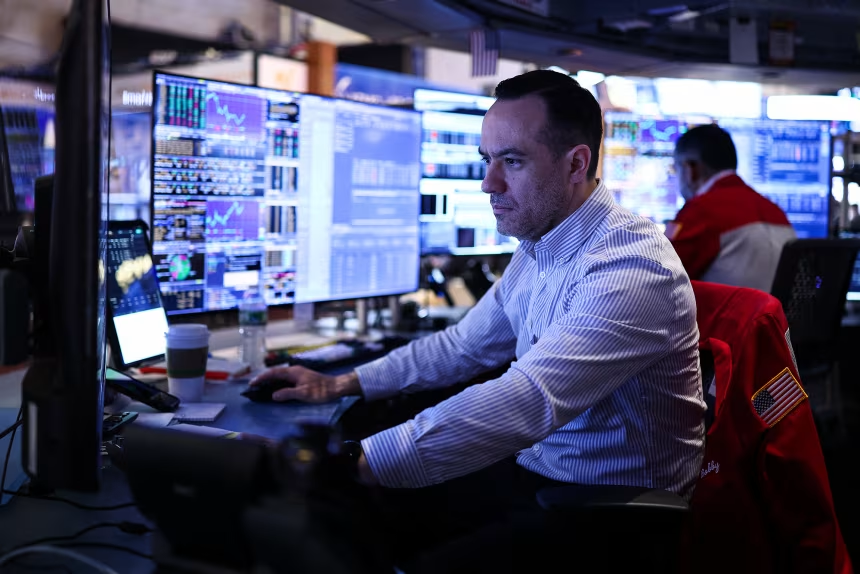
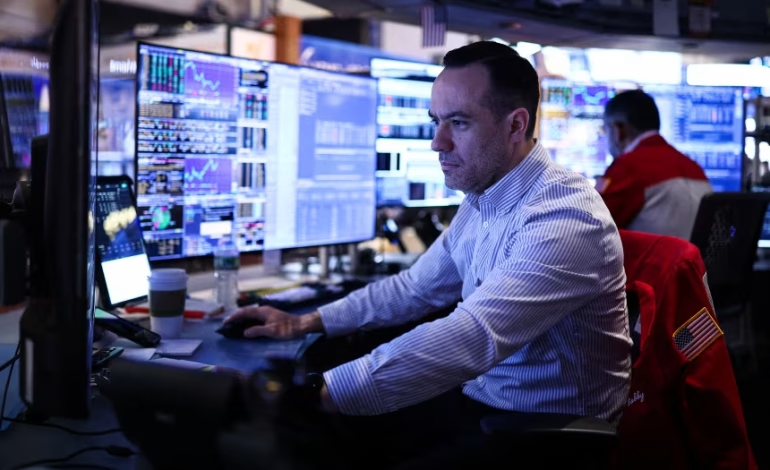
US stocks drifted lower in choppy trading, with the Dow slipping modestly after a much steeper drop earlier in the session. The S&P 500 and Nasdaq followed the same pattern – early losses, partial recovery, lingering unease. It wasn’t panic selling, but it wasn’t confidence either. Traders were reacting in real time to a war that suddenly looks longer, messier, and far more expensive.
The mood had shifted overnight.
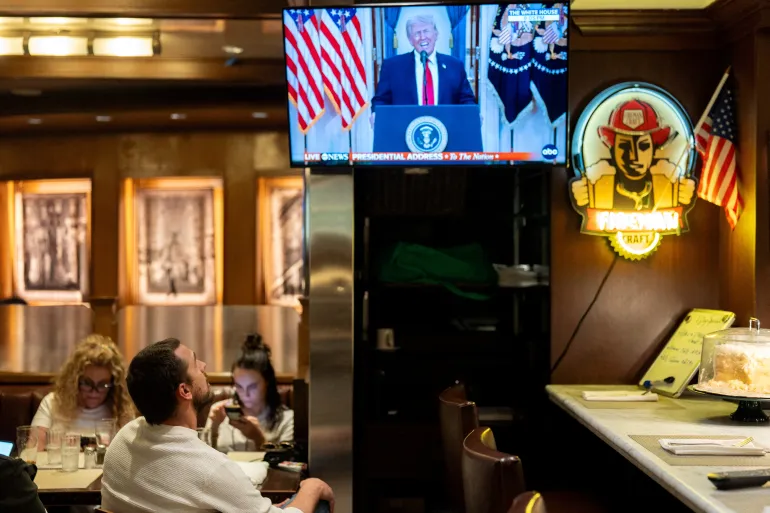
Earlier in the week, investors had started to lean optimistic. There was a sense – fragile, but real – that Washington might be inching toward some form of de-escalation. Stocks rallied hard on Tuesday, posting their best day in weeks. That optimism didn’t survive President Donald Trump’s national address.
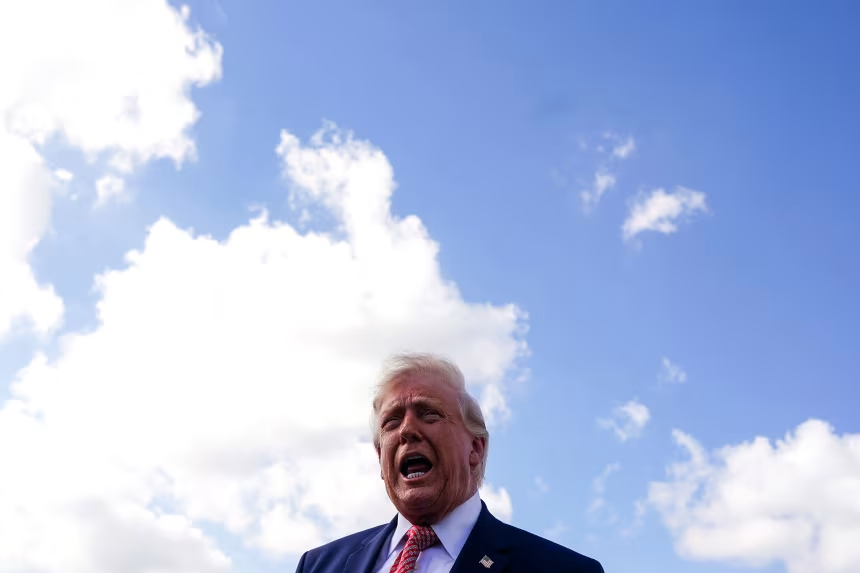
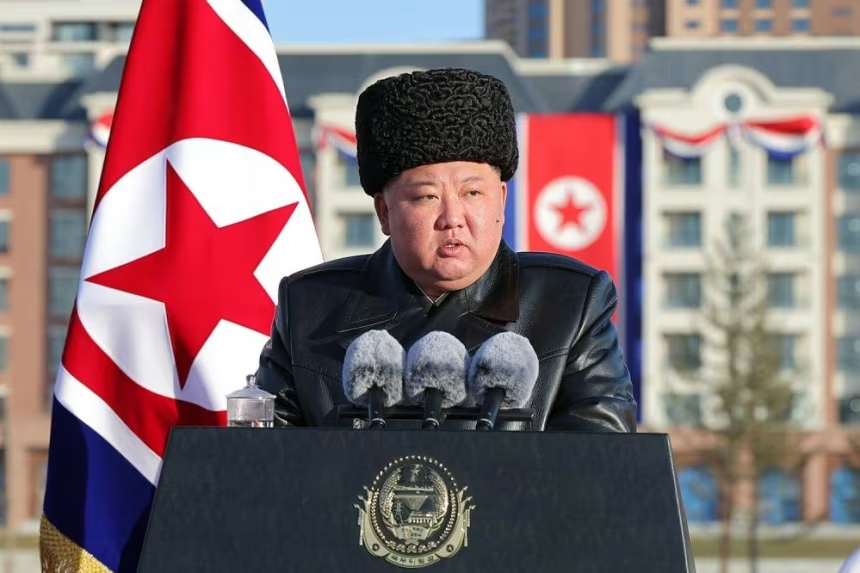
Instead of outlining a path out, Trump doubled down. The war, he said, would last at least “two to three weeks.” He hinted at heavier strikes, potentially targeting Iran’s oil infrastructure. What he didn’t offer was just as important: no exit strategy, no roadmap for reopening the Strait of Hormuz, no indication of how the conflict winds down.
That absence landed harder than any single policy announcement.
Oil markets reacted first – and fast. Brent crude jumped above $106 a barrel, while US crude surged past $108, at times pushing even higher. In the physical market, buyers were reportedly willing to pay close to $120 per barrel in key hubs. The message was clear: traders are pricing in disruption that won’t resolve anytime soon.
The math behind it is brutal. Analysts now estimate that hundreds of millions of barrels could be knocked out of global supply within weeks. Some projections push the total loss toward one billion barrels by the end of the month when refined products are included. Every additional month of fighting adds another massive chunk of missing supply.
That kind of shortfall doesn’t stay contained in energy markets. It spreads.
Gas prices in the United States have already jumped roughly 37% since the war began, with the national average climbing above $4 per gallon. Diesel is rising even faster, which matters more than most people realize. Diesel fuels supply chains – trucking, shipping, logistics. When it spikes, the cost of moving everything else goes up with it.
Consumers are starting to feel that pressure in small but accumulating ways. Airfares creep higher. Groceries edge up. Household budgets tighten. None of it happens overnight, but the direction is unmistakable.
Wall Street is trying to price all of that in at once.
There was a brief moment of relief Thursday morning after reports suggested Iran and Oman were working on a protocol to ease traffic through the Strait of Hormuz. Stocks bounced off their lows. The rebound didn’t last long. The broader reality – an unresolved conflict sitting on top of one of the world’s most critical energy chokepoints – kept traders cautious.
The Strait still isn’t functioning normally. Roughly a fifth of the world’s oil supply moves through that narrow passage in peacetime. Now, flows are severely restricted. Trump’s message to other countries was blunt: protect it yourselves. The US, he suggested, doesn’t need the oil.
Markets don’t see it that way.
Oil is global. Disruptions anywhere hit prices everywhere. Even if the US imports relatively little through Hormuz, it still pays the global price. So does everyone else.
That’s why volatility has become the default setting.
Stocks have been swinging sharply with each headline – up on hints of diplomacy, down on signs of escalation. The major indexes are coming off their worst quarter since 2022, and the Nasdaq just logged its weakest month in a year. This week might still end positive overall, but the path there has been anything but stable.
Underneath it all sits a deeper concern: inflation isn’t going away.
Higher energy costs feed directly into inflation, and inflation shapes everything else – interest rates, borrowing costs, corporate margins. Investors had started the year expecting the Federal Reserve to cut rates several times. Now those expectations are fading. If oil stays elevated, the Fed has little room to ease.
Bond markets are reflecting that shift. Yields remain higher than where they started before the war, even after some recent dips. Investors are adjusting for a scenario where inflation sticks around longer and policy stays tighter.
That’s a tough environment for equities.
Certain sectors are already feeling it. Airlines and cruise companies dropped as fuel costs surged. Travel becomes more expensive when oil spikes, and demand tends to soften. At the same time, some tech stocks managed to climb, cushioning the broader indexes. It’s a fragmented market – winners and losers splitting more sharply as the macro picture darkens.
Energy analysts aren’t expecting a quick reset. Even if the war ends sooner than expected, the aftershocks could linger. Higher insurance costs, more expensive shipping routes, increased demand for stockpiling – all of it builds a new floor under oil prices.
Which brings the focus back to the speech.
Markets weren’t necessarily expecting a peace plan. They were hoping for direction. A signal that there was a ceiling to the escalation, a timeline, some kind of strategic endpoint. Instead, they got open-ended conflict and the possibility of even deeper strikes.
That uncertainty is what’s driving the swings.
As one strategist put it, the “fog of war” is still thick – and the flow of oil is still too constrained to sound any kind of all-clear. Until that changes, volatility isn’t going anywhere.
For now, Wall Street is left trading headlines, watching oil tick by tick, and trying to answer a question that Washington hasn’t: how – and when – this war actually ends.


The latest news in your social feeds
Subscribe to our social media platforms to stay tuned