
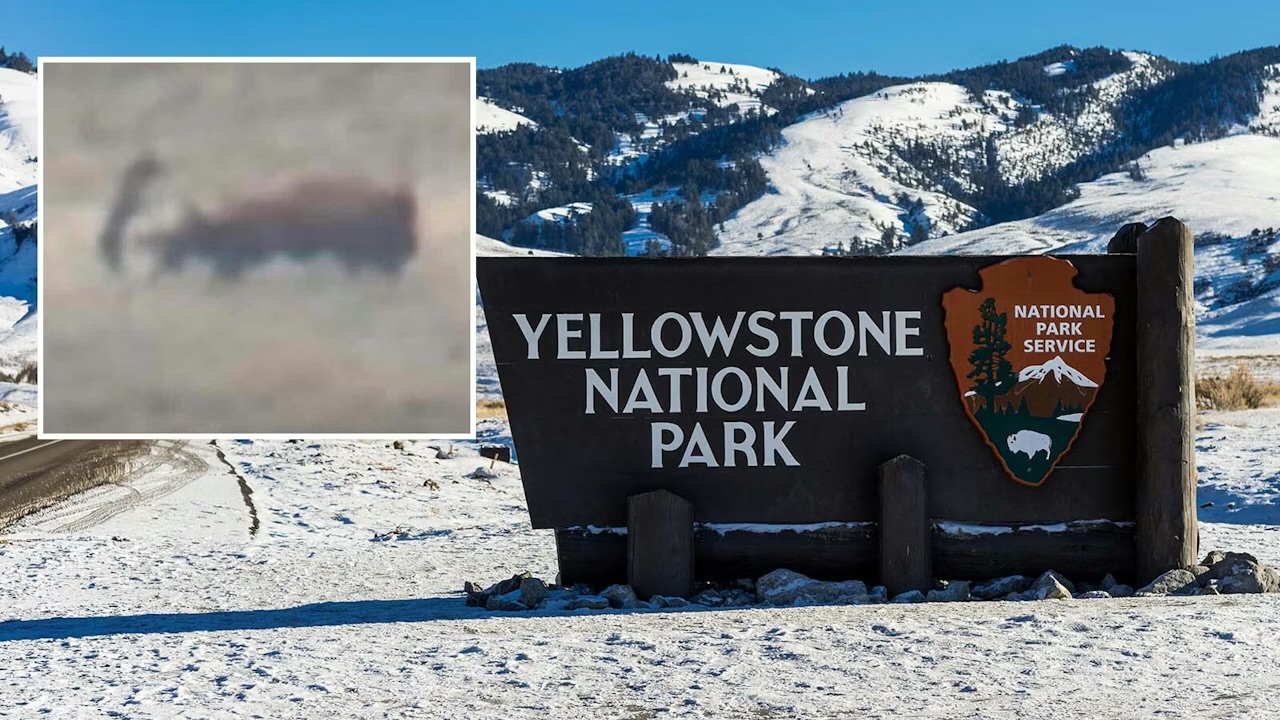




Yellowstone wolf goes flying after taking a bison kick during hunt
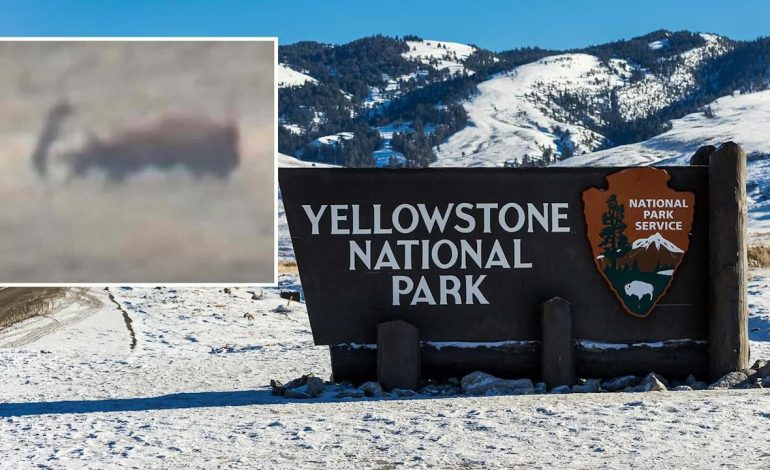

Every season is a struggle for survival in Yellowstone National Park. Predators and prey regularly find themselves in life-or-death battles, only one instinctive decision away from a life-ending injury or escaping to fight another day. One of those struggles played out on the Blacktail Plateau in northern Yellowstone on Sunday, when a large pack of wolves spotted a lone bison that had become separated a little too far from its herd and rushed to make the most of the moment.
“It was an opportunity,” said Andrea Baratte, a wildlife biologist and Yellowstone Adventure Tours guide who captured video of the hunt through a spotting scope. “The Rescue Creek pack was traveling along, saw the bison that was a little singled out, and started running toward it.” As soon as the bison saw the approaching danger, it turned and kicked hard. One wolf caught a back leg squarely to its chest, which knocked it into the air, only for the wolf to quickly land on all fours and hit the ground running. Most wolf-bison hunts are unsuccessful, and Baratte said this was one of those failed attempts. “The bison quickly caught up with the herd, and the whole chase ended.”
When wolves were reintroduced to Yellowstone in 1995, biologists hoped they would cull and control the park’s overwhelming number of elk. The 14 gray wolves transferred into the park were conditioned to hunt elk, in part because biologists placed elk carcasses in their acclimation pens. Since then, the number of elk in Yellowstone has dropped significantly, and Yellowstone’s wolves have quickly diversified their diets as well. Bison carcasses were always scavenged, but some of the park’s packs are targeting bison more often.
“Wolves generally attack the easiest, most abundant prey,” said ecologist, author, and bison advocate George Wuerthner. “Bison are very large animals. That’s a lot of calories, if you can bring them down. It’s always worthwhile, but with a greater risk.” A wolf pack’s hunting strategy for bison isn’t much different from that of elk, deer, or moose. Wolves will persistently harass bison herds until one individual, preferably young or injured, breaks off and exposes itself to attack. “Wolves usually try to attack these animals from the rear, coming in behind them and grabbing their butts,” Wuerthner said. “One or two wolves will drag it down from the back, then other wolves will try to grab the throat to finish the animal off.”
The Rescue Creek pack currently has around 16 wolves, which are frequently seen hunting and hanging out between the Blacktail Plateau and Tower Junction. That’s potentially enough to successfully take down a bison, but it’s not something they frequently attempt to do. “It depends on the pack,” Baratte said. “Some packs specialize more on bison than others, and that’s mostly in the wintertime. From my personal observations, I wouldn’t say I see the Rescue Creek pack specifically targeting bison.”
For wolves, the cost of a failed bison hunt can be deadly. Wolves might be smarter, but a single bison can easily outweigh all of its would-be killers combined and will always have the advantages of size and strength. Baratte couldn’t tell if the wolf kicked by the bison was seriously injured, but it certainly didn’t seem to affect it in the moment as it immediately recovered from the blow and ran after the fleeing bison. “Older wolves almost always have broken bones when they’re autopsied,” Wuerthner said. “If you live five or six years, the chances are you’ve been kicked, had to heal up a rib, or even broken a leg more than once.”
Bison are capable of kicking, but they prefer to tackle their problems head-on. “A lot of times, bison will form a defensive circle,” Wuerthner said. “The outer perimeter is the mature animals with their calves in the center. That will intimidate any threat from going inward.” If the bison don’t break or indicate they’re afraid, the wolves will move on. Baratte said the natural drama of Yellowstone rarely disappoints. “Seeing the interactions between wolves and prey is always fascinating,” he said. “It’s these two big forces of nature interacting with each other. It’s always spectacular.”



The latest news in your social feeds
Subscribe to our social media platforms to stay tuned