
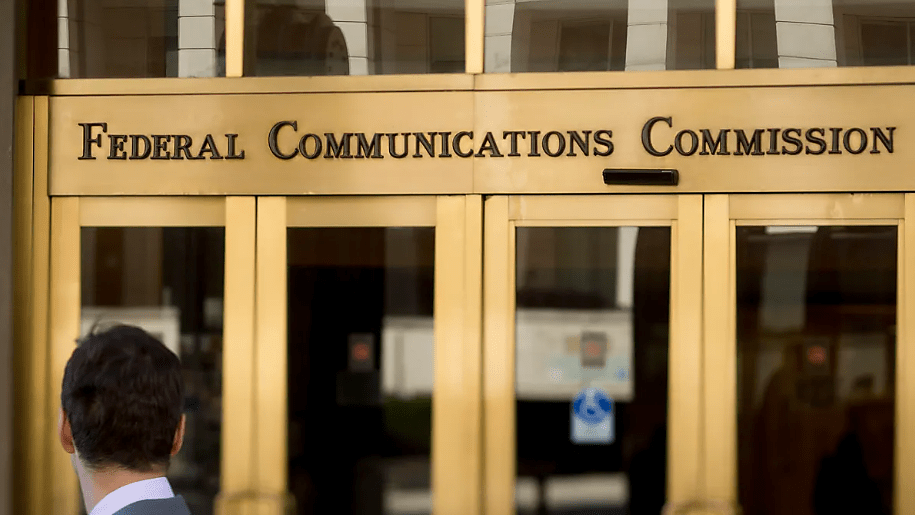



The fight over the FCC’s news-distortion policy is no longer just a niche regulatory argument. In early 2026, it has become a live question about how much pressure the government can place on broadcasters without formally censoring them, and how much of that pressure is already changing newsroom behaviour.
That tension sharpened after FCC Chair Brendan Carr warned that broadcasters airing what he described as “hoaxes and news distortions” could face consequences when their licenses come up for renewal. The immediate backdrop was coverage of the US-Israeli war on Iran, where the administration objected to reporting it viewed as inaccurate or damaging. But the larger issue reaches well beyond one conflict or one chairman. It goes to whether a decades-old FCC doctrine, rarely enforced directly, can still function as a political lever.
In responses to Wyoming Star, Jeff Westling, senior scholar of innovation policy at the International Center for Law & Economics, argued that the danger lies precisely in the policy’s legal ambiguity. The group said the FCC’s authority over broadcasters remains broad enough to create practical pressure even where an actual legal violation would be hard to prove.
“The issue is that FCC’s authority to regulate broadcasters in the public interest is very amorphous. That means, practically speaking, the policy against news distortion is just one factor when a broadcaster needs to have their license renewed, or as the case with CBS, when the parent company attempts to transfer control of those licenses to another entity.
Because the FCC considers news distortion as a part of this analysis, the agency can leverage an investigation or deeper inquiry as the broadcaster undergoes the review. And because a broadcaster’s entire business relies on the authority from the FCC to operate, they have to take FCC concerns very seriously.
As a business, if a broadcaster can eliminate regulatory risk by simply not airing some content, they may decide it is in their best interest to do so, even if in all likelihood they haven’t violated the policy in a strictly legal sense.”
That is the core of the argument: the power does not need to be used often to matter. The threat of review, delay or added scrutiny can be enough. In practice, that makes the policy less about clear enforcement and more about structural leverage. A broadcaster does not need to believe the FCC would ultimately win in court. It only needs to believe that conflict with the agency could become costly enough to avoid.
That matters even more in a media environment where political pressure rarely arrives through one channel alone. Jeff Westling described the policy itself as only one piece of a wider ecosystem of influence.
“I think the policy itself is still a relatively minor factor in editorial decisions, at least on day-to-day basis, but it is part of a broader push by the administration to influence speech of private actors in a manner that would favor the president. Even apart from the broadcasting side of things, media companies want access to government officials, pay taxes, and engage in a wide range of activities that an administration can make difficult if it so chooses. And we have seen some of that pressure translate into action, but I wouldn’t ascribe that strictly to the news distortion policy.”
That framing is useful because it avoids overstating the policy while still taking it seriously. The point is not that editors sit around every day asking what the FCC might do. The point is that when a regulator with licensing power starts publicly attacking coverage, it adds another layer of risk to decisions that are already political, commercial and reputational.
The legal weakness of the policy, meanwhile, is exactly what makes the current moment so striking. The same doctrine that looks shaky under modern First Amendment logic still survives because of older assumptions about broadcasting that have never been fully dismantled.
“The FCC authority over content regulation is extremely limited because broadcasters have a First Amendment right to speak as they see fit. The constitutional scrutiny for broadcast regulations are lower than other media in part because of the scarcity of broadcast licenses: you can only have so many operators in a given market without harmful interference so the FCC could dictate how those airwaves were used.
This scarcity argument has allowed the FCC to impose some content based rules like the broadcast hoax rule, the fairness doctrine (when it existed) and rules against obscenity. But the logic of the argument stems from the idea that broadcast was, at the time, the only way to deliver video content to consumers and thus it was important to make sure the content aired served the needs of the community.
Today, consumers can obtain content through a wide range of options such as cable television and digital platforms, and the barriers to communication have never been lower. If challenged, I think a lot of the FCC’s authority to regulate broadcasters will be diminished in favor of strong First Amendment protections for the broadcasters,” Jeff Westling said.
That is really the structural contradiction. Broadcast regulation still leans on scarcity-era logic even though the scarcity argument has weakened badly in a media market dominated by cable, streaming and digital platforms. Broadcasters remain subject to a more speech-restrictive regime than many of their competitors, not because the communications environment still looks like 1969, but because the legal architecture from that era still partially stands.
The result is a policy landscape that feels both outdated and useful: outdated in principle, useful in politics. That is why bipartisan critics, former FCC officials and free-speech advocates have increasingly described the news-distortion policy less as a genuine public-interest safeguard and more as a mechanism waiting to be weaponized by whichever administration wants it.
Jeff Westling argues that the cleanest solution would not be to fine-tune the doctrine but to remove the underlying authority that makes it possible.
“If Congress eliminates the FCC’s authority to regulate broadcast in the public interest, it would likely lead to the elimination of most, if not all, remaining content-based restrictions. This would likely include the FCC’s policy on news distortion. In practice, the FCC could still license broadcasters, but instead rely on market mechanisms to grant licenses to the parties that value those licenses the most, such as through auctions.
This would provide certainty to the broadcasters in their property right and make it much more difficult for the agency to politically punish a broadcaster that it dislikes, regardless of which party is in power.
But maybe even more important, we could see broadcast companies begin to air more edgy content that consumers actually want to watch. One of the reasons broadcasting as a medium is struggling is that broadcasters must abide by a wide range of rules that limit what they can broadcast to consumers, meaning some of the best content is forced to go on streaming services or cable channels alone.”
That argument goes further than the current controversy. It treats the problem not as one abusive chairman or one overheated moment during a war, but as a flaw in the underlying model of broadcast regulation itself. Once the government retains vague authority to decide whether a broadcaster is serving the “public interest,” every content rule tied to that authority remains available for future use.
And that is the real issue exposed by the current clash. A 50-year-old policy with a weak legal foundation can still matter a great deal if it sits inside a licensing system that gives regulators room to threaten, delay and investigate. In that setting, the boundary between regulation and intimidation gets blurry fast.



The latest news in your social feeds
Subscribe to our social media platforms to stay tuned