



‘Voice’ told 13-year-old coal miner to get out, then 62 other miners killed
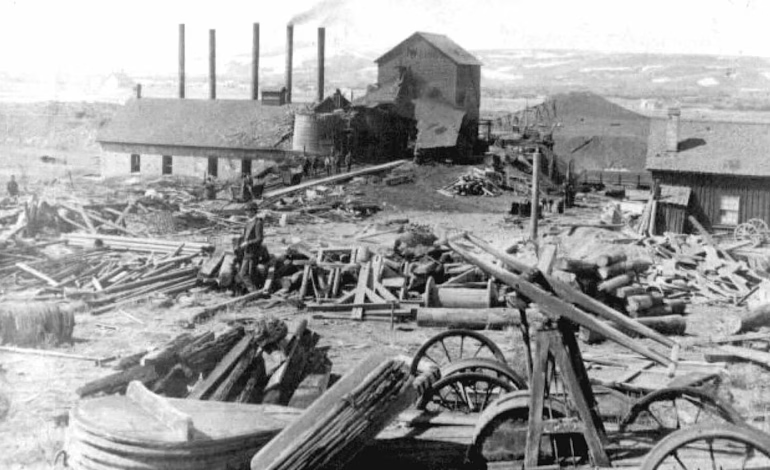

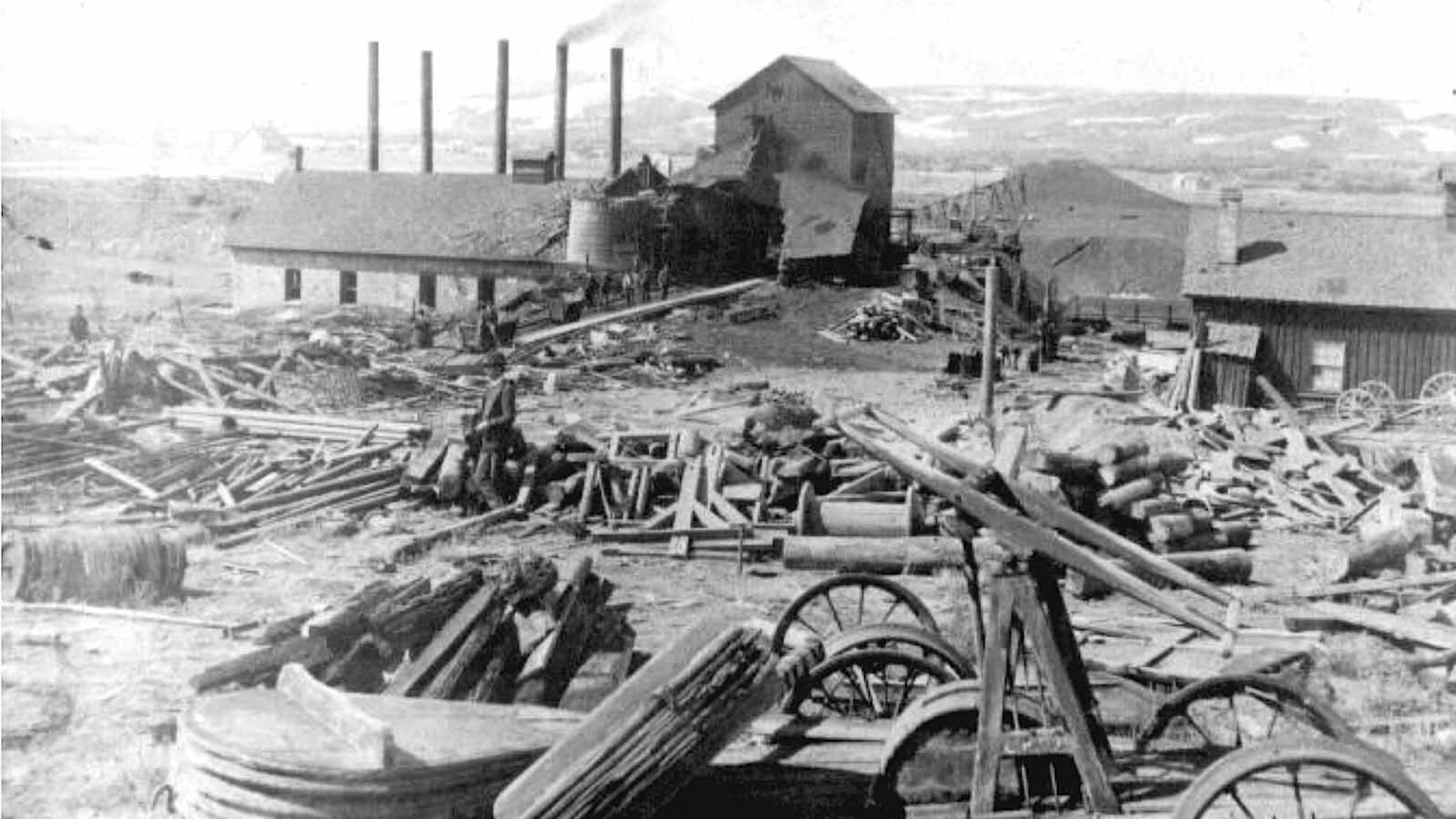
A hardworking 13-year-old coal miner recalled hearing a voice as he shoveled coal alongside his father into a car deep in Red Canyon Mine No. 5 outside Almy, Wyoming. It was March 20, 1895. The voice didn’t come from his father. Quitting time was approaching, and although their coal car was not yet full, the message seemed urgent.
“I heard a voice say, ‘Go home,'” William Moroni Purdy wrote later in life about surviving one of the deadliest coal mine disasters in Wyoming history. “I stopped shoveling and looked around to see who had spoken. No one was there but Father, and he was busy shoveling, and I knew he had not heard the voice. I began to think I was imagining things and started again to shovel coal. Then a feeling of heavy depression settled upon me.”
What he did next would save both his and his father’s lives. Purdy told his father they needed to leave the mine. His father responded that they had just gotten a new car to fill, but then agreed to go. As soon as they walked out of the entrance, his father headed toward the blacksmith shop and Purdy headed home. Then the ground below shook. “A bluish flame shot out of the shaft, reaching hundreds of feet into the air,” he wrote. “It was accompanied by a terrific blast which seemed to shake the very earth.”
The explosion killed 62 of their coworkers. Newspapers blared it in huge banner headlines. “Instant Death Came, Red Canyon Miners Were Destroyed in a Moment’s Time,” The Cheyenne Daily Leader reported. The Salt Lake Herald was even more dramatic: “Horrors Pile Up. One Woe Doth Tread Upon Another. Sixty Dead In A Wyoming Mine, Nearly All Of The Dead Leave Large Families.”
Mine foreman James Bruce stood outside the entrance with a couple of other men wrapping up the day shift and watched a dog fight. His own 13-year-old son was in a wagon headed from their home to pick him up. Bruce was among the dead. A Western Union telegram from one of Bruce’s sons read: “Mine explosion father killed come at once.”
The blast sent timbers and debris flying through the air. A log pierced a railroad car and another hit a boy in the neck, killing him. Screaming women and children came running from their homes toward the mine. Recovery of remains inside took several days because of crumbling infrastructure and lingering gas. The final tally of the dead was 62—fathers and sons, brothers and in-laws, all gone.
The coroner’s jury found that the explosion apparently originated from “fire damp and possibly augmented by coal dust.” The blast left 48 widows, 186 orphans, and 50 others who depended on the miners. Wyoming Gov. William Richards made a plea to the state’s residents to donate money to help destitute families. “No calamity of such an appalling character has ever before befallen the people of this state,” he said.
Purdy wrote that for several years he was “reluctant” to share his account because it “was of a supernatural nature and to me seems too sacred to expose to the ridicule of thoughtless people.” Both Purdy and his father went back to work in another mine. The last of the Almy mines closed in 1945.

The latest news in your social feeds
Subscribe to our social media platforms to stay tuned