

Here’s what red states that didn’t hand voter data to the feds are saying
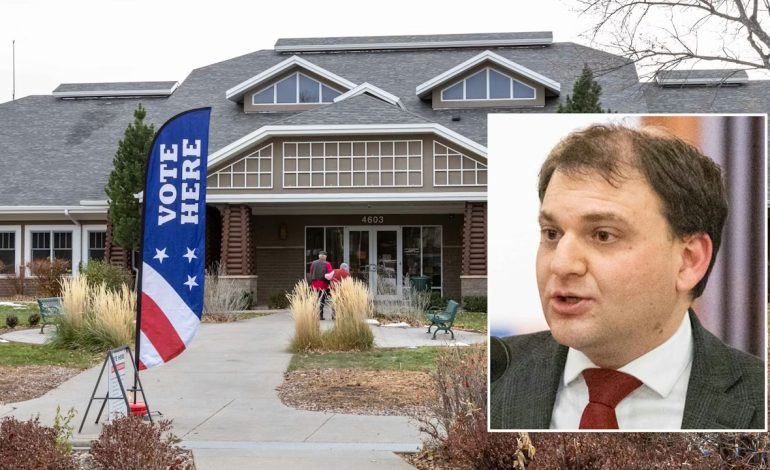

While Wyoming was among the first states to hand sensitive voter data to the U.S. Department of Justice last year, six Republican-led states and 23 Democrat-led states are still fighting the federal initiative in court. Last year, the Trump administration started asking states for voter rolls that included names, birth dates and specific identifiers like partial social security numbers or driver’s license numbers. The DOJ cited the Help America Vote Act, the National Voter Registration Act, and the Civil Rights Act of 1960.
Wyoming Secretary of State Chuck Gray granted the request in an Aug. 28 letter, claiming that after conferring with the Wyoming Attorney General’s Office, “we agree that disclosure of the requested records is proper under the Civil Rights Act.” He emphasized in a Tuesday email that he stands with the Trump administration’s push for election integrity, while deriding Wyoming Democrats and other groups. According to the Brennan Center, Wyoming is among the 12-state minority of jurisdictions that have either handed over unredacted voter rolls or pledged to do so. The DOJ sued 23 blue states and seven Republican-led states: Utah, Oklahoma, West Virginia, New Hampshire, Georgia, Idaho and Nevada.
Utah answered the DOJ with a fight, filing a motion to dismiss the federal case March 31. “The Framers envisioned a robust system of dual sovereignty in which the States maintained a strong independent role — including in running elections,” says the motion on behalf of Utah’s Republican elections chief, Lt. Gov. Deidre Henderson. Henderson alleges that the DOJ has not given a factual basis to support its demand for private data, that it’s trying to bootstrap enforcement mechanisms from a 66-year-old law to newer statutes, and that the data it seeks doesn’t fit under what the government can compel.
The Democratic National Committee filed a brief accusing the DOJ of suggesting it’s pursuing routine enforcement while committing an illegal “deception” to hand people’s personal information to the Department of Homeland Security. Georgia asked its federal court to dismiss the DOJ’s legal challenge, with a hearing set for June 3. New Hampshire called the DOJ’s request a “sweeping and novel demand” and said the department has not complied with federal privacy laws necessary to collect that information.
Cheyenne-based attorney George Powers, who previously won a records law case against the Wyoming Department of Education, has been filing public records requests with Gray’s office. He asked for whatever records Gray gave the DOJ, but the list he received was redacted. When he asked for just the data pertaining to himself, his sensitive data was again redacted. “I’m not an information guy, not an expert in how the internet works,” Powers said. “I do know, however, state law says this information is supposed to be confidential — and I know what the word ‘confidential’ means.”
Gray responded that “the Radical Left and the media will stop at nothing to undermine our work to ensure election integrity and security, and this is nothing more than Trump Derangement Syndrome.” He said he worked in close consultation with the Wyoming AG to comply with “a lawful request from a federal law enforcement agency charged with enforcing voting rights.” Gray added that he’s proud of his work with the Trump Administration to advance election integrity, and that any claim that his consultation with the Attorney General’s office was limited to one call are false.

The latest news in your social feeds
Subscribe to our social media platforms to stay tuned