





America’s clean energy push is running into a very modern problem: data centers.
The same facilities powering artificial intelligence, cloud computing, and streaming are now driving a surge in electricity demand that utilities say they’ve never seen before – and it’s forcing some uncomfortable trade-offs.
Take Nevada. The state’s largest utility, NV Energy, says proposed data centers could require three times the electricity currently used to power Las Vegas. Meeting that kind of demand with renewables alone? Not likely.
That puts Nevada’s clean energy targets – including a mandate to hit 50% renewable power by 2030 – in real jeopardy.
“I can’t remember a time” with this level of demand, one senior utility executive said, pointing squarely at data centers as the main driver.
It’s not just Nevada.
Across the country, utilities are scrambling to figure out how to keep up with the energy appetite of AI without backtracking on climate goals. In North Carolina, officials are already rethinking timelines – delaying coal plant retirements and planning new natural gas facilities. Lawmakers there even scrapped an interim emissions target, raising alarms about whether the state can still hit net-zero by 2050.
Some companies are quietly adjusting expectations too. NextEra Energy, one of the biggest power providers in the US, recently dropped its own zero-emissions target for 2045, citing demand for “all forms of power generation.”
That includes fossil fuels.
The pressure is coming from multiple directions. The Trump administration has encouraged more coal use to support manufacturing and data centers. At the same time, tech companies – once loud champions of aggressive climate goals – are slowing down those ambitions as they race to meet demand for AI services.
Environmental groups see a red flag.
“This is probably the single largest natural resource issue of our time,” said one Sierra Club leader in Nevada.
The state has become a magnet for data centers thanks to cheap land, tax breaks, and a business-friendly environment. Dozens are already operating, with many more planned. Lawmakers are now stuck trying to balance economic growth with environmental promises – and the tension is growing.
Not everyone in the industry is ignoring the problem.
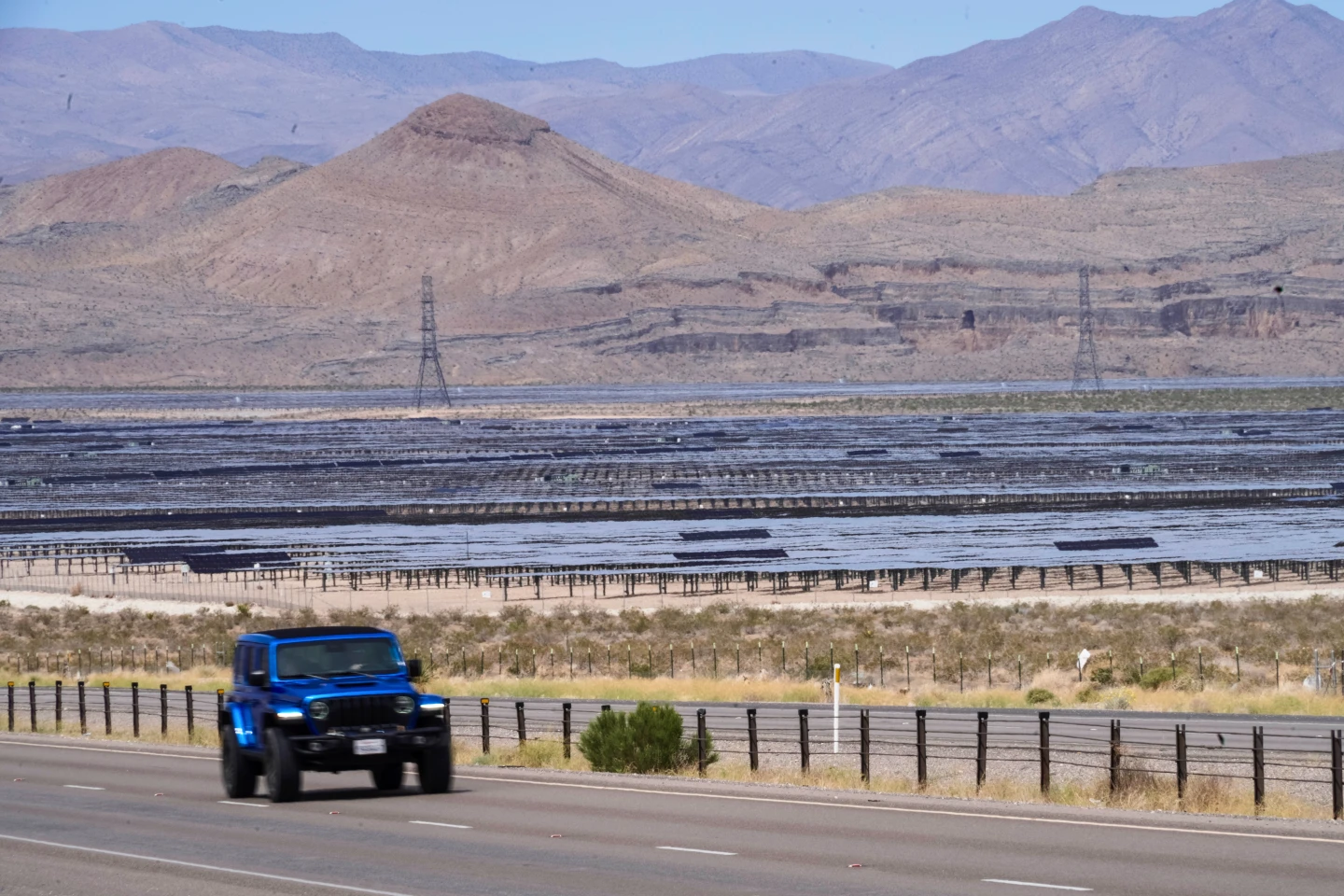
Data centers were responsible for about half of all corporate clean energy purchases in 2024, according to industry groups. Some companies are going further. One major Nevada facility, operated by Switch, built its own massive solar capacity – about a gigawatt – and can even run independently from the grid during peak demand.
Inside, it’s a different world: endless rows of servers, humming away in controlled environments, storing everything from banking data to streaming content. Keeping them cool, especially in desert heat, takes serious energy.
But those kinds of setups are the exception.
Many new projects are turning to gas-fired power for reliability. In Tennessee, a controversial data center tied to Elon Musk’s xAI has used mobile gas turbines mounted on trucks. In Nevada, environmentalists warn that some proposals rely on large numbers of diesel backup generators, raising concerns about air quality.
Residents are starting to push back. In places like Boulder City, near the Hoover Dam, locals have raised concerns about noise, water usage, and rising electricity bills. In some regions, wholesale power prices have already jumped sharply – up more than 250% in areas near large data center clusters.
Still, the situation isn’t entirely black and white.
Some experts argue data centers are being blamed for deeper issues – like an aging power grid and slow approval processes for renewable projects. Even when companies want clean energy, building solar, wind, or geothermal at scale takes time. Meanwhile, demand is exploding right now.
Nevada has tried to get creative. The state allows data center developers to fund new clean energy projects voluntarily and count that toward their own climate goals. It’s helped finance projects like a geothermal plant backed by Google. But critics say voluntary programs won’t be enough.
Lawmakers are now debating stricter rules, including requiring data centers to fully cover the cost of clean energy tied to their operations.
Utilities, for their part, are trying to protect themselves. NV Energy plans to require binding contracts from developers before building out new capacity, ensuring companies don’t walk away after infrastructure is in place.
Even so, the math is getting harder.
Clean energy is growing – just not fast enough to keep pace with AI’s power demands. And as utilities look for quick solutions, fossil fuels are creeping back into the mix.
The result: a collision between two major trends – the race for artificial intelligence and the push for a cleaner grid – with no easy resolution in sight.



The latest news in your social feeds
Subscribe to our social media platforms to stay tuned