


Argentina opens glaciers to mining amid backlash

Argentina’s lower house has approved a controversial reform that allows mining in glacier and permafrost regions, marking a significant policy shift under President Javier Milei and triggering strong opposition from environmental groups.
The amendment to the Glacier Law passed after nearly 12 hours of debate, with 137 votes in favour and 111 against. Having already cleared the Senate, the reform lowers barriers to extracting minerals such as lithium, copper and silver in sensitive Andean fields — areas long protected due to their role as key water reserves.
Supporters of the bill argue the change is necessary to unlock economic potential. Argentina sits on major lithium reserves, a resource central to global demand for batteries and energy transition technologies. The government has framed the reform as a way to attract investment and scale up exports, which could potentially triple by 2030.
Nicolas Mayoraz, a lawmaker from Milei’s ruling party, told parliament that combining “environmental protection and sustainable development is possible”.
That position is sharply disputed by scientists and activists, who say the environments in question are inherently incompatible with industrial activity. Periglacial zones — a mix of rock and ice — play a critical role in storing and regulating water, especially in already dry regions of the country.
“The science is clear … there is absolutely no possibility of creating what they [the government] call a ‘sustainable mine’ in a periglacial environment,” said environmental activist Flavia Broffoni.
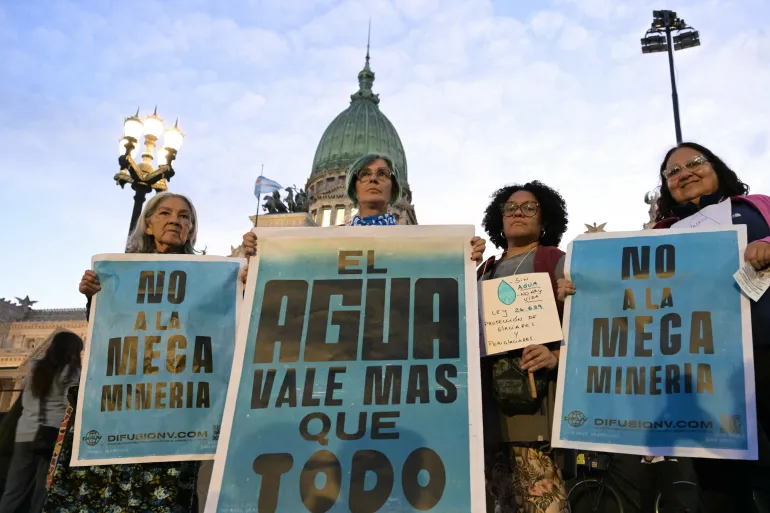
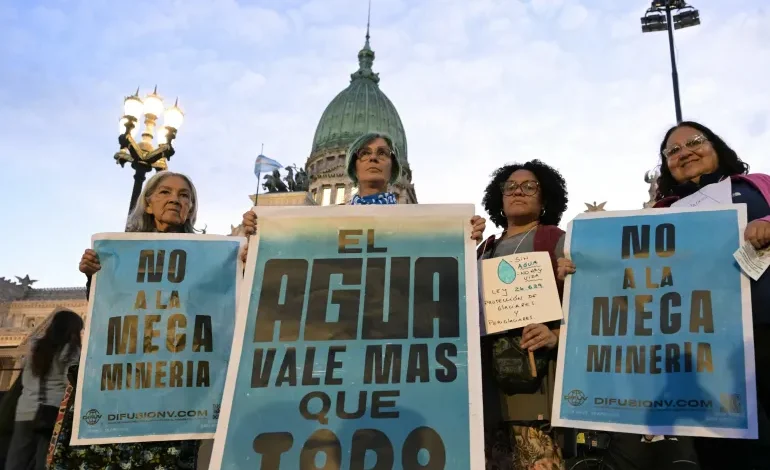
Public reaction has been immediate. Thousands gathered outside parliament during the vote, with protests at times turning confrontational. Greenpeace activists were arrested after scaling a monument and unfurling a banner urging lawmakers “not to betray the Argentine people”.
The tension reflects a broader trade-off embedded in the reform: economic urgency versus environmental risk. Argentina is already seeing pressure on its glacial systems, with reserves in mining-heavy northern regions shrinking by 17 percent over the past decade, largely due to climate change.
Milei has dismissed environmental concerns in blunt terms, arguing the country cannot afford to block development.
“Environmentalists would rather see us starve than have anything touched,” he said.
The reform also shifts power over environmental protections. Where a national scientific body previously determined which areas were off-limits, provincial authorities will now have greater control over designations — a move critics say could open the door to uneven standards and political pressure at the local level.


The latest news in your social feeds
Subscribe to our social media platforms to stay tuned