


Hormuz crisis pushes world toward new energy map

The disruption in the Strait of Hormuz is not just another shock to global energy markets — it is exposing how fragile the system has become, and why countries are now being forced to rethink how energy moves across the world.
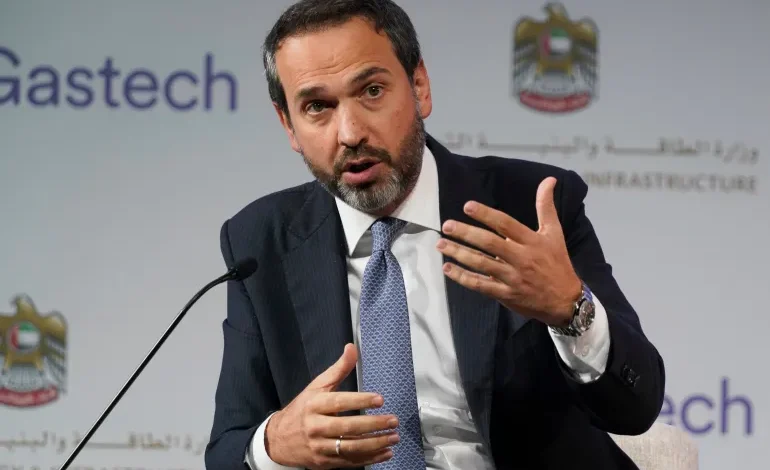
Turkiye’s Energy Minister Alparslan Bayraktar frames the current moment in stark terms, calling it “the mother of all crises”. Compared to previous disruptions — from COVID-era volatility to the fallout of the Ukraine war — this one, he suggests, cuts deeper because it hits both supply and transport at once.
“We are going through what we might call the ‘mother of all crises’,” he said, pointing to a structural gap between global demand and disrupted supply routes. With the world needing around 103 million barrels of oil per day and a shortfall of roughly 20 million barrels linked to the closure of the strait, the imbalance is immediate and visible.
At the same time, Bayraktar notes that markets have become conditioned to instability. Crises, rather than exceptions, are increasingly part of the baseline.
“Looking back at the past 20 years, it seems that crises have become the new normal.”
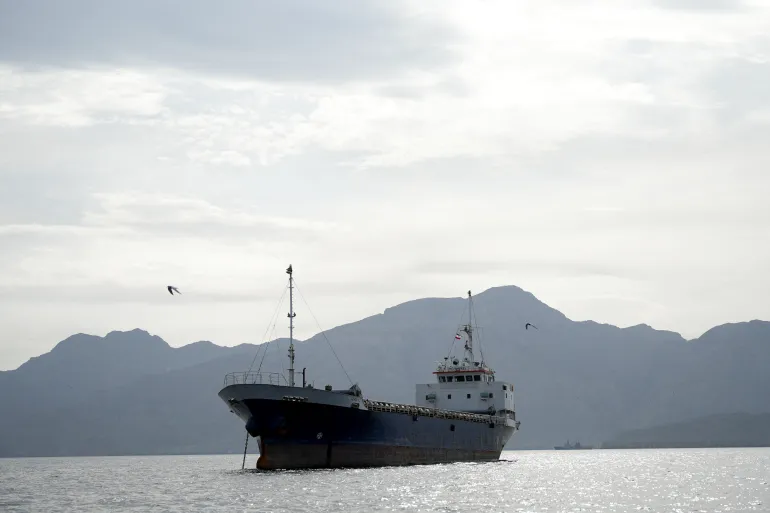
The Strait of Hormuz sits at the centre of this pressure. As the world’s most critical oil transit route, its disruption doesn’t just reduce supply — it breaks the link between producers and consumers. Even where oil and gas are available, they cannot always reach buyers.
That distinction matters. Bayraktar highlights how the crisis is playing out unevenly: in Western economies, the immediate impact is seen in rising prices, while in parts of the East, supply constraints are already more tangible.
“The crisis is also reflected differently in the East and the West. In the West, an impact on prices is currently observed, while in the East, there are also problems with supply, meaning that there are problems with both supplies and prices.”
The risk, he suggests, is escalation. If disruptions persist, prices could spike sharply, with broader economic consequences.
“If you wanted to buy a shipment for physical delivery today, you would have to pay $140 per barrel, and this price could rise even further to $200. This is, of course, the worst-case scenario.”
“In such a scenario, the global economy could enter another recession, with national economies contracting and inflation soaring.”
Against that backdrop, the case for diversification becomes less theoretical and more urgent. Existing alternative routes — such as pipelines in Saudi Arabia and the UAE that bypass the strait — have already softened the blow.
“I say this because diversification is more important than ever – without it, the world would have faced an even more devastating crisis.”
For Bayraktar, the takeaway is clear: the system is being pushed toward redesign.
“The important lesson we learn is that the crisis is forcing us to move towards a new energy architecture.”
Turkiye sees itself positioned within that shift. Sitting between Asia and Europe, and backed by years of infrastructure investment, the country is aiming to act as both a transit corridor and a stabilising node in a fragmented system.
Bayraktar points to pipelines such as Blue Stream and TurkStream, connections to Azerbaijan and Iran, and expanded storage capacity as part of a broader strategy. The logic is straightforward — build flexibility into supply, storage and transport to reduce exposure to single chokepoints.
At the same time, the domestic impact remains unavoidable. Even with relatively strong reserves — gas storage currently at 72 percent compared to Europe’s 28 percent — rising global prices still feed directly into national budgets.
The crisis, in that sense, is both global and local. It is reshaping trade routes and geopolitical alignments, while also tightening fiscal pressure on energy-importing countries.


The latest news in your social feeds
Subscribe to our social media platforms to stay tuned