



US President Donald Trump is once again testing the limits of Washington’s relationship with NATO, this time in the context of the war on Iran — and with hints that the US could reconsider its role in the alliance altogether.
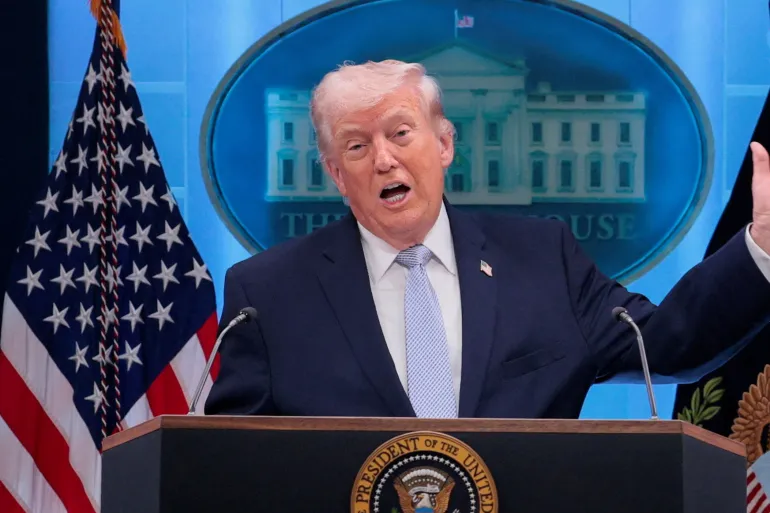
At a White House briefing, Press Secretary Karoline Leavitt framed the conflict as a moment of truth for NATO — and, in her telling, a failure.
“I have a direct quote from the president of the United States on NATO, and I will share it with all of you. They were tested, and they failed,” she said.
“I would add, it’s quite sad that NATO turned their backs on the American people over the course of the last six weeks, when it’s the American people who have been funding their defence.”
The criticism follows weeks of tension, as European allies declined to join offensive operations in Iran, limiting their involvement to defensive support and logistics. For the Trump administration, that distinction appears to matter less than the broader refusal to commit forces.
Behind the rhetoric is a more consequential question: whether the US might scale back — or even withdraw from — the alliance. Leavitt confirmed that such a move “has discussed” by Trump, though she did not offer specifics.
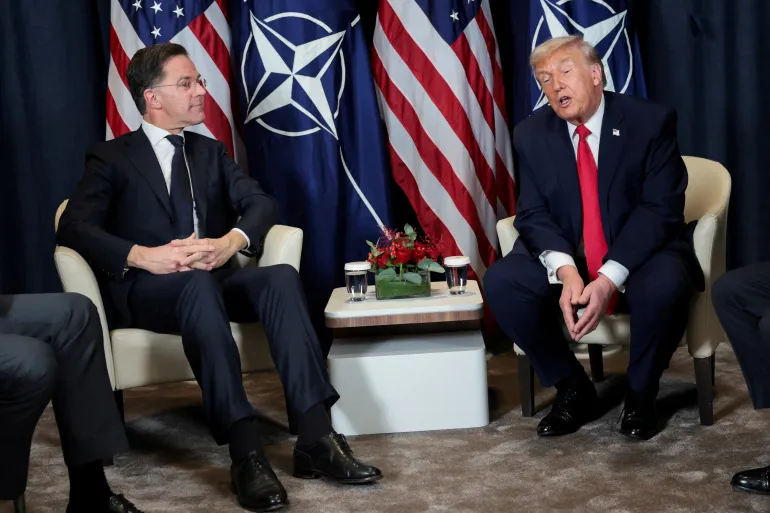
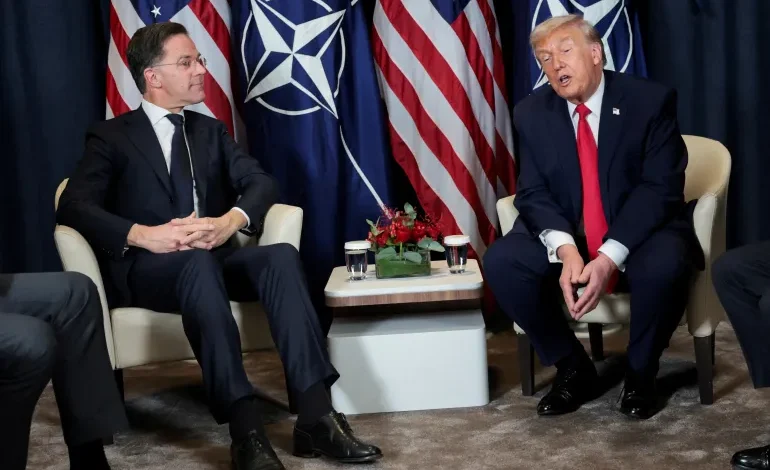
The comments came just before Trump met with NATO Secretary-General Mark Rutte at the White House. After the meeting, Rutte acknowledged friction but sought to keep the relationship on stable ground.
“There is a disappointment, clearly. But at the same time he was also listening careful to my arguments of what is happening,” Rutte said, describing the talks as “frank and open”.
He also pointed to the support NATO countries have provided, even if not in combat roles — including access to bases and logistical backing.
Still, the exchange highlights a recurring pattern in Trump’s approach to NATO: pressure, followed by partial reassurance, without fully resolving the underlying tension.
Since returning to office, Trump has pushed European allies to increase defence spending, securing a commitment last year for members to aim for 5 percent of GDP by 2035. But disputes persist, including over exemptions and uneven contributions.
The Iran war has sharpened those divisions. While the US frames the conflict as a strategic necessity, many European governments question both its legality and its objectives — and have been reluctant to align fully.
At the same time, reports suggest the administration is considering more tangible steps, including reducing US troop presence or closing bases in countries such as Spain and Germany. Those discussions, if acted upon, would mark a shift from rhetorical pressure to structural change.
For NATO, the stakes are clear. The alliance has long depended on US military and political backing, a point Rutte has emphasized in the past, warning that NATO “will not work” without it.


The latest news in your social feeds
Subscribe to our social media platforms to stay tuned