
Trump threatens 50% tariffs over Iran arms ties amid legal uncertainty
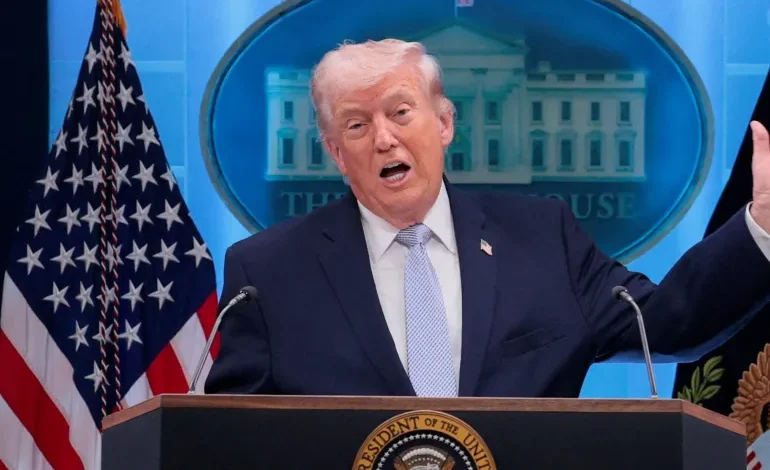

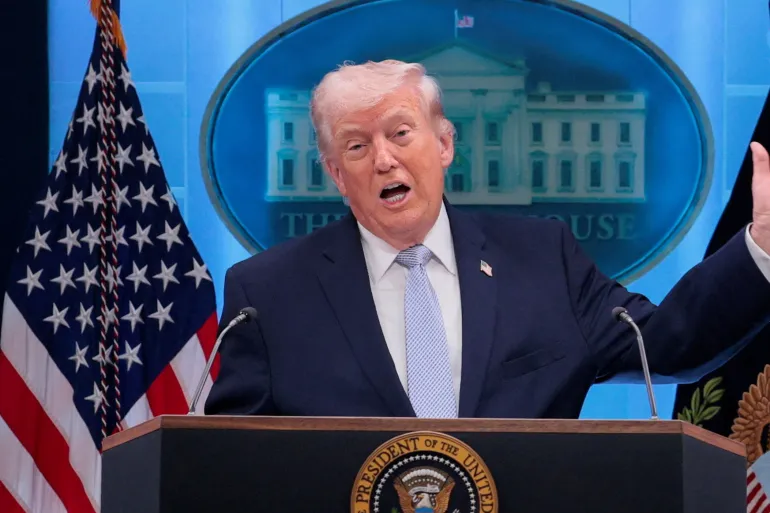
Just hours after agreeing to a temporary ceasefire with Iran, US President Donald Trump pivoted back to economic pressure, warning that countries supplying Tehran with military equipment could face sweeping tariffs.
In a post on Truth Social, Trump said any such country would be hit with a blanket 50 percent tariff on all goods entering the United States — with no carve-outs.
“A Country supplying Military Weapons to Iran will be immediately tariffed, on any and all goods sold to the United States of America, 50%, effective immediately. There will be no exclusions or exemptions! President DJT,” he wrote.
The threat signals a familiar approach: using trade policy as leverage in geopolitical disputes. But this time, the legal ground is less clear.
Earlier this year, the US Supreme Court struck down Trump’s use of the International Emergency Economic Powers Act to impose broad tariffs, ruling that the law — traditionally used for sanctions — does not extend to sweeping trade measures. A lower court has since ordered refunds of roughly $166bn collected under that framework.
That ruling complicates any immediate attempt to follow through on the new tariff threat.
“It’s a lot more complicated to do that after IEEPA was struck down,” said Rachel Ziemba of the Center for a New American Security. “There’s no immediate policy lever and authorisation that is available for the US to do that.”
Without that authority, the administration would likely need either congressional approval or a different legal mechanism — neither of which appears readily available.
Trump did not name specific countries, but the signal is widely understood to be aimed at major powers linked to Iran’s military capabilities. China and Russia have long been associated with providing technology, weapons systems and components that support Tehran’s defence infrastructure, though both governments deny recent transfers.
“This is a China-related threat, the way I read it. And China will read it that way,” said Josh Lipsky of the Atlantic Council.
Even so, the timing raises questions about how far the threat will go. Trump is expected to meet Chinese President Xi Jinping in the coming weeks, and a sharp escalation in tariffs could complicate those talks.
“US tariffs on Chinese products have gone down a lot since the court ruling,” Ziemba noted, adding that reintroducing steep duties would carry costs for American importers and consumers as well.
That tension — between signaling pressure and managing economic fallout — sits at the centre of the announcement. Analysts suggest the move may be less about immediate policy and more about positioning.
“This is kind of an empty threat, but shows that when push comes to shove, Trump comes back to tariffs,” Ziemba said.



The latest news in your social feeds
Subscribe to our social media platforms to stay tuned