





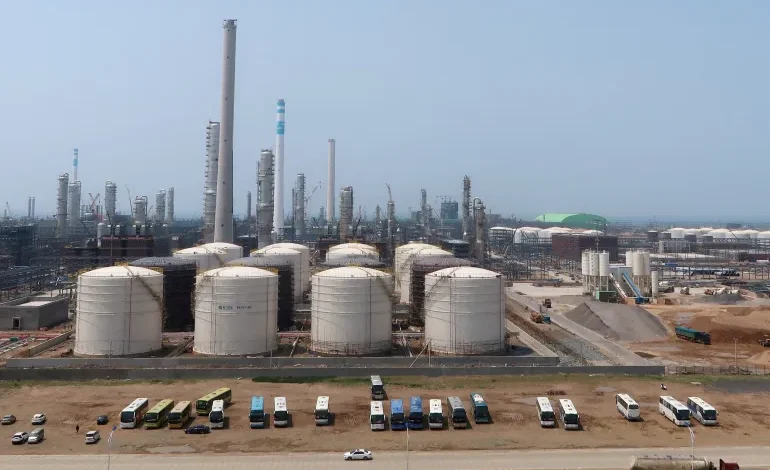

China has taken a direct step to counter US pressure on its energy sector, issuing an order to block sanctions targeting several domestic oil refiners accused by Washington of buying crude from Iran.
The move follows US Treasury sanctions announced on April 24 against five Chinese refiners, cutting them off from the US financial system and threatening penalties for entities that continue doing business with them. The measures are part of a broader effort to restrict Iran’s oil revenues amid ongoing geopolitical tensions.
Beijing’s response is unusually explicit. In a statement on Saturday, China’s Ministry of Commerce said the sanctions “improperly” restrict business between Chinese enterprises and third countries “in violation of international law and the basic norms governing international relations”. The ministry said it had issued a “prohibition order” stipulating that the sanctions “shall not be recognized, enforced, or complied with,” calling the step necessary to “safeguard national sovereignty, security, and development interests”.
“The Chinese government has consistently opposed unilateral sanctions that lack UN authorisation and basis in international law,” the ministry added.
The order specifically targets US measures against Hengli Petrochemical (Dalian) Refinery and four independent “teapot” refiners: Shandong Jincheng Petrochemical Group, Hebei Xinhai Chemical Group, Shouguang Luqing Petrochemical and Shandong Shengxing Chemical.
Washington has framed these companies as key intermediaries in sustaining Iran’s oil exports under sanctions. When announcing the latest measures, the US Treasury described Hengli as “one of Tehran’s most valued customers”, saying it had generated hundreds of millions of dollars in revenue for the Iranian military through crude oil purchases. Additional sanctions against the other refiners were introduced over the past year.
The clash highlights a deeper structural tension. China sources more than half of its oil from the Middle East, with Iran remaining a major supplier despite sanctions. Data from commodities firm Kpler indicates that China purchased more than 80 percent of Iran’s exported oil in 2025, underscoring the scale of the relationship.
Much of that trade flows through so-called “teapot” refineries — smaller, independent operators that play a disproportionate role in absorbing discounted crude from sanctioned producers such as Iran, Russia and Venezuela. These facilities account for roughly a quarter of China’s refining capacity but often operate on tight or even negative margins, making access to cheaper oil a critical advantage.
US sanctions complicate that model by restricting access to global financial channels and creating obstacles for exporting refined products under standard origin labels. Beijing’s prohibition order is effectively an attempt to shield domestic firms from those external constraints, though it also sharpens the legal and commercial risks for companies navigating between the two systems.


The latest news in your social feeds
Subscribe to our social media platforms to stay tuned