





US fast-tracks $8.6bn in Middle East arms sales as war pressures mount
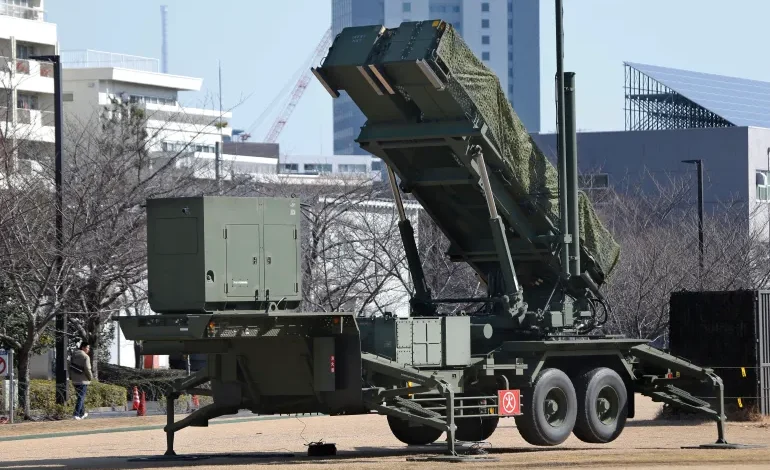


The United States has approved $8.6bn in arms sales to Middle East allies, using emergency powers to bypass Congress as the ongoing war involving Israel and Iran continues to strain regional defence systems.
The decision, signed off by Secretary of State Marco Rubio, allows the transfers to move forward without the standard congressional review under the Arms Export Control Act. The State Department said it had provided “detailed justification” that the move was necessary “in the national security interests of the United States”.
The timing is closely tied to battlefield realities. Since late February, Israel and several Gulf states have been absorbing sustained missile and drone attacks from Iran, rapidly depleting stockpiles of US-made weapons and putting pressure on air defence systems that were not designed for prolonged, high-intensity use.
The package itself reflects that urgency. Israel is set to receive nearly $1bn worth of advanced precision kill weapon systems, while Qatar and the United Arab Emirates have been cleared for similar purchases, alongside efforts to replenish existing arsenals. Kuwait’s $2.5bn deal focuses on battle command systems aimed at strengthening radar detection and coordination capabilities.
At the centre of the transfers are two key technologies: the APKWS, which converts unguided rockets into precision-guided munitions, and the Patriot air defence system, one of the most advanced platforms used to intercept incoming projectiles. Both have become critical in a conflict defined by the scale and frequency of aerial threats.
This latest round of approvals builds on a broader pattern. In March, the State Department cleared an additional $16.5bn in arms sales to Gulf partners, including drones, missiles and fighter aircraft. Taken together, the deals underscore how quickly US military support has expanded as the conflict has dragged on.
But the acceleration is also raising questions beyond the region. Heavy use of US munitions in the war has prompted concerns about longer-term readiness, particularly in the context of a potential conflict with China.
A recent report from the Center for Strategic and International Studies captured that tension directly:
“Prewar inventories were already insufficient; the levels today will constrain US operations should a future conflict arise,” it said.
That warning points to a broader strategic trade-off. While Washington is moving to sustain allies under immediate pressure, the pace of transfers risks exposing limits in its own stockpiles — a dynamic that becomes more significant as global tensions stretch across multiple theatres.
For now, the priority appears clear: stabilise the current front. But the deeper question is whether the supply chain behind that effort can keep up.


The latest news in your social feeds
Subscribe to our social media platforms to stay tuned