
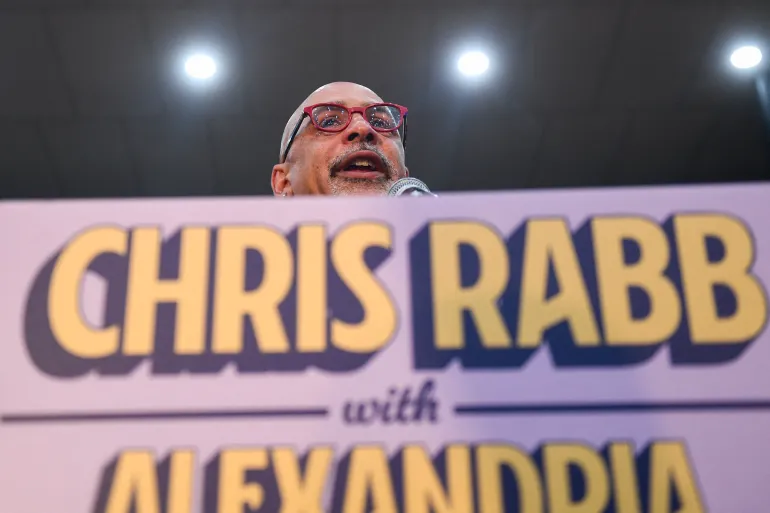



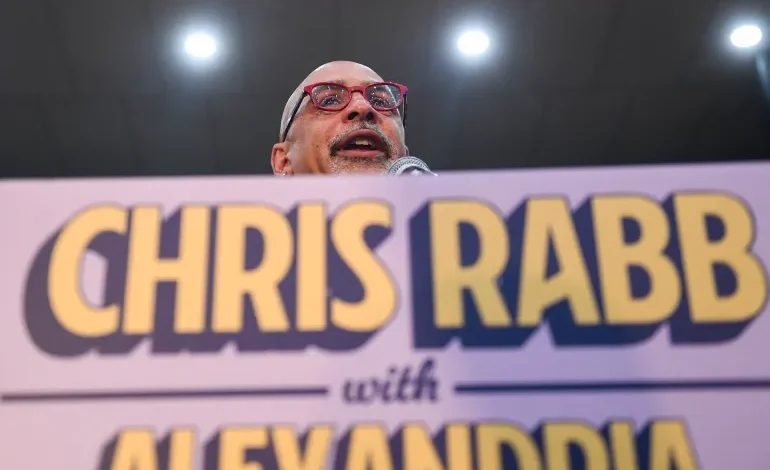


Chris Rabb’s victory in a Democratic congressional primary in Pennsylvania is being seen as an important moment for the party’s progressive wing, which has spent the past few election cycles under sustained political and financial pressure.
Rabb, a Pennsylvania state lawmaker, won decisively in a heavily Democratic district covering parts of Philadelphia, taking roughly 44 percent of the vote. State Senator Sharif Street followed with about 30 percent, while paediatric surgeon Ala Stanford secured around 24 percent. With no Republican candidate in the race, Rabb is now widely expected to win the seat outright in November.
The race became more than just a local contest. It evolved into another test of where Democratic voters stand after the party’s bruising losses in the 2024 elections and amid growing internal divisions over issues like economic populism, party establishment politics and US support for Israel.
All three major candidates campaigned as progressives to varying degrees, but Rabb positioned himself furthest to the left. He openly criticised the Democratic political establishment in Philadelphia and separated himself most clearly from his opponents on Gaza and US-Israel policy.
Rabb pledged to support a congressional resolution recognising the Nakba and repeatedly pushed for stronger language around Israel’s military actions in Gaza. During the campaign, he urged his rivals to describe the war as a “genocide”.
That issue exposed visible divisions inside the race. Stanford suggested in one voter exchange that using the term “genocide” was “harmful”, while Street — who would have become Philadelphia’s first Muslim member of Congress — also faced criticism from some activists who felt his position lacked clarity.
For many progressive organisers, the result reflected frustration with Democratic leadership structures that they argue have become too cautious and too closely tied to entrenched political networks.
“The question in this race was not whether we would elect a Democrat, but what kind of Democrat we would choose,” Pennsylvania Working Families Party cochairs Kendra Brooks and Nicolas O’Rourke said in a statement.
“The people of Philadelphia made their choice clear: bold, working-class leadership, and an end to the broken status quo.”
The contest also highlighted the increasingly open divide between establishment Democrats and the party’s activist left. Street, a former chair of the Pennsylvania Democratic Party, and Stanford, who had the endorsement of outgoing Representative Dwight Evans, were largely viewed as the institutional candidates in the race.
Earlier this month, Axios reported that Pennsylvania Governor Josh Shapiro privately urged labour unions backing Street not to run attack ads against Stanford out of concern that infighting between establishment-aligned candidates could strengthen Rabb’s position.
Rabb, meanwhile, assembled support from some of the Democratic Party’s most recognisable progressive figures, including Representatives Alexandria Ocasio-Cortez and Ilhan Omar, Senator Chris Van Hollen, Justice Democrats and the Sunrise Movement.
Grassroots organising also played a major role. The Democratic Socialists of America, which endorsed Rabb early, were widely credited with building an effective field operation ahead of the primary.
“We will be with Congressman Rabb every step of the way in the fight to abolish ICE (Immigration and Customs Enforcement), free Palestine and win Medicare for All,” the organisation said after the result.
The outcome stands out because progressive Democrats have recently struggled in high-profile primaries, especially candidates critical of US policy toward Israel. In 2024, Representatives Cori Bush and Jamaal Bowman both lost their seats after facing massive spending campaigns from AIPAC-backed groups, which together spent roughly $25m targeting the two lawmakers.


The latest news in your social feeds
Subscribe to our social media platforms to stay tuned