





As Hurricane Milton barrels towards Florida’s west coast, the focus has shifted from wind speed to the potentially devastating storm surge that could inundate coastal communities,Bloomberg reports.
While the storm’s Category 3 designation (on the five-step Saffir-Simpson scale) captures the power of its winds, the true danger lies in the rising seawater that accompanies it.
Storm surge, the abnormal rise in sea level caused by a hurricane’s powerful winds and low pressure, has been responsible for a significant portion of hurricane-related deaths in recent years, accounting for 11% of fatalities between 2013 and 2022.
While storm surge was once included in the Saffir-Simpson scale, it was removed in 2009 to allow for more targeted and localized warnings. Forecasters now use color-coded maps and specific warnings to advise communities on the anticipated surge levels. This approach allows for more precise evacuation orders, but it can also create confusion for residents who are used to relying on the simpler categorization system.
Hurricane Milton poses a particularly significant threat to the Tampa area, experiencing its most severe hurricane threat in a century. With over 6 million residents in counties under mandatory evacuation orders, the potential for widespread damage and displacement is high.
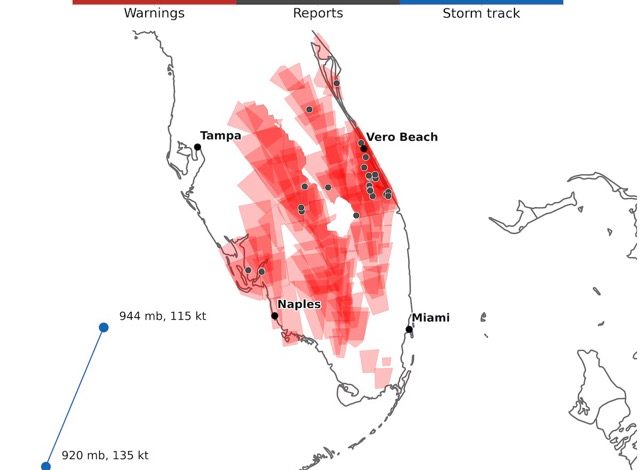
The storm’s most devastating impacts are expected to be its surge and heavy rains, not its winds. As Milton made landfall near Siesta Key on Wednesday night, a flash flood emergency was declared for the Tampa Bay area. Albert Whitted Airport in St. Petersburg reported receiving 16.6 inches of rain by 10 p.m. EDT.



The latest news in your social feeds
Subscribe to our social media platforms to stay tuned