

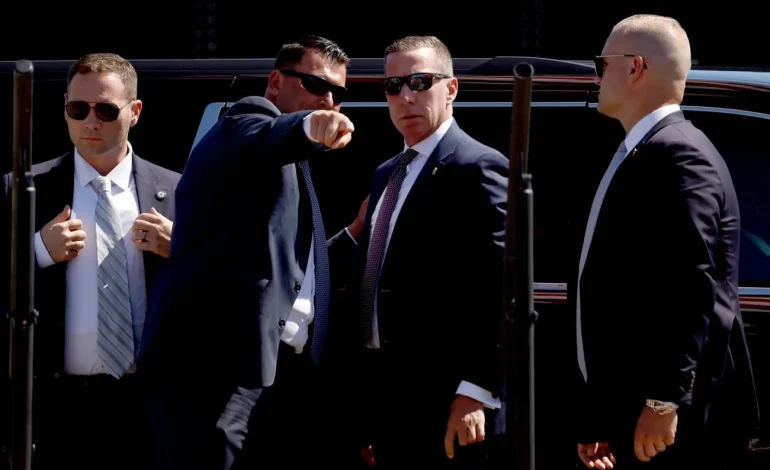

When it comes to executive security, high-profile CEOs like Elon Musk, Mark Zuckerberg, and Sundar Pichai are known for having multimillion-dollar protection packages, Business Insider reports.
Tesla reportedly spent $2.4 million in 2023 on Musk’s security, while Meta’s Zuckerberg has similarly substantial arrangements. But not every executive receives such extensive protection. Health insurance companies, for instance, allocate far less for the personal security of their top executives.
The recent death of UnitedHealthcare CEO Brian Thompson has renewed attention on this issue. Thompson was fatally shot outside a Manhattan hotel while walking alone to an investor event. The incident has raised questions about the adequacy of executive security for less high-profile figures like health insurance CEOs.
Security expenses for executives can differ dramatically by industry and company. For some of the most prominent tech executives, protection costs can run into the millions. Musk’s extensive security detail, for instance, sometimes includes as many as 20 bodyguards. Similarly, filings reveal that JPMorgan Chase’s Jamie Dimon, Apple’s Tim Cook, and Amazon’s Andy Jassy also receive significant security coverage, though typically at a cost in the hundreds of thousands rather than millions.
By comparison, executives at health insurance companies receive much more modest protection packages. UnitedHealth Group’s 2023 proxy statement did not specify any security-related costs for Brian Thompson, who also served as an executive vice president of UnitedHealth Group. Instead, his “other compensation” totaled $21,187, covering $14,850 in 401(k) matching and $6,337 in health insurance premiums—with no mention of personal security expenses.
Looking up the corporate ladder, UnitedHealth Group CEO Andrew Witty’s 2023 compensation package did not list any specific personal security costs either. While he was required to use corporate aircraft for business travel, there was no disclosure of any personal use of the company’s jet that year.
Other health insurers show similar patterns. CVS, which owns Aetna, provided former CEO Karen Lynch with $44,148 for “personal protection” in 2023, along with $243,281 for personal use of the company jet and $106,086 for a company car. Meanwhile, Cigna CEO David Cordani’s $310,437 in “other compensation” included $95,000 for home security system maintenance and monitoring. Proxy statements for Humana and Elevance Health (formerly Anthem) did not disclose any personal security-related expenses for their executives. Kaiser Permanente, a nonprofit, is not subject to the same reporting requirements as for-profit companies.
For publicly traded companies, executive security expenses are typically disclosed in proxy statements, which detail the salaries, bonuses, and perks of top executives. These costs are usually listed under “Other Compensation,” which also covers perks like personal jet use, 401(k) matching, and tax preparation services. However, it’s important to note that some security costs may not be included if they are paid directly by the executive or not reimbursed by the company.
For instance, security provided by Musk’s company, X Holdings, is structured in a way that avoids being listed as executive compensation in Tesla’s filings. This lack of uniformity in reporting makes it difficult to assess the true extent of executive security spending across industries.
The cost of executive protection can be steep. Former Secret Service agent Joseph LaSorsa, now the head of private security firm LaSorsa & Associates, notes that a round-the-clock security detail can cost $100,000 per month. Over a year, that totals $1.2 million, which is comparable to the base salary of many senior executives. But not every executive requires such intense protection.
“Protection is very much driven by what the executive really wants,” said John Orloff, a former US Secret Service agent now working with Jensen Hughes on security risk consulting.
While some executives opt for around-the-clock protection, others prefer a lighter security footprint. This explains why certain high-profile CEOs, like Musk and Zuckerberg, travel with large security details, while others, such as Walmart’s Doug McMillon and McDonald’s Chris Kempczinski, have more limited arrangements. In 2023, Walmart’s filings indicated McMillon’s security expenses were under $25,000, while his personal use of the company jet cost $192,848. McDonald’s paid $319,301 for Kempczinski’s private jet usage, but his individual security expenses were similarly modest.
The death of Brian Thompson could prompt health insurance companies to reevaluate their security protocols. While health insurance executives may not have the global fame of Musk or Zuckerberg, their roles come with visibility in the business community and public scrutiny. The tragic event could lead boards of directors and executive compensation committees to reconsider how much should be allocated for executive protection.
Since the cost of 24/7 protection can be as high as $1.2 million annually, companies may need to balance financial prudence with safety considerations. However, it’s unclear whether these changes will be reflected in proxy filings for 2024.

The latest news in your social feeds
Subscribe to our social media platforms to stay tuned