





Iran’s Khamenei Blames US, Israel,”Neighboring State” for Fall of Assad
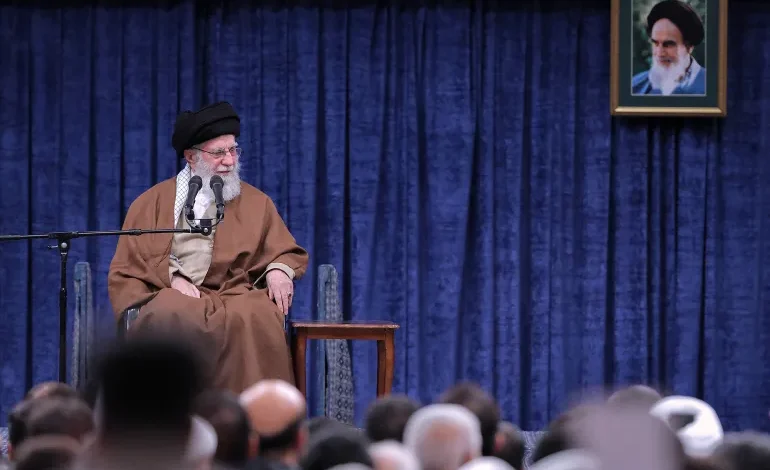

Iran’s Supreme Leader Ayatollah Ali Khamenei has accused the United States and Israel of orchestrating the downfall of Syrian President Bashar al-Assad, also implicating an unnamed neighboring country in the conspiracy, Al Jazeera reports.
In a speech delivered in Tehran on Wednesday, Khamenei stated unequivocally that the events in Syria were the result of a “joint American-Zionist plot.”
While identifying the US and Israel as the primary conspirators, Khamenei highlighted the significant role played by a neighboring state, citing the country’s “clear role…and continued involvement,” according to the state news agency IRNA. He declined to name the specific country, though Syria shares borders with Iraq, Israel, Jordan, Lebanon, and Turkey. Turkey’s support for certain Syrian opposition groups has been well documented.
Khamenei further revealed that Iranian intelligence had warned the Syrian government of impending threats to its stability over the past three months, claiming Damascus had “neglected the enemy.” The swift advance of Syrian rebels towards the capital, Damascus, ultimately ended the Assad family’s decades-long reign.
Iran and Russia had been staunch allies of the Assad’s ruling, providing significant military, political, and financial support throughout the Syrian civil war. However, on Tuesday, the commander of Iran’s Islamic Revolutionary Guard Corps (IRGC), Hossein Salami, announced the withdrawal of all Iranian forces from Syria.
Al-Assad’s removal represents a significant blow to the Iran-led “axis of resistance,” a network of armed groups opposing US and Israeli influence in the region. US President Joe Biden, in comments made hours after Assad’s departure on Sunday, attributed his fall partly to US support for Israel’s actions in Gaza and Lebanon, as well as backing for groups in Syria and Iraq that weakened Iran’s influence. He also cited US support for Ukraine as diverting resources from Moscow, and confirmed the continued presence of US forces in northeastern Syria.
Despite Assad’s fall, Khamenei dismissed suggestions of Iran’s weakened position as “ignorant,” asserting that the country’s resistance would only grow stronger. Immediately following Assad’s departure, Iran expressed its expectation that relations with Damascus would continue, advocating for the formation of an inclusive government representing all segments of Syrian society. Israel, meanwhile, has conducted hundreds of airstrikes within Syria since the conflict began, targeting key military installations.



The latest news in your social feeds
Subscribe to our social media platforms to stay tuned