





In the decades spanning the 1930s and 1940s, Cheyenne, Wyoming emerged as a central hub in America’s early aviation industry, due in large part to its longstanding relationship with United Airlines, Cowboy State Daily reports.
For more than 30 years, the city served as a focal point for aviation maintenance, training, and innovation, earning the nickname “Air Capital of the West.”
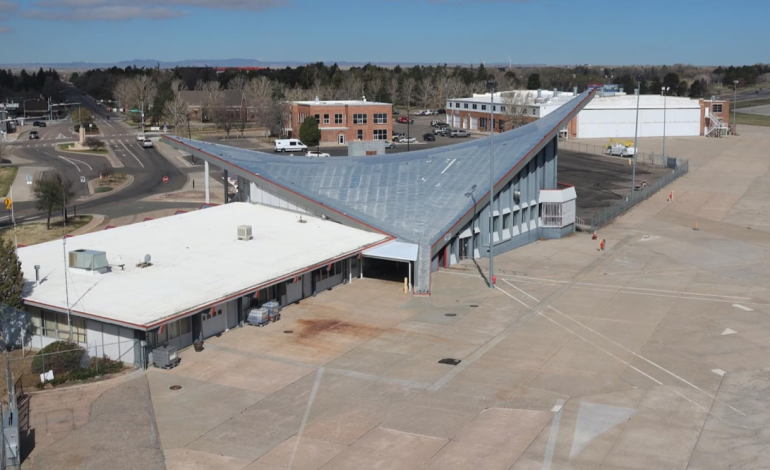
The partnership began in 1927 when United Airlines — then operating as Boeing Air Transport — established operations at what is now Cheyenne Regional Airport. This collaboration would continue until 1961, when the final remnants of United’s presence in the city came to a close. A modest plaque still mounted in the former terminal building, now occupied by the Wyoming Department of Transportation Aeronautics Division, commemorates the significant contributions of Cheyenne and the state of Wyoming to commercial aviation.
United Airlines relied heavily on Cheyenne for its geographic advantages. Positioned between Chicago and San Francisco, and free from the extreme mountainous terrain that defined other air routes, Cheyenne was a logical choice for routing early airmail services. When passenger air travel began to take precedence, the city remained a vital operational base.
“It was such a big part of Cheyenne, a big part of Wyoming at one time,” said Dean McClain, a pilot and member of the Wyoming Aviation Heritage League.
In 1929, the city constructed a new brick terminal, followed by a maintenance hangar in 1930 and a decorative fountain in 1934. These facilities became the backbone of what would grow into the largest aircraft overhaul and repair center in the world at the time. At its peak, United Airlines employed more than 1,600 workers in Cheyenne, covering a wide range of aviation disciplines including engine maintenance, instrumentation, metal work, and radio operation.
Popular Mechanics described the city in 1935 as the “mainspring of this far-flung air network,” highlighting the vast scale of the operation and the critical role Cheyenne played in United’s coast-to-coast services.
Beyond routine maintenance, Cheyenne became a center for aviation innovation. It was here that United Airlines developed de-icing procedures, tested controllable pitch propellers, and advanced emergency propeller feathering — procedures that greatly improved aviation safety and reliability. The city also became the training ground for pilots and stewardesses, further solidifying its place in aviation history.
World War II only deepened the city’s importance. The US Army Air Corps contracted United to complete the final outfitting of thousands of B-17 bombers in Cheyenne. Among these efforts was the development of the “Cheyenne” tail turret, a notable upgrade to the B-17’s defensive capabilities. Two modified bombers were also believed to have played a role in reconnaissance ahead of Lt. Col. Jimmy Doolittle’s raid over Tokyo in 1942.
By the early 1950s, however, rapid advancements in aviation technology and infrastructure began to shift the industry’s center of gravity. With new, pressurized aircraft able to easily clear the Rocky Mountains, United moved its operations to larger cities such as San Francisco and Denver. While stewardess training continued in Cheyenne for a few more years, the last operational ties were severed in November 1961.
Though Cheyenne no longer serves as a bustling hub for major airline operations, the impact of its role in early commercial aviation remains part of Wyoming’s legacy. Structures like the 1929 terminal and maintenance hangar are now listed on the National Register of Historic Places, reminders of a time when Cheyenne stood at the forefront of America’s aviation frontier.
“It’s just a shame that it is forgotten,” McClain remarked.
The latest news in your social feeds
Subscribe to our social media platforms to stay tuned