


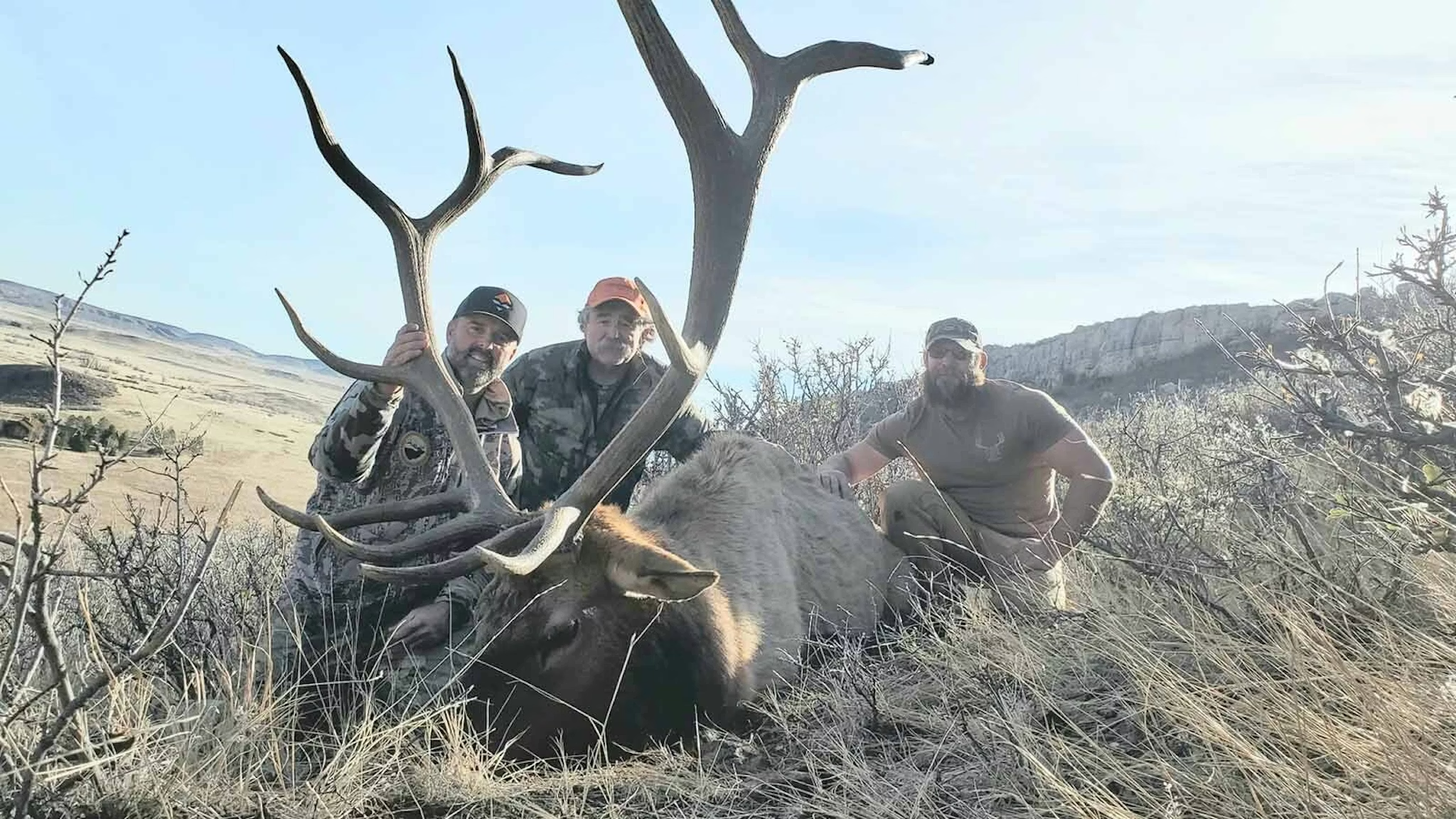


Game Agents Use Tasers To Subdue Animals, But Don’t Try It On A Charging Grizzly


When wild animals become stuck or stubbornly lurk where they are not supposed to be, wildlife agents reach for Tasers to subdue them. It is a highly effective way to lay out a deer or moose entangled in netting long enough for game wardens to rush in and cut it free, said Brian DeBolt, large carnivore conflict coordinator with the Wyoming Game and Fish Department. Tasers can also convince critters to move along. “We did that once with a black bear in Laramie that had taken up residence under a guy’s porch,” DeBolt said. After a quick tasing, the bear fled and never returned.
Tasers are not to be confused with handheld stun guns pressed directly against an attacker. A Taser, or conductive electrical weapon (CEW), is a pistol-like device that shoots two wires with sharp probes. After the probes sink into the target’s skin, controlled pulses of electricity disrupt the neuromuscular system, causing the animal to stiffen and fall over.
Game and Fish has not used Tasers on grizzlies yet, but DeBolt is sure they would be effective. Tasers have been used to haze grizzlies away from a fish farm in Alaska. However, both DeBolt and Canadian bear safety expert Kim Titchener said packing a Taser into the Wyoming backcountry for grizzly defense is a bad idea. Tasers are meant for stationary or nearly still targets. Against a rapidly moving angry grizzly, the odds of landing an effective hit are astronomical. “No, absolutely do not” try it, Titchener said. “It would get you mauled.”
Game and Fish started using Tasers in 2019, and game agencies in several other states have taken up the practice. Wyoming agents typically use them a few times a year on animals ranging from deer and moose to mountain lions. The trend started by accident in Alaska around 2011. A game warden was called to rescue a moose calf that had tumbled into a basement foundation, but the mother moose would not let him near. An Alaska State Trooper had a “lightbulb moment” and suggested using his Taser on the mother moose. “He tased the cow moose and it worked,” DeBolt said. The warden jumped in, grabbed the calf, and heaved it to safety. Both moose ran away happy.
As to whether tasing makes wild animals resentful, research indicates they instead avoid people, associating humans with a nasty, shocking experience. DeBolt knows firsthand. As part of his training, he allowed himself to be tased. “It was extremely unpleasant, but I was OK,” he said. “After less than five minutes, I was fine.” He noted that tasing can be the quickest, most humane option compared to tranquilizers, which take time to work, or catch poles, which can lead to injuries if the animal panics.


The latest news in your social feeds
Subscribe to our social media platforms to stay tuned