



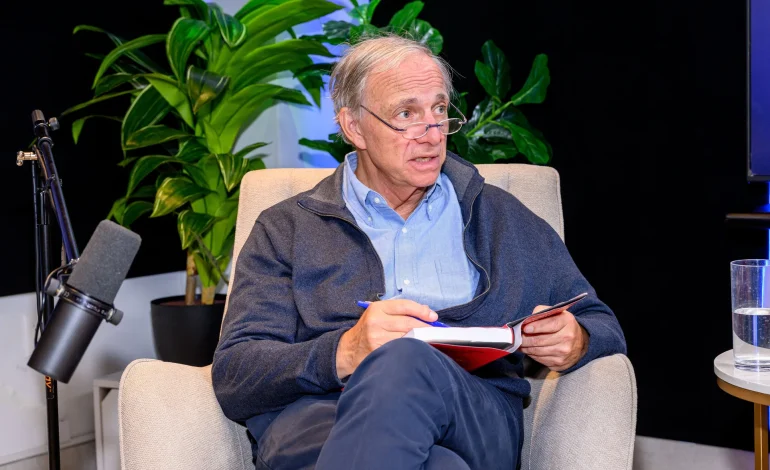

Ray Dalio isn’t mincing words. The Bridgewater Associates founder says the US is drifting toward a “civil war of some sort,” not necessarily blue vs. red armies, but rival camps using every lever of power — legal, financial, technological — to punish each other. Pair that with a government balance sheet he calls a “debt bomb,” and you get a country flirting with a self-made crisis.
Speaking to Bloomberg, Dalio argued the stakes have rarely been higher. Public debt sits around 125% of GDP, and if investors lose confidence, borrowing costs could jump or Washington could be forced into painful cuts. In his metaphor, when debt and interest payments swell faster than income, it’s “like plaque in the arteries,” choking off productive spending. He’s been here before: in 2007 he warned “the system” was loaded with hidden risk; 2008 proved him right.
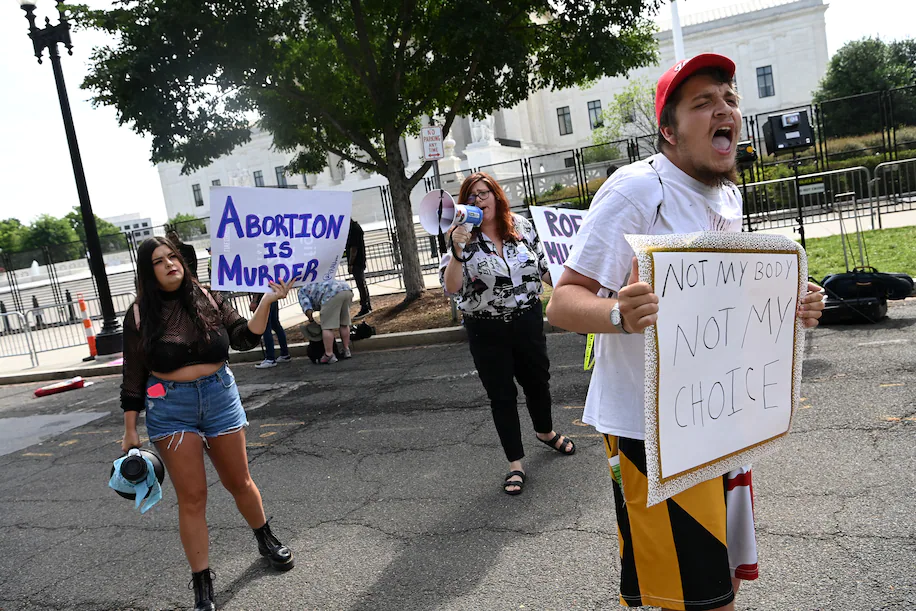
The domestic picture, in his view, is no safer. Culture-war trench lines have hardened, trust has thinned, and the tools to escalate are everywhere. “We’re in wars,” he said—money wars, tech wars, geopolitical standoffs — and inside the US, “irreconcilable differences” are turning into tests of power. Polling backs the mood music: majorities tell surveyors the country feels “greatly divided,” and politics now bleeds into markets, courts and statehouses with little restraint.
Dalio sketches two paths. In the best case, the country “rises above” the rancor, rallies around shared interests and does the dull, necessary work: cool the deficit, reform taxes and spending, and lower the temperature. He admits that may sound “a little idealistic,” which is why his more practical bet is that each side keeps pushing its advantage until something breaks. That’s not just a political problem; it’s a market one. If buyers demand a higher premium to hold US debt — or step away altogether — interest costs climb, growth slows, and suddenly the bond market is setting national priorities.
He also puts America’s moment in a wider frame he’s written about for years: long cycles where great powers over-borrow, overreach and get forced into resets. He’s wary of drawing neat timelines, but the parallels he cites are stark — rising deficits, global flashpoints, and a domestic tug-of-war over who gets to define the rules. Back in 2023 he put 50% odds on a broader global conflict after Russia’s invasion of Ukraine and the Israel-Hamas war. Today he sounds just as cautious, only with US politics squarely in the risk mix.
None of this means doom is preordained. Dalio’s mantra is that the act of worrying — early and honestly — creates space to fix things. That could mean rebalancing budgets before bond markets force the issue; dialing down maximalist politics before they spill into the streets; and remembering that markets, like democracies, are confidence games. If Americans can still agree on the basics — pay the bills, keep the fights procedural, let growth do some of the heavy lifting — the country can muddle through.
If not, he warns, the “tests of power” will continue until they migrate from rhetoric and regulation to something uglier. And by then, the debt plaques he talks about won’t be a metaphor anymore — they’ll be constricting an economy that has fewer good options left.
Fortune, Quartz, and the Daily Beast contributed to this report.

The latest news in your social feeds
Subscribe to our social media platforms to stay tuned