




With input from the New York Times, Reuters, BBC, CNBC, Investor’s Business Daily, Bloomberg.
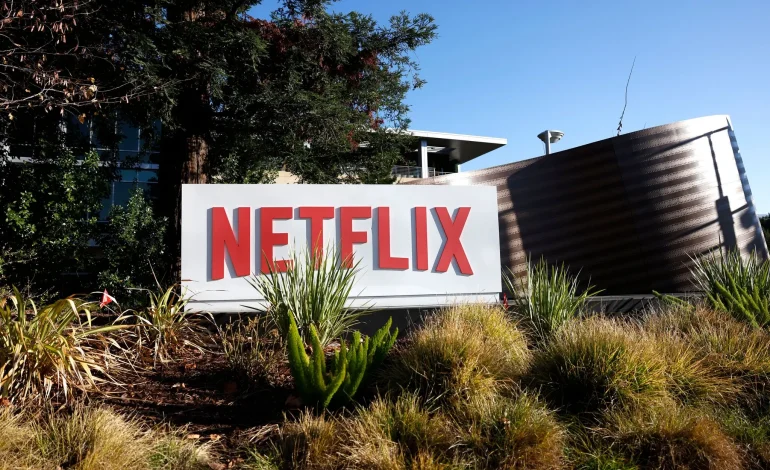
Netflix is about to stop playing Hollywood and start owning it.
On Friday, the streaming giant announced a blockbuster deal to buy Warner Bros. Discovery’s film and TV studios plus its streaming arm, including HBO Max, in a cash-and-stock transaction valuing the business at $82.7 billion, debt included.
It’s Netflix’s biggest swing ever — and a move that would turn the world’s largest paid streamer into a true Hollywood superpower.
Under the agreement:
- The deal values Warner Bros. Discovery at $27.75 per share;
- The equity value is about $72 billion;
- The enterprise value, including debt, comes to $82.7 billion;
- Warner Bros. Discovery will spin off its cable networks — including CNN, TNT and other global channels — into a separate public company before the sale closes;
- The deal is expected to close 12–18 months from now, after that TV spinoff, likely in Q3 2026.
Netflix will walk away with:
Warner Bros. film studio, home to:
Harry Potter;
DC Comics movies;
The Wizard of Oz, Casablanca, The Shining, Gone With the Wind and other classics.
HBO and HBO Max, with hits like:
Game of Thrones;
The Sopranos;
Euphoria;
The White Lotus.
A massive TV library that includes:
Friends;
Other long-running series and global franchises.
In plain English: Netflix isn’t just adding content. It’s buying a huge chunk of Hollywood’s history and a big slice of its future.
Netflix already has more than 300 million subscribers worldwide. Warner Bros. Discovery brings another 128 million across HBO Max and related services.
On an investor call, Netflix co-CEO Ted Sarandos leaned into the long game:
“We already have incredible shows and movies and a great business model. This is a rare opportunity. It’s going to help us achieve our mission to entertain the world and to bring people together through great stories.”
Netflix has always prided itself on being a “builder, not buyer” company. Co-CEO Greg Peters said exactly that just weeks ago. But this deal gives Netflix something it’s struggled to build from scratch:
deep, multigenerational franchises that keep people and their kids — and their grandkids — coming back.
Analysts have long noted that while Netflix can create global hits like Stranger Things, it doesn’t have the century-long library of evergreen brands that traditional studios own. Warner Bros. does.
A key part of Netflix’s pitch: it says it will keep releasing Warner Bros. movies in theaters, not just dump everything straight to streaming.
That’s a big promise from the company that practically taught audiences to stay home in sweatpants.
Even so, not everyone in Hollywood is buying it. A group of anonymous film producers sent a letter to Congress warning that Netflix has “no incentive to support theatrical exhibition” and “every incentive to kill it,” arguing the company sees time in theaters as time not on Netflix.
Behind the scenes, unions, filmmakers and theater owners are bracing for what a Netflix–Warner combo could mean for release windows, production volume and bargaining power.
This deal didn’t happen quietly.
Warner Bros. Discovery ran a formal sale process, drawing serious interest from:
- Netflix;
- Comcast;
- Paramount Skydance, led by David Ellison.
Paramount was the only bidder trying to buy all of Warner Bros. Discovery, including the cable networks, and previously floated a roughly $60 billion offer for the whole company. That was rejected. After that, Warner Bros. narrowed the process to its studio and streaming assets instead.
Netflix ultimately beat out Comcast and Paramount with a mostly cash-heavy offer.
Paramount was not happy. In a letter reported by CNBC, its legal team accused Warner Bros. Discovery of running a “myopic process with a predetermined outcome that favors a single bidder.”
Translation: they think the whole thing was tilted toward Netflix from the start.
A deal of this size is guaranteed to face intense antitrust scrutiny in Washington and abroad.
A combined Netflix–Warner Bros. would:
- Control a massive share of high-end scripted TV and franchises;
- Own one of Hollywood’s biggest studios and the world’s top streamer;
- Have outsized leverage with:
Talent;
Unions;
Theaters;
International distributors.
How the Trump administration looks at this will depend on how it defines the market: Are Netflix and Warner competing mainly with other streamers like Disney+, Amazon and Apple — or does this create too much power under one roof?
If regulators block the deal:
- Netflix would owe Warner Bros. Discovery a $5.8 billion reverse breakup fee;
- If Warner Bros. Discovery walks away to take another deal, it would owe Netflix $2.8 billion.
So both sides have a lot of cash on the line, even before regulators weigh in.
To make all this work, Netflix has lined up a $59 billion unsecured bridge loan from a trio of big banks:
- Wells Fargo;
- BNP Paribas;
- HSBC.
This kind of bridge financing is a temporary loan that typically gets refinanced later through longer-term debt like bonds. It’s one of the largest of its kind, comparable only to mega-deals like Anheuser-Busch InBev’s $75 billion financing for its SABMiller takeover.
Banks get hefty fees and, more importantly, a deeper relationship with Netflix for future deals and capital raises.
If regulators sign off, the combined company will be a streaming mega-power with:
- The biggest global subscriber base;
- A towering library of movies and series;
- A stable of brands and franchises few others can match.
Analysts say that kind of dominance almost certainly means:
- Higher subscription prices over time;
- Fewer competing platforms with big-budget originals;
- More consolidation, as smaller players either merge or fade.
For Warner Bros. Discovery, selling the studio and streaming arm is a way to unload debt and refocus. For Netflix, it’s a once-in-a-generation chance to lock up some of the most valuable entertainment IP on earth.
For everyone else in Hollywood — and for regulators — it’s now a race to decide whether this is the natural next step in the streaming era, or a step too far.


The latest news in your social feeds
Subscribe to our social media platforms to stay tuned