



Arctic heats up at record pace as ice and snow retreat, NOAA warns
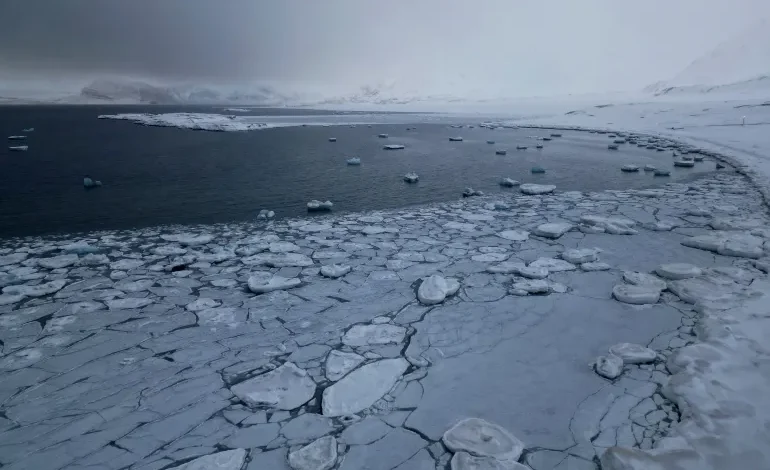

The Arctic is warming faster than anywhere else on Earth, with new data showing record-breaking temperatures and a dramatic loss of snow and ice across the region.
According to the latest Arctic Report Card published on Tuesday by the US National Oceanic and Atmospheric Administration (NOAA), average surface air temperatures across the Arctic between October 2024 and September 2025 were “the warmest recorded since 1900”.
The findings cap a decade of sustained temperature records around the North Pole, the report said. Compiled by 112 scientists from 13 countries, the annual assessment paints a picture of rapid, accelerating change in one of the planet’s most sensitive regions.
Satellite records show that winter sea ice hit its lowest recorded maximum in March 2025. Snow cover in June has fallen to about half of what it was six decades ago, a striking measure of how quickly the Arctic’s reflective, cooling surfaces are disappearing.
This year’s report marks the 20th Arctic Report Card released by NOAA, an agency whose remit has come under scrutiny during Donald Trump’s second presidency. At a press briefing, NOAA’s acting chief scientist Steven Thur was asked about earlier official statements linking Arctic warming to fossil fuel pollution.
His response avoided explicit references to climate change.
“We recognise that the planet is changing dramatically. Our role within NOAA is to try to predict what’s going to occur in the future by documenting what’s occurring today,” Thur said.
The careful phrasing reflects a broader shift inside US federal agencies. The Sabin Center for Climate Change Law at Columbia University says multiple departments have removed references to climate change from their websites under the current administration.
This includes “the entire page on climate change on the White House website” and US Department of Agriculture material assessing wildfire vulnerability.
Federal researchers have also “seen their studies disappear from agency websites”, the centre said.
Even as environmental signals flash red, several Arctic states are moving in the opposite direction. The US, Russia and Norway are among countries planning to expand mining and energy projects in the region as retreating ice opens access to previously unreachable resources.
In October, Kremlin investment envoy Kirill Dmitriev said a proposed 112km rail and cargo link between Siberia and Alaska could “unlock joint resource exploration” across borders.
“Certainly, Russia is eyeing the opportunity of joint Russia-China-US projects, including in the Arctic region, specifically in the energy sector,” Dmitriev said, according to Russia’s TASS news agency.
The Trump administration has likewise announced plans for expanded offshore drilling, including 21 new five-year oil and gas leases stretching from the Gulf of Alaska to the High Arctic. The move delivers on Trump’s campaign pledge to “drill, baby drill”.
This push for more fossil fuel extraction sits uneasily alongside global public opinion. A 2024 poll by the UN Development Programme and Oxford University found that 80 percent of respondents worldwide want stronger action on climate change.
Governments and corporations pressing ahead regardless are increasingly facing legal pressure. A recent advisory ruling by the International Court of Justice found that polluters have a responsibility to address the damage they cause.



The latest news in your social feeds
Subscribe to our social media platforms to stay tuned