






China has executed four people convicted of running sprawling scam and gambling operations out of Myanmar that killed six Chinese citizens and siphoned off more than $4bn.
The Shenzhen Intermediate People’s Court said on Monday that the four had been put to death, though it did not specify when the executions were carried out. They were part of a group sentenced in November after authorities concluded they had built and operated scam hubs along China’s border with Myanmar.
The network was based in Myanmar’s Kokang region, where it established so-called industrial parks that functioned as centres for online gambling and telecom fraud. According to the court, the operations relied on abduction, extortion and forced labour, and were linked to forced prostitution as well as drug manufacturing and trafficking.
In total, the group defrauded victims of more than 29 billion yuan ($4.2bn). Six Chinese citizens died as a result of the crimes, with others injured. The court described the offences as “exceptionally heinous, with particularly serious circumstances and consequences, posing a tremendous threat to society”.
Five defendants were originally sentenced to death. One of them, identified as ringleader Bai Suocheng, died of illness before the sentence could be carried out. Appeals lodged by the remaining defendants were rejected by the Guangdong Provincial High People’s Court, clearing the way for the executions.
The announcement follows last week’s confirmation that 11 other people convicted of running scam centres in Myanmar had also been executed, signalling that Beijing is prepared to use its harshest penalties as part of a wider campaign against fraud networks operating beyond its borders.
Those networks have flourished in recent years across parts of Myanmar, Cambodia and Laos, where scam parks have evolved into a highly organised industry. A mix of trafficked workers and willing recruits has been used to target victims worldwide, including thousands of Chinese nationals.
China’s pressure has increasingly spilled over into regional politics. Governments across Southeast Asia are facing growing scrutiny from Beijing, Washington and others over their failure to dismantle the criminal economy surrounding scam operations.
Experts say many of the centres are run by Chinese-led syndicates working in tandem with Myanmar armed groups, exploiting the country’s prolonged instability and civil conflict. Myanmar’s military authorities have long been accused of tolerating the industry, but over the past year they have highlighted a series of raids after sustained lobbying from China.
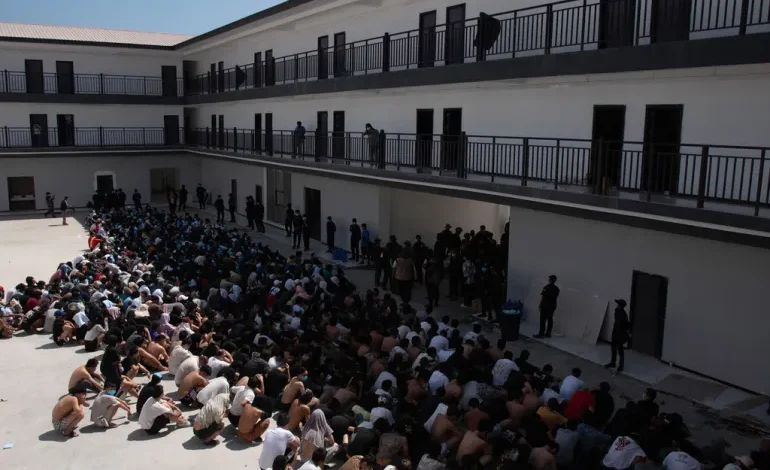
One of the most prominent came in October, when more than 2,000 people were arrested during a sweep of KK Park, a notorious scam complex near the Thai border.



The latest news in your social feeds
Subscribe to our social media platforms to stay tuned