





The original story by
If you’ve ever checked a forecast and wondered how anyone can predict a blizzard two days out — or how ranchers and water managers know when runoff might hit — there’s a good chance the answer runs through a powerful machine in Cheyenne.
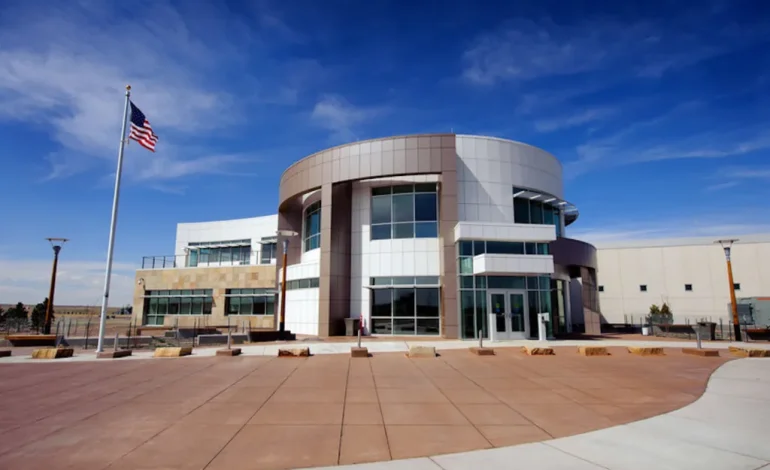
That machine, the NCAR-Wyoming Supercomputing Center, helps crunch the data behind everything from seasonal outlooks and drought monitoring to snowpack modeling that matters for Wyoming’s agriculture, tourism and energy industries. It’s operated by the National Center for Atmospheric Research (NCAR), based in Boulder, Colorado. And now, the whole operation is facing a major shake-up.
Last week, a Trump administration official signaled the government intends to dismantle NCAR. In a social media post, Office of Management and Budget Director Russell Vought called NCAR “one of the largest sources of climate alarmism in the country,” and said the administration “will be breaking up” the institution. He added that a “comprehensive review” is underway and that “vital activities such as weather research” would be moved elsewhere.
That “elsewhere” is doing a lot of heavy lifting — because for Wyoming, the big question is: what happens to the supercomputer in Cheyenne?
NCAR says it’s not sure yet, either. In a statement, the organization said the National Science Foundation (NSF) plans to publish guidance laying out next steps. One option on the table: transfer stewardship of the supercomputer to an “appropriate operator.” NSF is also expected to explore transferring or divesting the aircraft NCAR manages, while narrowing the scope of modeling and forecasting work to focus on things like seasonal prediction, severe storms, and space weather.
Translation: the administration is signaling it wants to keep some practical forecasting pieces alive — but the institution as it exists now may be broken apart, and the fate of the Cheyenne facility could depend on who, if anyone, steps up to run it.
For researchers at the University of Wyoming, this isn’t some distant, DC budget fight. UW Geology and Geophysics Professor J.J. Shinker says NCAR and the Wyoming supercomputer aren’t just helpful — they’re baked into how the state learns about itself.
She uses NCAR data tied to that supercomputer in a spring course and worries about disruptions. More broadly, Shinker argues the work supports real-world needs Wyoming deals with every year: drought, snowpack, precipitation trends, runoff timing, wildfire vulnerability, and planting decisions.
And one point she keeps coming back to: drought monitoring. “A big issue in our state,” she said, and something that depends on updated, real-time, quality-controlled data — exactly the sort of thing NCAR has helped provide.
She also notes that the system pulls in global signals — satellite data, ocean buoys, climate patterns like El Niño and La Niña — not for political messaging, but for practical forecasting and research that helps people plan around water and weather.
Outside Wyoming, the reaction from climate and weather experts has been alarmed. Katharine Hayhoe, a climate scientist at Texas Tech and chief scientist for The Nature Conservancy, described NCAR as “quite literally our global mothership,” arguing it supports hurricane research, radar advances, new weather models — and major climate modeling infrastructure.
Her warning was blunt: dismantling NCAR is like “taking a sledgehammer to the keystone” holding up scientific understanding of the planet.
Whether you buy that framing or not, it points to the same underlying reality: NCAR isn’t just one lab doing one job. It’s an ecosystem of computing, modeling, expertise and coordination — and ecosystems don’t always survive being “broken up” into parts.
There’s also an economic angle that’s very local. Cheyenne Mayor Patrick Collins says the supercomputing center helped kickstart the city’s growing reputation as a tech and data center hub — the kind of early anchor that told big companies, “This place can handle serious computing.”
He points to major players building out in the region — including Microsoft’s expansion, plus plans from Meta and a Crusoe–Tallgrass joint venture, all riding the wave of demand for AI-scale computing.
In Collins’ view, losing NCAR’s Cheyenne presence wouldn’t just be a symbolic hit. It could weaken Cheyenne’s pitch to future employers and investors — and take away a source of what he calls “super high-quality jobs,” along with the community investment that tends to follow.
And beyond the dollars, he says, the atmospheric science work matters because early warnings and improved forecasting help communities protect people and property.
In Washington, Democrats have started pushing back. Colorado Sens. Michael Bennet and John Hickenlooper reportedly stalled the Senate’s budget process in protest, trying to slow or block the dismantling plan. But if the administration pushes through, the timetable and structure of whatever replaces NCAR could move quickly — and Wyoming could be left reacting rather than steering.
For Wyoming, the uncomfortable reality is this: weather doesn’t wait for politics to settle down. Drought cycles, snowpack shifts, spring melt timing, severe storms — those keep coming, and the demand for reliable modeling isn’t going anywhere.
Which is why the debate over NCAR’s future isn’t just about “climate” as a cultural argument. In Wyoming, it’s about whether the state keeps a powerful tool that helps it read the skies — and plan for what comes next.



The latest news in your social feeds
Subscribe to our social media platforms to stay tuned