
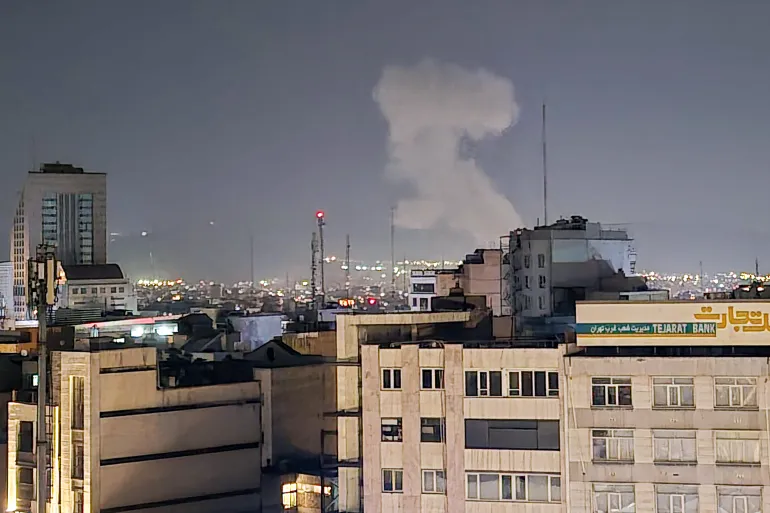
NSW’s Post-Bondi Crackdown: Tighter Gun Caps, New Hate-Speech Powers, and a Fight Over Protest Rights


With input from Reuters, ABC News, and the Guardian.
Sydney is still in shock from the December 14 mass shooting at a Jewish Hanukkah celebration in Bondi – an attack that killed 15 people and reignited a question Australia thought it had mostly settled after Port Arthur in 1996: how many guns should civilians be allowed to own, and how fast can governments move when public fear is running hot?
New South Wales is answering that with a legislative blitz.
An emergency sitting of Parliament is pushing through a package that does three big things at once: tightens gun licensing, expands hate-speech and symbol bans, and hands police sweeping powers to restrict public gatherings after a terrorism incident. The bill is expected to clear the NSW upper house on Tuesday.
The headline number is simple: most gun owners would be capped at four firearms, with farmers allowed up to 10.
The politics behind that cap is not subtle. Police have said one alleged Bondi gunman, Sajid Akram, owned six firearms. NSW leaders are basically saying: if “normal” licensing can produce that outcome, the licensing system needs a hard ceiling.
But NSW isn’t starting from a “few guns” baseline. A firearms registry reportedly shows more than 70 people in NSW each own more than 100 guns, with one licence holder sitting on nearly 300. That’s the uncomfortable reality under the “Australia has tough gun laws” narrative: the laws can be tough and the gun stockpile can still grow.
The state government is pitching the cap as a public safety reset. The opposition is more complicated. Rural conservatives – especially the Nationals – argue the reforms will hit farmers and regional shooters unfairly, even with the 10-gun carve-out.
Analytically, the cap also signals something else: NSW isn’t just trying to block “bad actors.” It’s trying to shrink the overall pool of weapons circulating in the community, on the theory that fewer guns in legal hands means fewer guns that can later be lost, stolen, sold, or misused.
The same bill also takes aim at hate speech and extremist imagery – including bans on displaying terrorist symbols. NSW Premier Chris Minns has framed it as a necessary escalation: if people are “putting hate in people’s hearts,” the state should meet them with “the full force of the law.”
Here’s where the real-world enforcement angle comes in: authorities shut down a Muslim prayer hall that officials said was operating illegally under planning rules. The Canterbury-Bankstown Council issued a “cease use” directive against the Al Madina Dawah Centre, saying surveillance showed the premises being used as a prayer hall in breach of approvals. Minns called the closure an “important step.”
Supporters say it’s a clean, practical example of the “decisive steps” Minns is talking about: don’t wait for a courtroom brawl over ideology if you can enforce basic rules right now. Critics warn that mixing planning enforcement with a post-terror panic risks blurring two separate things – zoning compliance and extremism – and can inflame community tensions if people feel targeted.
Even if you support stricter gun laws and tougher hate-speech measures, the protest restrictions are the bit that’s lighting up civil libertarians.
Under the reforms, police could restrict public assemblies in designated areas for up to 90 days following a terrorism incident, with the power triggered within 14 days of such an incident. NSW says it’s about safety, preventing intimidation, and letting police focus on security instead of managing huge rallies.
Activist groups – including Palestine Action Group and Jews Against the Occupation – say they’ll mount a constitutional challenge. Their argument is straightforward: the laws are a rights-reduction machine that can be used well beyond the specific threat scenario that justified them.
This is where NSW’s political messaging matters. Minns has publicly linked the Bondi attack to the broader climate around protests, including pro-Palestinian demonstrations, arguing the state can’t risk another mass mobilisation of that scale in the immediate aftermath of terrorism. That linkage is exactly what critics call “scapegoating” – and what supporters call realism about tension and copycat risks.
From an analytical standpoint, NSW is betting that the public will tolerate extraordinary limits on assembly because the trigger condition – a terrorism incident – sounds narrow. The risk is that “terrorism incident” becomes a political lever: the legal definition, the decision to designate, and the geography of restricted areas could all become flashpoints. And once a government learns it can temporarily shut down street politics after a traumatic event, it’s hard to pretend that lesson won’t be remembered the next time the streets get loud.
The Bondi attack is also reshaping Australia’s diplomatic posture in real time. Prime Minister Anthony Albanese spoke with Israeli President Isaac Herzog, expressed shock, and invited Herzog for an official visit “as soon as possible.” Herzog accepted, stressing the need for legal measures against antisemitism, extremism, and “jihadist terror,” according to Israel’s readout.
Domestically, that invitation will land in two different ways at once: a gesture of solidarity with Jewish Australians after an antisemitic attack – and, inevitably, a political marker in an environment where Gaza-related protests and rhetoric are already being pulled into the debate about public order and hate speech.
NSW isn’t treating Bondi as a one-off crime scene. It’s treating it as a proof-point that the state is in a new security era – one where antisemitism, violent extremism, and social polarisation are viewed as mutually reinforcing.
That framing produces a package like this: reduce gun access, criminalise more hate expression, and pre-empt mass mobilisation after terrorism. The logic is internally consistent. The controversy is that it’s also internally convenient: the harder it becomes to protest, the easier it is for governments to manage political fallout in tense moments – including moments that have nothing to do with the original attack.
The deeper question NSW is forcing Australia to confront is whether the post-1996 consensus still holds. After Port Arthur, the nation moved fast and broadly, and gun reform became a rare bipartisan symbol of competence. Today, the consensus is fraying: there’s still strong appetite for tighter gun laws, but there’s less agreement on how far governments should go on speech and protest in the name of safety.
And that might be the real legacy of Bondi in politics: not just a new cap on firearms, but a more permanent argument about where “community safety” ends and a more controlled public square begins.

The latest news in your social feeds
Subscribe to our social media platforms to stay tuned