


Placard, Protest — and a Terrorism Act Arrest: Greta Thunberg Detained in London

With input from Deutsche Welle, the Guardian, AP, Al Jazeera, and BBC.
Greta Thunberg showed up to a pro-Palestinian protest in London’s financial district on Tuesday and left in police custody — arrested under UK terrorism legislation over a placard that referenced a banned group.
The 22-year-old Swedish climate activist was detained after joining a demonstration outside a building linked to Aspen Insurance on Fenchurch Street. According to campaign groups at the scene, the protest targeted the insurer over alleged business ties to Elbit Systems’ UK arm, a subsidiary of Israel’s largest weapons maker.
City of London Police said officers were first called around 7 a.m. after hammers and red paint were used to damage a building. A man and a woman were arrested on suspicion of criminal damage, police said, after gluing themselves nearby.
Then came a third arrest.
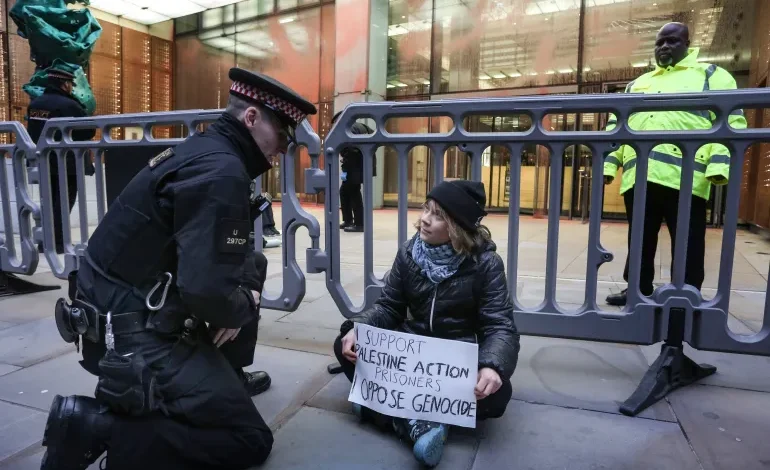
Police said a 22-year-old woman “attended the scene” later and was arrested for “displaying an item — in this case a placard — in support of a proscribed organisation … contrary to Section 13 of the Terrorism Act 2000.” Campaigners identified that woman as Thunberg.
The sign, groups said, read:
“I support the Palestine Action prisoners. I oppose genocide.”
That wording matters because Palestine Action was proscribed earlier this year — meaning public support, symbols, or promotional statements can trigger criminal liability under terrorism laws. The designation has been heavily contested by civil liberties advocates, who argue the group’s conduct amounts to criminal damage rather than terrorism.
Thunberg’s arrest also landed in the middle of an escalating row over a prison hunger strike involving activists linked to pro-Palestine direct action cases. Organizers say some detainees have been refusing food for weeks while awaiting trial, and they’ve been pushing for bail and an end to the proscription.
Police later said the woman arrested for the placard was released on bail to a date in March, as inquiries continue.
The bigger takeaway: Britain’s post-proscription crackdown has shifted from chasing dramatic acts of vandalism to policing messages — and Thunberg, who’s become a familiar face in Europe’s pro-Palestinian protests, just became the latest high-profile test case.



The latest news in your social feeds
Subscribe to our social media platforms to stay tuned