



The original story by Luke Fountain for CNBC.
If it feels like leather goods suddenly got a lot more expensive, you’re not imagining it. Boots, handbags, furniture and other leather products are getting hit hard in 2025, and industry watchers say the pain could last for years.
The culprit is a messy mix of new tariffs, global supply chain snarls and a shrinking supply of cattle hides — a perfect storm that’s driving prices higher from the factory floor to the checkout line.
Take Western bootmaker Twisted X. When President Donald Trump rolled out sweeping import tariffs in April, the company was thrown into instant crisis mode. At its headquarters in Decatur, Texas, staff turned a conference room into a full-blown “tariff war room” as shipping costs jumped, invoices fluctuated wildly and some shipments were paused mid-route.
“It was chaos,” said CEO Prasad Reddy. “Prices were changing faster than we could account for them. A lot of companies had to stop shipments entirely.”
Leather prices are rising faster than many other consumer goods, and analysts say there are two main reasons.
First, many of the highest tariffs target countries where the US sources most of its leather goods — places like China, Vietnam, India and Italy. Second, the US simply imports far more leather products than it makes.
That dependency is now expensive.
According to the Yale Budget Lab, leather goods prices could stay about 22% higher for the next one to two years. Inflation, freight costs and tariff exposure are all stacking up, with little relief in sight.
Big brands are already sounding the alarm. Tapestry, the company behind Coach and Kate Spade, told investors it expects tariff-related costs to hit $160 million, warning that profit margins will take a bigger-than-expected hit. Steve Madden executives echoed the concern, calling the latest quarter “challenging” largely because of tariffs.
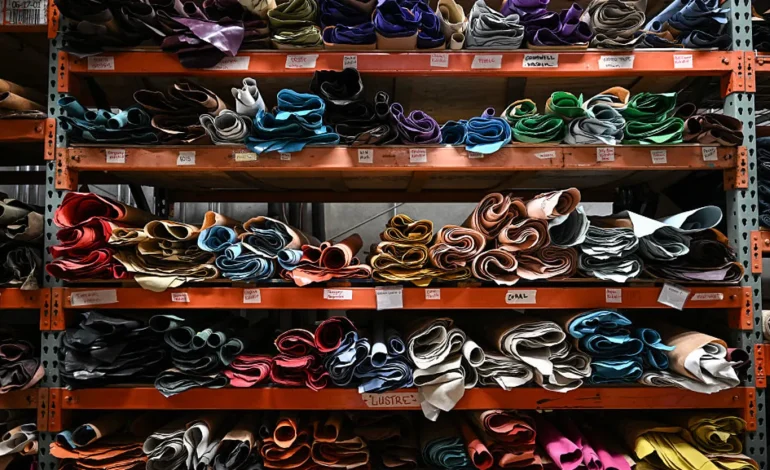
Most leather goods follow a globe-trotting journey. A hide might start on a US ranch, get tanned in Asia, stitched together in another country, then shipped back to the US as a finished product.
That system once kept prices low. Now, it’s a liability.
When tariffs hit, Chinese tanneries slowed or stopped accepting shipments. Companies rushed to move production elsewhere — only to hit bottlenecks in Cambodia and Bangladesh, long delays in Vietnam and a sudden 50% tariff slapped on many Indian leather exports.
By late summer, nearly every step of the process cost more: raw hides, tanning, assembly and shipping.
Twisted X managed to limit price hikes to about 1% to 3% this year — modest compared with competitors — but even that restraint may not hold much longer.
“Next year could be tough,” said the company’s chief marketing officer, Tricia Mahoney. “We’re more prepared now, but costs are still climbing.”
Analysts say the worst may still be ahead. As higher costs fully cycle through inventories, 2026 could be the year shoppers really feel it.
Leather footwear and accessories could rise another 22% over the next couple of years, with long-term increases closer to 7% even after things stabilize.
“That’s when companies have to decide,” said one analyst. “Do they pass costs to consumers, cut jobs, or squeeze shareholders?”
Luxury brands are already pushing prices up. Chanel’s Classic Flap bag, for example, is about 5% more expensive than last year after another round of increases this spring.
Tariffs were pitched as a way to revive US manufacturing, but leather companies say that’s not happening — at least not quickly.
America’s once-thriving tanning industry has mostly vanished. In the 1950s, hundreds of thousands of workers were employed in roughly 1,000 tanneries. Today, that workforce has shrunk to around 50,000, with only a few hundred tanneries left.
Instead of reshoring production, most brands are simply reshuffling suppliers overseas to soften the blow.
Adding to the squeeze: there just aren’t as many hides available.
The US cattle herd is the smallest it’s been since the 1950s, after years of drought, high feed costs and herd sell-offs. Since hides are a byproduct of beef and dairy production, fewer cattle means scarcer — and pricier — leather.
Even shoppers thinking of switching to “fake leather” won’t escape the impact. Many synthetic materials rely on petrochemicals sourced from Asia, which are also subject to tariffs. Those products are seeing mid- to high-single-digit price increases, too.
From cowboy boots to designer handbags, leather goods are caught in a long-term cost crunch. With tariffs locked in, supply chains strained and raw materials in short supply, industry experts say shoppers shouldn’t expect relief anytime soon.
For now, higher prices aren’t a temporary spike — they’re the new normal.


The latest news in your social feeds
Subscribe to our social media platforms to stay tuned