




The original story by and
Elon Musk helped kickstart the legend of the “PayPal Mafia,” that early-2000s crew of founders and execs who went on to shape Silicon Valley. Now there’s a new alumni network getting the spotlight — and this one comes with rocket fuel.
Call it the SpaceX Mafia: a fast-growing group of former SpaceX employees who’ve spun out to launch their own companies — many of them hard-tech, aerospace, defense, and industrial startups — and they’re pulling in serious money and even more serious attention.
By the numbers, it’s not a small trend. Startups led by ex-SpaceX people have raised more than $3 billion in venture funding, according to PitchBook data and the founders themselves. And this isn’t “friends and family” cash. We’re talking heavyweight backers like Andreessen Horowitz (a16z), Founders Fund, 8VC, and other top-tier firms that tend to bet big when they think a category-defining company is being built.
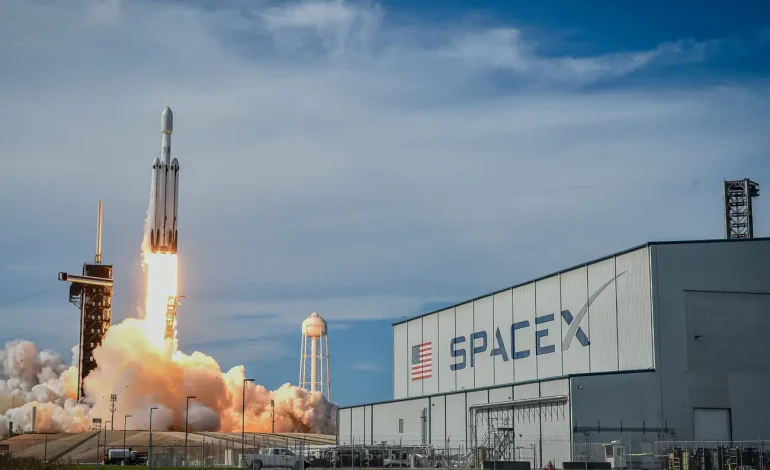
It helps that SpaceX itself is sitting at the center of the current tech-industrial hype cycle. The company reportedly launched an insider share sale in December valuing it around $800 billion, putting it at the top of the private-company leaderboard. With talk of an IPO as soon as 2026, investors aren’t just watching SpaceX — they’re scouting the “next SpaceX,” and the people who know how that machine works.
That’s where the SpaceX Mafia idea becomes more than a cute nickname. If a company becomes a training ground for people who then go build the next wave of companies, investors start treating it like a talent factory. That’s what happened with PayPal. It’s what happened with early Google. And it’s increasingly what people are saying is happening with SpaceX.
A big theme across these founders is ownership — not in the “I own equity” way, but in the “if it breaks, it’s your problem” way. Multiple former employees describe SpaceX as an “engineering bootcamp” where you’re expected to understand a system end-to-end, move fast, simplify aggressively, and get to hardware.
That matters because a lot of startups don’t fail from lack of ideas — they fail because execution is messy, slow, expensive, and full of unknowns. SpaceX alumni are basically trained in chaos management.
You see the same lessons repeated in different voices:
- “Extreme ownership” — being responsible from early design through build and operations.
- Breaking impossible problems into smaller ones, then solving them quickly.
- A culture that rewards speed, clarity, and low ego over polished presentations.
- Constant pressure to ship real things, not just prototypes and promises.
Put differently: the SpaceX vibe isn’t “move fast and break things.” It’s more like “move fast, and if the thing breaks, you fix it tonight.”
A lot of SpaceX Mafia startups live in the obvious neighborhood: satellites, propulsion, launch-adjacent infrastructure, space logistics. But some go way beyond that into healthcare, manufacturing software, building materials, and retail tech.
A few examples from the list of companies led by former SpaceX employees:
- Apex Space (cofounder Max Benassi): building mass-manufactured satellite platforms; the company says it’s raised more than $500 million and has 230+ employees.
- Impulse Space (Tom Mueller, former SpaceX propulsion CTO): spacecraft designed to move satellites and cargo between orbits; the company says it’s raised $525 million.
- K2 Space (Neel Kunjur): building larger satellites across multiple orbits; reported $450 million raised.
- Epsilon3 (Laura Crabtree): software for engineering, assembly, and testing workflows in space and beyond; raised $18.92 million (PitchBook).
- First Resonance (Karan Talati): manufacturing software for hard-tech companies like air taxis and nuclear tech; $32 million raised.
- Levels (Josh Clemente): metabolic health tracking using continuous glucose monitoring; $57 million raised.
- Reliable Robotics (Robert Rose, Juerg Frefel): automation software for aircraft flight; $134 million raised.
- Varda Space Industries (Will Bruey): in-space manufacturing (pharma, materials) and returning products to Earth; $329 million raised.
And then there are companies that signal how wide the alumni footprint is getting:
- PicnicHealth (Troy Astorino): medical records and research data platform; $100M+ raised.
- Plantd (Nathan Silvernail, Huade Tan): carbon-negative building materials from grasses; $42 million raised.
- Vori (Robert Pinkerton): analytics and operations software for smaller grocery chains; $27.9 million raised.
So no, it’s not all rockets. But even the non-space companies sound like they’re run by people who learned how to build systems under pressure.
The investor list reads like a roll call of “we like ambitious, technical founders” firms: a16z, Founders Fund, Lux Capital, Lightspeed, Craft Ventures, and others. That tells you the bet isn’t only on any single market. It’s on a founder profile: people who have already lived inside an org where “hard things” are normal.
It’s also a sign that Silicon Valley’s obsession with software-only growth stories has shifted. Hardware, industrial tech, defense, and space are back in fashion — and SpaceX alumni sit right at the intersection of those worlds.
The SpaceX Mafia is becoming a real phenomenon because it checks three boxes investors love:
- Proven training ground (SpaceX);
- Founder network that shares talent, advisors, and credibility;
- A market moment where space + defense + industrial tech are hot again.
If SpaceX eventually goes public, expect this alumni ecosystem to get even louder — more founders, more funding, more “ex-SpaceX” name-dropping in pitch decks.
Because in tech, success doesn’t just create competitors. It creates graduates. And right now, a whole lot of SpaceX graduates are out raising billions and building their own launchpads.


The latest news in your social feeds
Subscribe to our social media platforms to stay tuned