




Warm December Has Some Wyoming Grizzlies Still Awake — Here’s What That Means for Hikers

The original story by Mark Heinz for Cowboy State Daily.
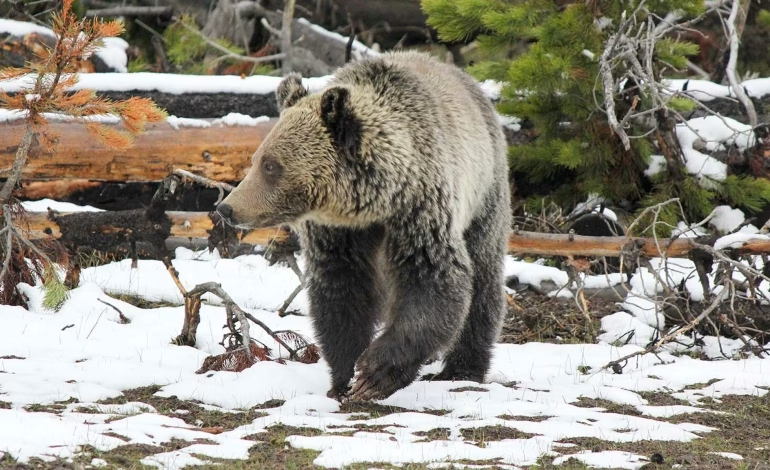
If you’ve been enjoying Wyoming’s weirdly spring-like weather lately, you’re not alone — a few grizzly bears seem to be taking advantage of it, too.
Most grizzlies are usually tucked into their dens by now, full from fall feasting and ready to sleep through winter. But this year’s warm stretch has kept some bears roaming later than normal, which means anyone heading out for a hike should act like it’s still bear season.
Retired federal ecologist Chuck Neal of Cody says he’s been seeing fresh grizzly tracks even at Christmastime, and the sign looks like it’s mostly coming from big bears.
“Anyone who is planning on hiking in bear country this time of year, I would recommend they carry bear spray,” Neal said.
Grizzlies typically start denning up in late October or early November, but Neal says it’s not unheard of for a handful to stay active — especially when the weather gives them a reason to wander.
Even in an average year, some bears pop out during warm spells. Neal says it’s usually large, mature males, and sometimes younger males that don’t seem fully committed to sleeping in.
When the temps rise and snow cover stays light, a few of them basically go on a winter stroll — not common, but not shocking either.
Bear safety expert Kim Titchener says temperature plays a role, but it’s not the main switch that flips a bear into hibernation mode. The biggest factor is food availability.
In fall, bears enter hyperphagia — the all-you-can-eat stretch where they pack on fat for winter. That can include:
- gut piles and carcass remains from hunters;
- wild berries;
- roots and other plants.
Once those easy calories start disappearing, most bears head to their dens.
“It’s more the lack of food (than weather) that gets bears to go to bed,” Titchener said, adding that cooler temps still help encourage it.
She also notes that a single warm December doesn’t automatically rewrite bear behavior — but long-term warming trends could.
Over time, she says, climate change could keep plants growing later into fall, which may stretch out the feeding season and potentially keep more bears up longer.
Cody hunter and conservationist Joe Kondelis says bears seem biologically tuned to den at roughly the usual time, mostly based on seasonal cues and food.
Still, he agrees grizzlies can reemerge if conditions stay mild — especially in lower elevations.
Most dens are higher up where snow sticks around longer, and Kondelis says Wyoming’s high country has still been getting storms. So while the backcountry up high may be settling into winter, lower areas could still see bears moving around.
Simple: if you’re hiking in bear country right now, don’t treat it like a bear-free season.
- Carry bear spray and keep it accessible;
- Stay alert (especially near brushy areas and creek bottoms);
- Assume a bear could be out, even if it “feels” like winter.
Because this year, at least in parts of Wyoming, it kind of isn’t winter — and a few grizzlies apparently got the memo.

The latest news in your social feeds
Subscribe to our social media platforms to stay tuned