


Iraq parliament picks Haybat al-Halbousi as speaker, clearing first hurdle to new government
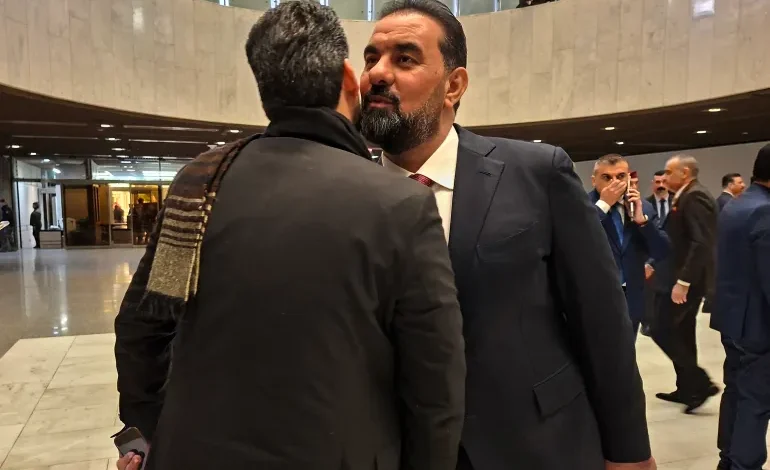

Iraq’s newly elected parliament has chosen Haybat al-Halbousi as its speaker, marking the first concrete step in forming a new government after months of political uncertainty.
According to Iraqi media reports on Monday, citing parliament’s media office, al-Halbousi of the Sunni Taqaddum (Progress) Party won a decisive victory, securing 208 votes. His two rivals trailed far behind, with 66 and nine votes respectively.
Al-Halbousi’s support base lies mainly in Iraq’s Sunni-majority west and north, and his election allows parliament to formally move ahead with the next stages of government formation following the November 11 vote.
Under Iraq’s long-standing muhasasa power-sharing system, the speaker of parliament is a Sunni consensus figure, elected during the legislature’s first session alongside two deputies.
That bloc is the Shia Coordination Framework (SCF), but its internal dynamics are far from settled.
Despite pressure from Supreme Judicial Council President Faiq Zaidan to respect the constitutional 90-day deadline for forming a government, few in Baghdad expect a quick outcome. Past experience suggests otherwise: after the 2021 election, negotiations dragged on for more than 300 days.
The central question now is who the SCF will put forward as prime minister.
Incumbent Prime Minister Mohammed Shia al-Sudani was originally nominated by the SCF four years ago, but this time he attempted to distance himself from the alliance, running an independent list. His Reconstruction and Development Coalition performed strongly, winning about 46 of parliament’s 329 seats.
That manoeuvre was short-lived. A Federal Supreme Court ruling last month effectively pushed al-Sudani back under the SCF’s umbrella, placing him once again at the mercy of an alliance dominated by powerful figures who often operate outside parliament itself.
The SCF must now decide whether to back al-Sudani again or put forward an alternative candidate, even as its own composition has shifted sharply.
Of the SCF’s roughly 180 lawmakers, an estimated 80 to 90 are linked to Shia parties with pro-Iran, anti-West armed wings, many of which are under United States sanctions. In 2021, similar groups held just 17 seats.
That surge is likely to complicate not only Iraq’s relations with Washington and regional actors, but also internal Shia politics, where resentment of Tehran’s influence remains strong.
Al-Halbousi’s election brings procedural momentum, but it does little to resolve the deeper power struggles that will shape who ultimately governs Iraq.

The latest news in your social feeds
Subscribe to our social media platforms to stay tuned