





Who is behind the $5m ad blitz against Georgia’s lieutenant governor?
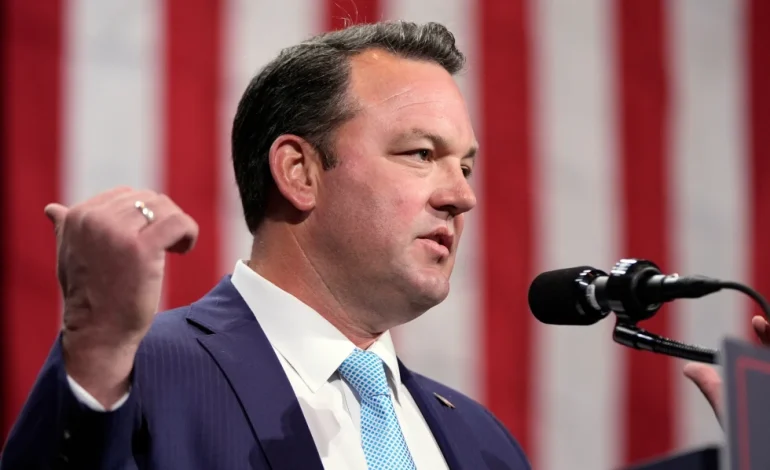

An outfit calling itself “Georgians for Integrity” has poured roughly $5m into television ads, mailers and text messages accusing Jones of using his office to enrich himself. The group’s spending has been so heavy that, for many Georgians sitting down to watch football since Thanksgiving, the ads have been almost impossible to avoid.
The timing is no accident. Jones, already endorsed by President Donald Trump, is running for governor next year, and the Republican primary will be decided in May. The ads mark the opening shots of that contest. They also offer a textbook example of how dark money is shaping state-level politics, not just federal races, with anonymous groups dropping huge sums to sway public opinion while keeping donors hidden.
Jones and his campaign are furious. They have threatened legal action against television stations that continue to air what their lawyer calls “demonstrably false” and slanderous claims. So far, the ads are still running.
“They want to be anonymous, spend a lot of money, and create a lot of lies about myself and my family,” Jones said in a December 16 interview on WSB-AM, calling the ads “fabricated trash”.
Jones’s main Republican rivals, Attorney General Chris Carr and Secretary of State Brad Raffensperger, say they have nothing to do with the campaign. All three are vying to replace term-limited Governor Brian Kemp, with multiple Democrats also in the race.
The Georgia Republican Party has filed a complaint with the State Ethics Commission, arguing that the ads violate state law by spending money to influence an election without registering or disclosing donors.
“I think there are far-reaching consequences to allowing this activity to go forward unchecked,” Georgia GOP chairman Josh McKoon told The Associated Press. “And the consequences are much broader than the outcome of the May primary.”
Legal experts say the dispute reflects the long shadow of the US Supreme Court’s 2010 Citizens United ruling, which opened the floodgates to independent political spending.
“Dark money is becoming more and more the norm in races, up and down the ballot, and at early times,” said Shanna Ports, senior legal counsel at the Campaign Legal Center.
Accusations of self-dealing against Jones are not new. Carr has been making similar claims for months. But the campaign escalated sharply after Georgians for Integrity was incorporated in Delaware on November 24. The group is registered as a nonprofit “social welfare” organisation, a structure that allows political spending while shielding donor identities.
Jones’s campaign says the ads misleadingly suggest he enabled the use of eminent domain to benefit his family’s interest in a massive data centre project in his home county south of Atlanta. Jones did vote in 2017 for a law creating a narrow exception to Georgia’s ban on transferring condemned land to private developers. But state filings show eminent domain is not being used for the $10bn project, which could include up to 11 million square feet of data centres.
Trying to trace who is actually paying for the ads has led to dead ends. Georgians for Integrity lists its local address as a mailbox at an Atlanta office supply store. A media buyer named Alex Roberts, with an address in Park City, Utah, appears on paperwork filed with TV stations but has not responded to questions. Neither has a Columbus, Ohio-based lawyer listed on incorporation documents.
Under Georgia law, the Republican Party argues, the group qualifies as an independent committee. Such committees can raise and spend unlimited funds, but they must register before taking contributions and disclose who is giving the money.
The legal gray area lies in how the ads are framed. They never mention Jones running for governor or refer to the 2026 election. Instead, they urge viewers to call his office and “Tell Burt, stop profiting off taxpayers.”
McKoon dismisses that distinction.
“If you are funding a message that is designed to impact an election, and I think it strains credulity to argue that that is not the case here, then you ought to have to comply with the campaign finance laws that the legislature has seen fit to pass,” he said.


The latest news in your social feeds
Subscribe to our social media platforms to stay tuned