


UN Security Council Rebukes Israel Over Somaliland Recognition, US Stands Apart

Most members of the United Nations Security Council have sharply criticised Israel’s decision to recognise Somaliland, warning that the move threatens Somalia’s territorial integrity and could carry dangerous consequences far beyond the Horn of Africa, including for Palestinians in Gaza.
At an emergency meeting in New York on Monday, 14 of the council’s 15 members condemned Israel’s formal recognition of the self-declared breakaway region of Somalia. The United States was the lone exception. While Washington defended Israel’s right to establish diplomatic ties, it stressed that US policy on Somaliland remains unchanged.
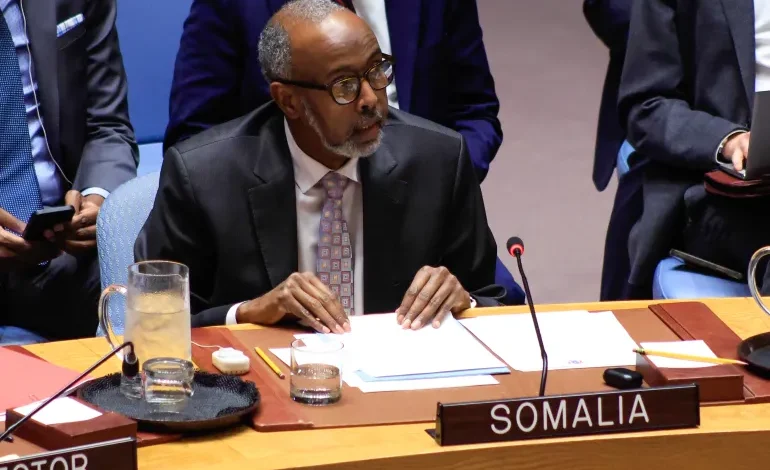
Somalia’s UN ambassador, Abu Bakr Dahir Osman, urged the council to reject what he called Israel’s “act of aggression”, warning that it risks fragmenting Somalia and destabilising the Horn of Africa and the Red Sea corridor.
Osman said Mogadishu is particularly alarmed by concerns that Israel’s move could be linked to plans to forcibly “relocate the Palestinian population from Gaza to the northwestern region of Somalia”.
“This utter disdain for law and morality must be stopped now,” he told the council.
Israel last week became the first country to formally recognise Somaliland as an independent and sovereign state, prompting Somalia to request the emergency session.
Reporting from UN headquarters, Al Jazeera’s Gabriel Elizondo said the meeting exposed near-total isolation for Israel on the issue. “Fourteen of the 15 council members condemned Israel’s recognition of Somaliland,” he said, while the US “defended Israel’s action but stopped short of following Israel’s lead”.
US deputy ambassador Tammy Bruce told the council that “Israel has the same right to establish diplomatic relations as any other sovereign state”. However, she added that Washington had “no announcement to make regarding US recognition of Somaliland, and there has been no change in American policy”.
Israel’s deputy UN ambassador, Jonathan Miller, sought to downplay the fallout, telling members that the decision was “not a hostile step toward Somalia, nor does it preclude future dialogue between the parties”.
“Recognition is not an act of defiance. It is an opportunity,” Miller said.
Several delegations tied Israel’s recognition of Somaliland to wider fears over the war in Gaza and the possibility of forced displacement of Palestinians.
Speaking for the Arab League, UN envoy Maged Abdelfattah Abdelaziz said the group rejected “any measures arising from this illegitimate recognition aimed at facilitating forced displacement of the Palestinian people, or exploiting northern Somali ports to establish military bases”.
Pakistan’s deputy UN ambassador, Muhammad Usman Iqbal Jadoon, described Israel’s move as “deeply troubling”, especially given “previous references to Somaliland of the Federal Republic of Somalia as a destination for the deportation of Palestinian people, especially from Gaza”.
Permanent Security Council members China and the United Kingdom also rejected Israel’s decision. China’s UN ambassador Sun Lei said Beijing “opposes any act to split” Somalia’s territory.
“No country should aid and abet separatist forces in other countries to further their own geopolitical interests,” Sun said.
South Africa, invited to address the council as a non-member, echoed those concerns. Its UN ambassador, Mathu Joyini, said Pretoria “reaffirmed” Somalia’s sovereignty and territorial integrity in line with international law, the UN Charter and the African Union’s founding principles.
Bruce drew controversy by comparing Israel’s recognition of Somaliland with international recognition of Palestine.
“Several countries, including members of this council, have unilaterally recognised a non-existent Palestinian state, yet no emergency meeting has been convened,” she said, accusing the council of “double standards”.
That argument was quickly rejected. Slovenia’s UN ambassador, Samuel Zbogar, said the situations were not comparable.
“Palestine is not part of any state. It is illegally occupied territory… Palestine is also an observer state in this organisation,” Zbogar said. “Somaliland, on the other hand, is a part of a UN member state, and recognising it goes against the UN Charter.”
Somaliland declared independence from Somalia in 1991 following the collapse of the regime of military ruler Siad Barre. Despite operating with its own government, currency and security forces for more than three decades, it has never been recognised by the international community until Israel’s move last week.

The latest news in your social feeds
Subscribe to our social media platforms to stay tuned