


A Feast Delayed: How a Warm Winter is Starving Yellowstone’s Boneyard

Spring comes early to a hidden valley in Yellowstone. It is not signaled by blooming flowers, but by death. This secluded area, known to a handful of wildlife experts as the boneyard, is where the park’s great herds of elk and bison traditionally go to die. It is a grim, annual event that has, for millennia, served as the foundation for spring’s renewal. But this year, an unusually warm winter has left the boneyard silent and the park’s predators waiting.
The Season of Bones
The boneyard operates on a brutal, natural schedule. By the tail end of winter, elk and bison have exhausted their fat reserves, surviving on meager forage. Drawn to one of the first places in the park to green up, they gorge on tender new grass. For animals whose digestive systems have spent months processing woody browse, the rich food is a shock. It often proves fatal, especially for the old and weak, leading to rapid dehydration and collapse.
This mass die-off, typically peaking in March, is not a random tragedy. It is an ecological catalyst. The accumulation of carcasses creates a concentrated pulse of nutrients, perfectly timed for the emergence of grizzly bears from hibernation and the denning of wolves with new pups. For scavengers like eagles and ravens, it is a seasonal bonanza that fuels reproduction.
The Unusual Quiet of a Warm Year
The winter gripping the Northern Rockies has been historically mild, with record-low snowfall and temperatures soaring well above average. For the elk and bison, this has been a reprieve. Easier movement and greater access to forage mean herds are entering spring in stronger condition. The physiological desperation that drives them to the boneyard and makes them vulnerable to the “green-up” has been diminished.
The silence in the boneyard echoes up the food chain. Wildlife filmmaker Casey Anderson, who has documented the site, notes the shift. “When there’s little to no snow on the ground, it’s easier for prey animals to flee,” he says, pointing out that predator hunting success plummets. More critically, the expected windfall of carcasses—the easy calories that bear and wolf populations have come to rely on in lean spring months—has not materialized.
“The tables turn in herbivores’ favor,” Anderson observes. “It’s going to be a tough time for our scavengers and predators if this winter stays this way.”
A Landscape of Relics, Left in Place
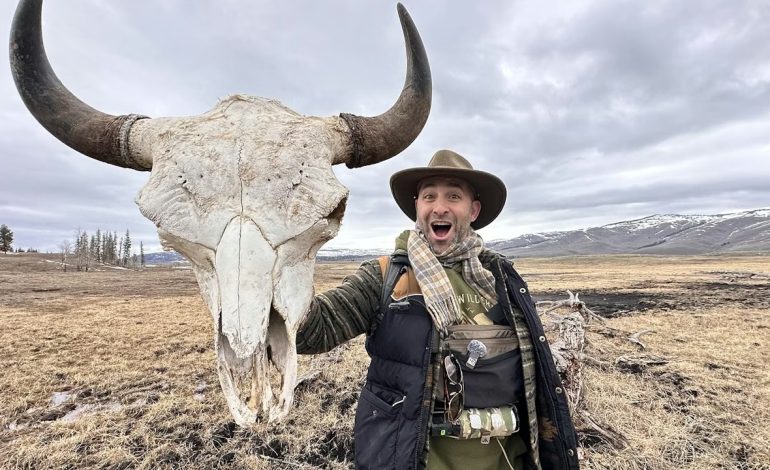
For the rare human visitor, the boneyard in a typical year is a stark and humbling landscape. Outdoor influencer Coyote Peterson, who accompanied Anderson, described it as akin to the elephant graveyard from The Lion King, a valley littered with skulls and bleached bones. They discovered the skull of a bull elk with antlers so immense they seemed to belong to a prehistoric age.
These remains are left exactly as found. Federal law strictly prohibits the removal of any natural object from Yellowstone. The bones are not souvenirs; they are part of the ecosystem’s economy, slowly returning calcium and phosphorus to the soil to feed the very grasses that will one day lure another generation to its end.
The quiet anxiety now is not about the deaths that happen in the boneyard, but about the deaths that haven’t. The park’s intricate web of life depends on a rhythm of extreme seasons. A single warm winter disrupts that rhythm, leaving predators to hunt harder and scavenge farther. Yellowstone’s spring rebirth is being tested, waiting for a feast that is ominously late.



The latest news in your social feeds
Subscribe to our social media platforms to stay tuned