





With input from AlJazeera, Reuters, the Guardian, Deutsche Welle, and Bloomberg.
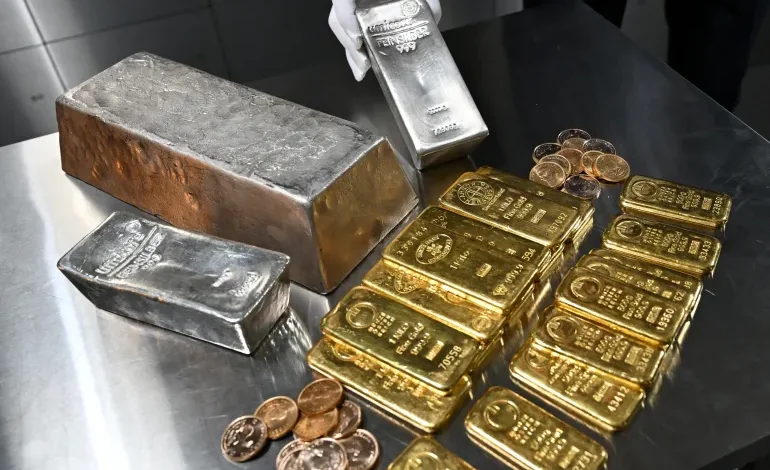
Gold and silver ripped to crazy new highs last week, then gave a chunk of it back in a matter of days. Prices shot up to record territory – gold near about $5,595 an ounce and silver roughly $122 – only to plunge sharply on Friday and slide again on Monday, before clawing back some ground on Tuesday. So why the rollercoaster? Short version: a mix of politics, crowded bets, and margin calls.
Investors piled into bullion as a hedge against political and economic uncertainty. The return of Donald Trump to the White House – and the unpredictable policy moves that come with it – helped weaken the dollar and turbo-charge demand for assets that don’t have a counterparty.
Emerging-market central banks (think China, Turkey and others) kept buying gold to diversify reserves, which added serious, steady demand.
Heavy buying of call options forced some sellers to buy the metal itself to hedge, creating a feedback loop that pushed prices higher and attracted speculators chasing momentum.
On Friday, Trump’s nomination of Kevin Warsh for Fed chair flipped sentiment. Warsh is seen as a more orthodox pick, which lifted the dollar and reduced the idea that ultra-easy US policy would keep pushing metal prices up.
Over the weekend COMEX raised margin requirements for futures traders. That forced many leveraged players to either add cash or dump positions – and with liquidity thin, selling cascaded into huge price moves.
Prices had gone parabolic and positions were crowded. Once some players hit the exit, the unwind snowballed – classic “too many people on one side” risk.
Leveraged speculators got burned. Traders described the unwind as one of the most violent since past crises, with liquidity disappearing at the worst possible time and forced sales amplifying the plunge. That wiped out a lot of froth and many leveraged bets, which is part of why prices rebounded a bit afterwards.
After the brutal drop, both metals recovered some losses on Tuesday: gold jumped several percent off its lows and silver climbed back as well. Analysts say the clean-out of speculative positions could actually make the market healthier – though it also makes short-term moves more dramatic.
The structural drivers that pushed gold higher (dollar weakness, central-bank purchases and anxiety about debt and policy) haven’t vanished, so many strategists still expect gains over the medium term.
Silver’s fundamentals (industrial demand from electronics, AI and green tech) give it an extra leg up compared with pure safe-haven gold, so some analysts think silver can keep rising once volatility calms.
Expect more spasms. The recent shock showed how quickly crowded trades can unwind. Until the market fully digests those forced sellers and margin changes, wild intraday swings are likely.
This was less a change in the big story for gold and silver than a brutal correction in an overheated rally. The long-term bull case hasn’t been universally killed – but anyone who thought the metals’ record run would be a smooth cruise is in for more turbulence.



The latest news in your social feeds
Subscribe to our social media platforms to stay tuned