


Humans, Not Robots, Are Still Wyoming’s Best Bet for Beating the $600 Million Road Repair Crunch

The question isn’t whether robots can fix a road. It’s whether Wyoming can afford to wait for them.
As the state stares down a $400 to $600 million shortfall in road repair funds over the next two years, futuristic promises of cheap, automated labor offer a tempting vision. Ask an AI model, and it will cheerfully predict fleets of zero-human machines patching pavement 40% faster at half the cost by 2030.
But talk to the people who actually build Wyoming’s roads, and you’ll hear a story grounded in mud, gravel, and hard economics. The consensus is clear: for the massive, immediate challenge at hand, robots are a distant dream, not a viable budget fix.
The Multibillion-Dollar Price Tag of a Robot Future
The first and tallest hurdle is one of pure cost. While an AI might cite a unit price of $500,000 for a single machine, industry veterans paint a starkly different financial picture.
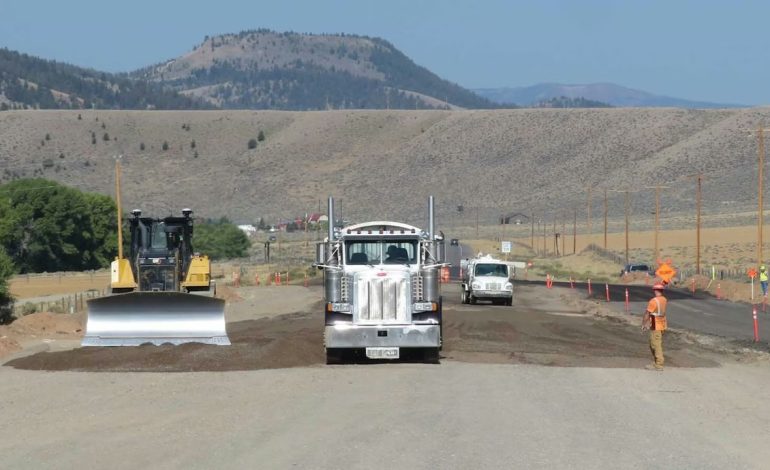
“On a small paving project, you might have seven dump trucks, a paver, and multiple rollers,” explains Dan Benford, Executive Director of the Associated General Contractors of Wyoming. “And that’s just laying asphalt. You also need graders, dozers… a job site could have 10 to 15 different machines.”
Automating that entire fleet isn’t a simple purchase; it’s a staggering capital investment. Benford estimates outfitting for a single project could run $5 to $7 billion. For a contractor running multiple jobs across the state? “Now you’re talking $10 to $20 billion upfront,” he says.
For an industry that survives on competitive, thin-margin bids, such a gamble on unproven technology is a non-starter. “Most Wyoming contractors wouldn’t be in a position to spend that kind of money,” Benford states.
The Unmapped Terrain of Real-World Chaos
Beyond the price tag lies a world of logistical chaos that today’s robotics can’t navigate. The controlled environment of a highway model doesn’t account for Wyoming’s reality.
“Those self-driving cars need very well-painted roads,” Benford notes, pointing out their known struggles in construction zones. “If we can’t get our self-driving cars to be fully autonomous and trustworthy, how are we going to let these heavy machines become that and build the roads?”
The technology lacks the sophisticated judgment to handle a child chasing a ball onto the worksite, an unexpected rockfall, a sudden weather change, or the thousand other variables a veteran foreman adjusts for instinctively. As retired robotics professor Lynne Parker puts it, “There’s just a lot of constraints that make it hard for robot systems to do everything as perfectly as a human mind.”
Lessons from the Field: When “Efficiency” Creates More Work
Skepticism is fueled by real-world stumbles. Rhett Carter, a plumber who has worked on tech-forward sites, recalls a Utah project where a wall-building robot, akin to a “Roomba,” failed spectacularly.
“It was way off, way wrong,” Carter says. The automated work had to be completely torn out, idling tradespeople for an extra week. “Roads are different but not really,” he adds. “If it’s in the wrong place, that’s not going to work.”
The Pragmatic Path: Augmenting, Not Replacing
This doesn’t mean technology has no role. The practical future isn’t full automation, but augmentation. Experts point to near-term, cost-effective aids:
· AI-Powered Inspection: Cameras on county trucks can automatically scan for and catalog potholes, creating a prioritized master repair list.
· Remote-Controlled Machinery: Following the mining industry’s lead, a single operator in a trailer could control multiple dozers or rollers remotely, improving safety on dangerous slopes.
· Targeted Task Bots: Small robots dedicated to repetitive, precise tasks like sealing cracks or painting lines.
These tools make human crews more efficient and data-driven. They don’t attempt to replace them.
The Human Equation
Finally, there’s the question of what is lost in a push for automation. “These are great-paying jobs for skilled people,” Benford emphasizes, highlighting the societal cost of eliminating such roles. Carter frames it simply: “AI will be taking the job… but we still have to figure out a way to still be paying people.”
For a state with an immediate, nine-figure funding crisis, the solution won’t be found in a decade’s-time robotics. It will be found in practical policy, smart investment, and the skilled hands of the workforce that has always built Wyoming. The robots can wait; the roads can’t.



The latest news in your social feeds
Subscribe to our social media platforms to stay tuned