





Armenian prisoners in Azerbaijan: loose ends while leaders shake hands
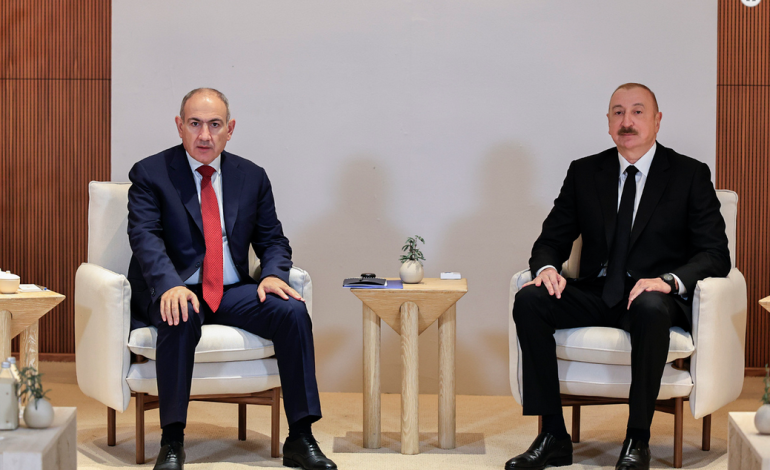

Abu Dhabi, a plush hall, two leaders on opposite sides of a small table – and a set of human stories that still haven’t been tied up. On 4 February 2026, as Prime Minister Nikol Pashinyan and President Ilham Aliyev smiled for cameras, praised trade corridors and celebrated what they called the “benefits of peace on the ground,” there was a stubborn, public counterpoint: at least 19 Armenians remain in Azerbaijani custody, and domestic and diaspora activists are working overtime to make sure those names don’t disappear from the diplomatic ledger.
This is the messy afterlife of a conflict that, for decades, was as much about identity and memory as it was about maps and borders. The new choreography – summitry, Zayed awards, ceremonial handshakes – is attractive. It’s also incomplete. The diplomatic script now being performed contains a gap where prisoners, accountability and closure should be. That gap is what this article tries to map: the facts on the table, the actors pushing from below and abroad, and the political logic that explains why a resolution to these “loose ends” is proving so intractable.
The official communiqués from Abu Dhabi were crisp about progress. Armenia’s press office described the meeting as welcoming “the progress achieved in the implementation of the outcomes of the Washington Peace Summit,” noting bilateral trade, Azerbaijani exports of oil products to Armenia, and new transit routes for grain and other goods. The two sides also agreed to explore more economic cooperation and confidence-building measures. It was, by most diplomatic standards, a tidy paragraph of forward motion.
But read between the lines and you find the omissions: the public statements do not squarely resolve the legal and humanitarian questions surrounding detainees, nor do they outline a clear mechanism for their return – even as civil society groups and overseas Armenians demand action. In short: lots of texture to the “benefits of peace” claim, and a conspicuous lack of closure where it matters most for families and communities.
Armenpress reports that the French National Assembly adopted a resolution calling for the release of Armenian captives held in Azerbaijan and lists 19 remaining detainees – high-profile figures including former Nagorno-Karabakh political leaders and senior officials. The Armenian state’s public communications and independent outlets have repeatedly named former presidents and ministers among those still detained. That is not a small number, and it’s not a group of anonymous footnotes: these are people whose detention has political symbolism and legal consequences.
For families and activists, the stakes are immediate and human – fathers, mothers, colleagues, commanders, former administrators. For policymakers, the stakes are diplomatic and legal: how do two states that are trying to normalize relations resolve allegations of unlawful detention, possible mistreatment, and the legal status of people captured in the fog of the last rounds of conflict? The public discussion has not landed on a single, transparent path to resolution.
If Yerevan and Baku are speaking quietly in hotel lobbies, Armenian opposition activists and diaspora organizations have taken a louder tack in the capitals of Europe and North America. Former officials and opposition figures have crisscrossed diaspora hubs, announcing talks in Paris and the US, pushing for parliamentary and civil-society pressure on governments to raise the prisoner issue. Those mobilizations are not symbolic; recent coverage highlights lobbying aimed at parliaments and foreign ministries, plus public campaigns to keep the story visible in the international media.
One obvious outcome: the French National Assembly vote. With 183 votes in favor and none against, the resolution demanding the release of Armenian captives is a diplomatic arrow in the opposition’s quiver – a public rebuke to any normalization that moves forward without securing the return or fair adjudication of detainees. It’s also a reminder that the diaspora can be a diplomatic amplifier when domestic institutions feel constrained.
There are several reasons why detainees remain a thorny issue.
First, legal ambiguity. Were these people prisoners of war? Criminal detainees? Political hostages? Different labels trigger different legal regimes: the Geneva Conventions, bilateral agreements, domestic criminal codes. Absent transparent judicial processes or a mutually agreed mechanism, each side accuses the other of impropriety and delays. That ambiguity gives states room to maneuver politically – and families no clarity.
Second, bargaining power. In a normalization process that includes trade, transit and symbolic concessions, detainees can become bargaining chips – grim leverage for negotiating concessions that go far beyond prison doors. That is the cynical arithmetic of many peace processes: human beings become part of the ledger in deals that mix security guarantees, economic incentives and political symbolism. The more comprehensive the normalization package, the greater the temptation to hold cards close.
Third, domestic politics. For both leaders, how this question is handled has an audience at home. Pashinyan faces a tense domestic environment where opposition groups are vocal and the electorate sensitive to human-rights imagery. Aliyev faces his own political calculations. Neither leader wants to be seen as giving ground without getting something concrete in return. That dynamic slows movement and complicates transparency.
The Abu Dhabi meeting referenced the Washington summit outcomes and emphasized practical flows: oil products, grain transit, and budding trade. Those are the visible tokens of normalization. But the harder legal work – mechanisms for investigations, independent observations, or third-party monitoring that could verify detainee treatment and secure releases – remains unresolved in public documents. In short: the ribbon-cutting has been done in places; the rulebook for dealing with these human cases hasn’t been fully written.
International actors can help, but their involvement is a double-edged sword. External mediation or monitoring could accelerate releases – think coordinated prisoner exchanges supervised by neutral entities – but it also risks being politicized if one side accuses the other of bias. For diaspora activists pushing for external pressure, that is an advantage; for leaders trying to preserve sovereignty over the normalization agenda, it is a potential loss of face. The French parliamentary resolution underscores both paths: internationalizing the issue increases pressure, and complicates bilateral bargaining.
Domestically, this is now a political front line. Opposition groups leverage the prisoner issue to mobilize diaspora sentiment and international allies; the government argues that publicizing every bargaining position risks wrecking a fragile process that has already produced trade and transit initiatives. That tension – transparency versus tactical confidentiality – is central. It’s what sharpens every statement from the prime minister’s press office and every press release from opposition figures who are trying to make the human cost visible.
At the same time, Armenian civil society and human-rights organizations have been vocal, calling for independent verification and humanitarian priorities ahead of political optics. Their demand is simple: end the anonymity, document conditions, and create legally binding mechanisms for rapid resolution. The push for accountability, not revenge, has become the civil-society chorus in diaspora hubs and inside Armenia.
Practicality matters. A credible pathway would likely include several elements:
- An internationally supervised registry and status determination process for detainees (who is held, under what charges, and by which legal authority).
- Agreed timelines for access by international monitors or humanitarian organizations.
- Conditional steps to tie phased trade and transit benefits to tangible humanitarian outcomes (e.g., phased releases or transfers).
- Public reporting to prevent the kind of rumor and politicized narrative that feeds polarization.
These steps won’t be easy: they require trust, which is thin; transparency, which some negotiators reject as strategic naivety; and third-party credibility, which the diaspora and domestic activists often insist on. But without such mechanisms, the “benefits of peace” will look unevenly distributed: goods and trade in the daylight, families and justice in the shadows.
Look past the immediate actors and you see a region where precedent matters. How the South Caucasus handles detainees will be read by capitals from Moscow to Tehran, Brussels to Washington. If normalization proceeds without addressing the humanitarian ledger, it sets a template where geopolitics trumps accountability. If, instead, Yerevan and Baku find a way to combine normalization with legally sound and visible resolution mechanisms, they create a model worth exporting. That geopolitical ripple is one reason the diaspora has been so insistent on keeping the detainee file on international agendas: it’s not just about their relatives; it’s about shaping norms.
There is no shortcut to closure on this issue. The Abu Dhabi smiles and the Zayed Award headlines reflect a diplomatic momentum that is real – trade is starting, corridors are opening, and both sides publicly speak of benefits. But trophies and traffic do not substitute for truth and resolution. Until the legal status of detainees is clarified, until independent monitors can verify treatment, and until families see their members returned or fairly adjudicated, the normalization will always have a jagged edge.
Diplomacy tends to celebrate forward motion. That’s understandable: peace is scarce and fragile, and trade and transit are tangible wins. But unfinished business festers. For Armenia, the political calculus is acute: a government that appears to prioritize image and trade over citizens in peril risks ceding moral ground to opponents. For Azerbaijan, the calculus is also acute: keeping detainees as bargaining chips risks tarnishing any veneer of goodwill and invites international censure. For the diaspora, the path is clear: keep pressing legislatures and foreign ministries, because international attention has already produced results – as in Paris and other capitals – and can move the needle.
If there’s one practical lesson from Abu Dhabi, it’s this: peace that ignores the human ledger is always provisional. The leaders may sign, the corridors may hum, and the cameras may leave. But the families of those still detained won’t stop counting. Neither should the diplomats who hope peace will outlast a summit.



The latest news in your social feeds
Subscribe to our social media platforms to stay tuned