





CNBC, Bloomberg, the Wall Street Journal, Market Watch, and Investor’s Business Daily contributed to this report.
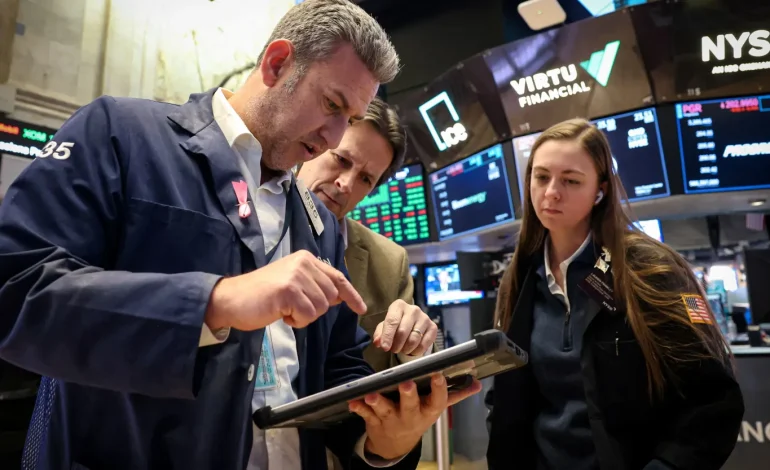
Wall Street hit the brakes again on Wednesday, with the S&P 500 slipping for a second straight session as the tech sell-off gathered steam. At the center of the turbulence was Advanced Micro Devices, whose sharp drop sent ripples through the broader market and reminded investors that the AI-fueled rally isn’t a one-way street.
The S&P 500 closed down about 0.5%, dragged lower by weakness in chips and software. The Nasdaq took the bigger hit, sliding roughly 1.5% as tech-heavy portfolios felt the pressure. The Dow Jones Industrial Average, however, managed to buck the trend, rising 148 points, or about 0.3%, thanks to strength in more defensive and value-oriented names.
The day’s tone was firmly risk-off. Even bitcoin joined the sell-off, falling around 3% after briefly dipping below the $73,000 mark, adding to a sense that investors were stepping back from crowded trades across the board.
AMD was the clear villain of the session. Shares plunged as much as 17% after the chipmaker’s first-quarter forecast failed to impress parts of Wall Street. While the company beat expectations on recent earnings, the guidance wasn’t enough for a market that has grown used to blowout numbers from anything tied to artificial intelligence. CEO Lisa Su tried to calm nerves, telling CNBC that demand has been accelerating and that AI growth is moving faster than even she anticipated. Still, reassurance wasn’t enough to stop the bleeding.
And AMD wasn’t alone. The weakness spread across the chip sector, with Broadcom tumbling about 6% and Micron Technology sinking roughly 12%. Once-darling semiconductor names suddenly looked a lot less bulletproof.
Software stocks also stayed under pressure. Oracle dropped another 6%, while CrowdStrike slid more than 2%, extending losses from the previous session. The broader tech-software space continued to unravel, with several names hitting fresh 52-week lows. There were a few exceptions, though. Microsoft managed to stay afloat, inching up about 1% and showing that investors are starting to pick favorites rather than blindly buying the whole sector.
That selective behavior is becoming a theme. As Certuity’s chief investment officer Scott Welch put it, the market has been differentiating between perceived AI winners and losers for a while now — and this week looks like a continuation of that process. In other words, not every company with “AI” in its earnings call gets a free pass anymore.
While tech sagged, the Dow found support from old-economy strength. Amgen jumped about 7% after posting better-than-expected quarterly earnings and revenue, giving the index a solid boost. Honeywell also climbed more than 1% as investors rotated into more value-leaning names.
Welch described the move as a “natural rotation.” After years of large-cap growth dominance, value stocks, small caps and even non-U.S. markets — which quietly outperformed domestic equities last year — are starting to get a second look.
“All of this has been coming for a while,” he said, and now it’s finally playing out.
On the macro front, fresh data did little to inspire confidence. ADP’s latest report showed private payrolls grew by just 22,000 jobs in January, well below economists’ expectations. The weak reading suggests a labor market that’s still limping along in a low-hire, low-fire mode. The official government jobs report is delayed due to the recent shutdown, keeping investors somewhat in the dark for now.
Tuesday’s session had already set the stage, with major indexes sliding as money flowed out of high-flying growth names and into more cyclical plays like Walmart. Big tech and AI infrastructure stocks were among the hardest hit, and Wednesday simply extended that trend.
Looking ahead, attention is turning back to earnings. Alphabet is set to report after the bell, with Amazon’s results due Thursday. With nerves already frayed, these reports could either stabilize sentiment — or add more fuel to the volatility.
For now, the message from the market is pretty clear: the AI trade isn’t dead, but it’s getting a lot more selective. And after months of near-relentless gains, Wall Street looks ready to question just how much optimism is already baked into tech stock prices.



The latest news in your social feeds
Subscribe to our social media platforms to stay tuned