


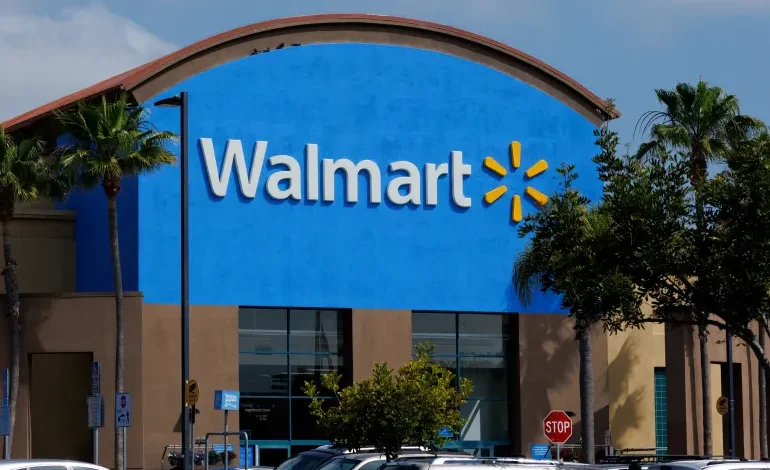

Walmart has crossed a milestone few retailers ever reach: a $1 trillion market valuation. Shares in the world’s largest big-box chain climbed to a fresh high in early trading on Tuesday, lifting the Arkansas-based company into a small and exclusive group of corporate giants whose market value now runs to 12 digits.
The rally comes at a moment when several narratives are converging in Walmart’s favour. Investors are responding to leadership changes at the top of the company and to expectations around a US-India trade deal that could significantly reshape global supply chains. By midday, the stock was up 2.1 percent, extending a surge that has been building for weeks.
With roughly 11,000 stores across 19 countries, Walmart becomes only the second retailer ever to hit the trillion-dollar mark. The only other is Amazon, which is now valued at about $2.6 trillion. Walmart now sits alongside tech heavyweights such as Apple, Microsoft, Alphabet and Nvidia in the so-called trillion-dollar club.
A major catalyst has been trade. On Monday, Donald Trump announced a deal with India that would cut US tariffs on Indian goods to 18 percent from 50 percent. For Walmart, which has been steadily shifting its supply chains away from China and deeper into India, the prospect of lower tariffs is a direct boost to margins and long-term strategy.
On Tuesday, US Trade Representative Jamieson Greer cautioned that the details of the agreement were still being finalised, including the fate of secondary tariffs linked to India’s purchases of Russian oil. Markets, however, appear less concerned about the fine print for now.
Walmart’s pivot toward India has been years in the making. According to a Reuters review of import data, the share of Walmart’s global exports sourced from India jumped from just 2 percent in 2018 to 25 percent in 2023. Over the same period, the retailer reduced its reliance on China, cutting the share of goods sourced there to about 60 percent from 80 percent. The company has said it aims to source $10bn worth of goods from India by next year.
Those shifts matter because India is strongest in categories where tariffs bite hardest. Walmart’s biggest import areas include home textiles, apparel and toys, according to data from ImportYeti. “Those are the products facing the highest tariffs, while consumer electronics and other categories have largely been shielded,” Ziemba noted. If the US-India deal takes effect, tariffs on Indian goods would be broadly comparable to those faced by exporters in Vietnam and Bangladesh, making India an even more attractive alternative.
Indian exporters are watching closely. The Federation of Indian Export Organisations said lower US tariffs would significantly boost shipments of textiles and apparel, helping Indian firms compete more evenly with their Southeast Asian peers.
Trade is only part of the picture. Walmart has also been investing heavily inside India itself and owns an 80 percent stake in the e-commerce giant Flipkart, tying its future not just to India as a factory floor but also as a consumer market.



The latest news in your social feeds
Subscribe to our social media platforms to stay tuned