



D’Amaro to Run the Mouse House — Walden Gets the Creative Crown. Here’s what that really means.

With input from CNBC, Variety, Bloomberg, the Financial Times.
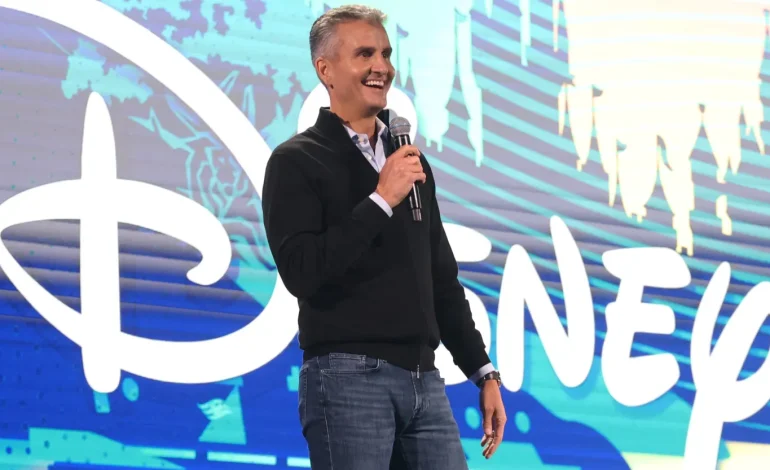
Disney made it official: Josh D’Amaro, the parks-and-experiences boss who’s spent nearly 30 years at the company, will take over as CEO on March 18. He’s the Mouse House’s eighth chief executive in more than a century — and the handoff is more than a change of faces. It’s a signal about where Disney thinks growth will come from, how the company plans to stitch together its sprawling empire, and how the studio side will be shepherded through the churn of streaming and new tech.
Quick hits first: D’Amaro, 54, has been running Disney’s “Experiences” division — parks, cruises, consumer products — a unit that just crossed $10 billion in quarterly revenue for the first time. Dana Walden, who many saw as the other top contender for the CEO job, didn’t walk away empty-handed: she’s being elevated to president and chief creative officer and will report directly to D’Amaro, taking on a bigger brief that now includes film operations. Wall Street shrugged (Disney shares ticked down after the announcement), which isn’t a surprise after a rough five years — Disney stock is down over 40% over that stretch, while the S&P 500 has more than doubled.
Why the parks guy? The board’s message — bluntly summarized by chairman James Gorman — is that they wanted someone who could run the whole business, not just a single division. “We were looking for people who had not just run good businesses, which is necessary but not sufficient, but had the ability to grow into what a CEO does,” Gorman said. That phrasing matters: the board sees D’Amaro as the sort of operator who can navigate a messy, multi-legged business where theme parks and streaming are both central.
Walden’s new job is a practical answer to an obvious gap. D’Amaro is widely respected inside Disney and brilliant at running parks — but he doesn’t have the creative pedigree or the Hollywood Rolodex that sit-at-the-top-of-the-studio-business requires. Walden is that person: a TV veteran with deep relationships across the industry. As president and chief creative officer, she’ll steer TV, film and streaming content (aside from ESPN), and act as the chief connector to the creative community. Translation: Walden will be the one keeping studios, showrunners and talent feeling seen and heard — and keeping nasty headline-grabbing fights (think Scarlett Johansson’s “Black Widow” dispute) from becoming recurring drama.
Expect an awkward few months. D’Amaro and Walden will need to calibrate the new hierarchy and manage a leadership reshuffle across Disney Entertainment and Experiences. There’ll be promotions, exits and the usual corporate musical chairs as reporting lines get rewritten. The board apparently wanted that scaffolding in place this time — a contrast with the Chapek era, when Bob Chapek, another parks-and-products veteran, took the top job without a clear creative lieutenant and ultimately bungled relations with the studio ranks.
Why the split matters strategically: Parks and cruises are cash-generators that bounced back hard post-pandemic; streaming is capital-hungry and still trying to replace the old syndication cash cow. Disney+ is finally profitable, but it’s expensive to run and hasn’t fully made up for the secular decline in licensing and syndication revenue. The board needs someone who understands both the cash-and-carry world of parks and the long, costly slog of content investment. That’s the argument in favor of D’Amaro. The counterargument is that Disney is still, first and foremost, a storytelling business — and you can’t graft a theme-park mentality onto creative decisions without consequences.
Gorman pushed back on the “it’s all parks now” take. “That is the amateur’s narrative,” he said. His point: the entertainment businesses remain huge and half the company. Under Alan Bergman’s watch, Disney added studios and produced several billion-dollar hits; Walden has shepherded TV successes and helped grow Disney+. So the board’s choice was about scale and temperament, not a bet on one silo over another.
There’s also an industry-level headache waiting in the wings: generative AI. Walden will have to wrestle with how AI changes storytelling — and how studios, networks and streamers protect creative value as production tools get democratized. She’ll also inherit the political, cultural and business risks roiling Hollywood: talent negotiations, changing ad markets, and a public increasingly skeptical of old media giants.
For investors and employees, the big immediate question is whether this pairing can reverse Disney’s long-term investor fatigue. Parks can lift earnings quickly; hits on streaming and in theaters can take longer and cost a lot. The honeymoon will be short if the markets don’t see early signs of better margins or clearer strategic coherence.
Bottom line: this is a compromise that looks engineered to reduce risk. D’Amaro gets the top job because he runs the cash machine that underwrites Disney’s broader ambitions. Walden gets the creative reins because the board knows content credibility can’t be an afterthought. Whether the arrangement delivers growth, healed studio relationships, and fewer headline scandals — that’s the work that starts now.


The latest news in your social feeds
Subscribe to our social media platforms to stay tuned