



EXCLUSIVE: A US Take on Armenia’s Strategic Realignment

Armenia’s strategic flip from a conflict-first survival mode to a “connect-and-compete” posture has been one of the more surprising geopolitical stories of the past year. For Washington, the shift looks like a rare win: a small state choosing market-friendly reform, European integration, and US-led connectivity projects over reflexive dependency on Moscow. But beneath the ribbon-cutting photos and diplomatic soundbites lies a knottier story – one of awkward optics, dicey implementation, and the very real risk that bigger powers (and domestic politics) will turn a promising pivot into a political headache.
This feature maps how the US sees the Armenian realignment, why Washington is rolling high-stakes chips into the South Caucasus, and where the strategy could trip on the rocks of regional rivalries and local politics.
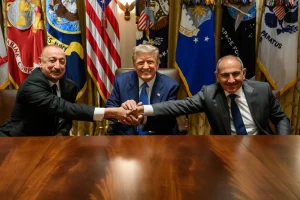
Start with the headline fact: a four-decade-old axis of tension between Armenia and Azerbaijan has begun to thaw into normalization, with transport connectivity and economic ties at the center of the bargain. That process accelerated through US-hosted diplomacy in 2025 and culminated in public declarations signed by Armenian Prime Minister Nikol Pashinyan, Azerbaijani President Ilham Aliyev, and then-US President Donald Trump – an unlikely diplomatic trio that nonetheless framed a new era in the region.
The new architecture put transit and infrastructure – not military parity – at the heart of normalization. On paper, that’s an elegant bargain: Azerbaijan gets secure access to its exclave Nakhchivan, Armenia gets transit fees, jobs, and fresh access to markets, and Europe gets another slice of the “Middle Corridor” connecting Asia and Europe. The US element to this is visible and central: a project called TRIPP (the Trans-Regional Infrastructure and Peace Project) became Washington’s vehicle to underwrite the corridor and ensure the United States had a seat at the table for any major economic reshuffle.
The appeal for Washington is twofold and fairly straightforward. First: strategic signal. The US wants to demonstrate it still matters in places where Moscow traditionally called the shots. TRIPP is as much a geopolitical statement as an engineering plan: it says, loudly, that the US will provide the money, the governance model, and the security guarantees to make cross-border projects palatable to all sides. Second: economic logic. A functioning Middle Corridor running through the South Caucasus would offer Europe a viable transit route, reduce overreliance on chokepoints, and create commercial opportunities for US companies – from construction and logistics to digital and financial services.

That combination – strategic presence plus commercial upside – explains why Washington isn’t treating the South Caucasus like a low-stakes diplomatic boutique. Instead, it’s letting big-money, high-visibility projects set the tempo. The US has published implementation frameworks (TRIPP documents) and launched field studies in Armenia to move from pledge to project.
If you’re trying to parse the US calculus, Zaur Shiriyev’s commentary is a tidy primer. The Carnegie Russia Eurasia Center scholar makes two points that should shape Washington’s policy checklist.
First, he argues that Armenia’s tilt toward the EU is compatible with US interests – so long as European engagement is framed as economic and institutional support rather than a straight swap for US security engagement. As he puts it:
“Armenia’s move towards the European Union does not undermine its relationship with the United States. On the contrary, it is compatible with US strategic interests in the South Caucasus, particularly when EU engagement is framed around economic reform, regulatory alignment, and institutional capacity rather than security substitution. In Armenia’s case, the risks associated with closer ties to the EU arise less from Brussels itself than from the geopolitical reactions such a course provokes.”
That’s basically a green light for Washington to back Brussels-style governance reforms without ceding the security agenda.
Second, Shiriyev flags the regional reaction risk – Moscow and Tehran being the two obvious skeptics – and why a US-led TRIPP matters as a signal to them:
“US involvement serves as a strategic signal that Washington does not regard the South Caucasus as a Russian sphere of influence. While Russia is no longer the dominant regional hegemon, its preoccupation with the war in Ukraine has only temporarily limited its capacity in the South Caucasus. Moscow continues to assume that, once the conflict subsides, it can return and reassert influence on its southern flank. A visible US role therefore matters, as it constrains efforts to regain leverage through coercion or through control over regional connectivity.”
He warns explicitly that a purely EU-driven approach would likely provoke a harsher pushback from Russia and Iran than the current, US-tempered path.
Those two points capture Washington’s dilemma: help Armenia reform economically and integrate with Europe – but don’t do it in a way that leaves Yerevan exposed to pressure from regional heavyweights.
Brussels isn’t standing on the sidelines. The EU and Armenia have elevated their Political and Security Dialogues, and the European Peace Facility approved a second bilateral assistance measure for Yerevan – both clear signals that the bloc is ready to translate goodwill into practical support. At the same time, Armenia is implementing parts of the Comprehensive and Enhanced Partnership Agreement (CEPA), aligning rules and standards that make trade with Europe easier the closer Yerevan moves to EU norms. This convergence of policy and assistance makes European markets a realistic long-term target for Armenian reformers.
From Washington’s perspective, EU alignment is useful because it institutionalizes reforms that make Armenia a better economic partner – if done right. But if Brussels tries to go it alone, or if EU engagement is perceived in Moscow as a strategic encirclement, the games change. That’s where TRIPP’s US skin in the game comes into play: it shores up political cover and gives Moscow and Tehran less room to claim Armenia is being pulled into an exclusively European security orbit.
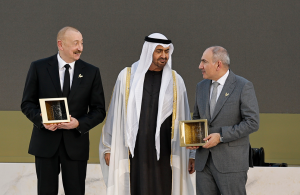
Look at the diplomacy, and you see momentum. Pashinyan and Aliyev have met multiple times, including a public encounter in Abu Dhabi where both leaders accepted the Zayed Award for the initialed peace treaty and spoke of tangible “benefits of peace on the ground.” There have been modest, symbolic commercial ties – energy deliveries and small trade steps that would have been unthinkable a year earlier. Those low-level but persistent gestures matter because they normalize interaction and create political constituencies in both capitals that favor cooperation over confrontation.
But do not overstate the depth of economic interdependence. The commercial exchanges so far are experimental and limited. They help the political argument, but they’re not a substitute for robust institutional links or large-scale investment flows. Shiriyev puts it this way:
“Regional dynamics also matter. Turkey is a critical actor. Opening the Armenia–Turkey border and expanding economic interaction would reduce Armenia’s exposure to Russian pressure and support gradual reorientation westward. Azerbaijan, too, plays a limited but notable role. Its energy exports to Armenia on two occasions point to emerging practical cooperation and suggest that deeper economic interdependence, while modest, is not inconceivable.”

Where it could go wrong — Washington’s risk map:
1. Implementation gaps and optics.
TRIPP is ambitious. Building cross-border rail and road across mountainous territory, sorting land claims, and running transparent procurement at scale is hard in any country – harder in one where political trust is fragile. If contracts are opaque or local communities feel sidelined, the backlash will be swift and politically damaging for Pashinyan and for the US sponsors.
2. Russian pressure.
Moscow has publicly warned Armenia about the costs of moving toward the EU. Kremlin messaging frames EU alignment as a strategic loss for Russia and flags membership in Eurasian institutions as incompatible with Western integration. That rhetorical pressure could translate into economic or political tools – from energy levers to diplomatic isolation – if and when Russia decides the time is right. Shiriyev notes Russia’s capacity to reassert influence once its attention returns from Ukraine:
“Russia remains the only power fundamentally opposed to Armenia’s European trajectory. Moscow views closer alignment with the EU not as a technical economic choice but as a strategic loss and a diminution of its influence in Yerevan. This perspective underpins Russia’s claim that Armenia’s membership of the Eurasian Economic Union is incompatible with EU integration, a position driven more by geopolitics than by legal or economic necessity.”
3. Iranian unease.
Tehran dislikes any connectivity that reroutes trade flows away from corridors where it exerts leverage. Iran’s objections are often couched in sovereignty language, but the reality is geoeconomic competition. Iran’s ability to directly intervene is limited, but it can complicate projects diplomatically and through local proxies.
4. Domestic political fragility.
Pashinyan’s government has pushed big reforms and constitutional changes that opponents argue were rushed or insufficiently consultative. If reforms are perceived as foreign-driven, or if the benefits of peace and transit fail to reach ordinary Armenians, the political cost to the reformers could be acute –and that could have ripple effects for US policy credibility. Our previous coverage flagged this risk during the constitution rewrite debates and subsequent political fallout.

5. Dependency and governance traps.
There’s a tightrope between leveraging US money and expertise and creating dependencies that feed local resentment. If TRIPP’s governance model gives foreign firms or states outsized control over infrastructure, critics will brand it a loss of sovereignty. The task for Washington is to design visible, accountable partnerships that leave decision-making in Armenian hands while ensuring transparency and commercial viability.
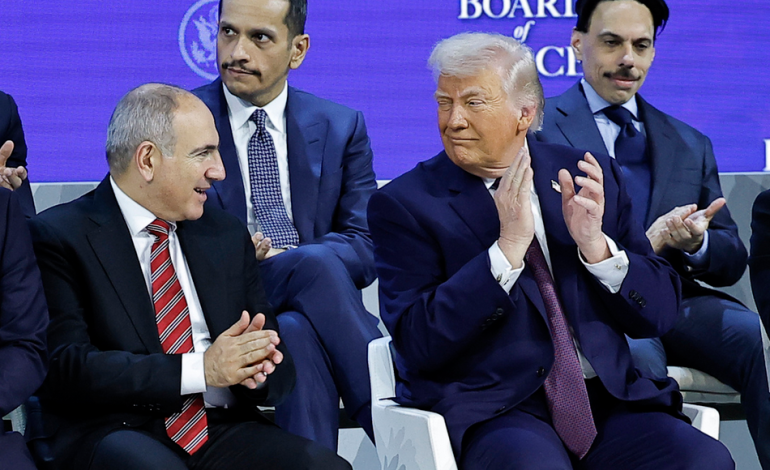
Washington has also leaned into soft-power signals – for example, inviting Armenia and Azerbaijan to join a Trump-led “Board of Peace.” These moves are useful theatrical diplomacy: they create incentives for leaders to stay at the table, generate positive headlines, and embed small countries into new networks of patronage and prestige. But theater isn’t policy. The test will be if diplomatic optics convert into durable legal arrangements, tariff harmonization, and social reconciliation. More substantial developments can come out during US VP J.D. Vance‘s visit to the Caucasus, announced back in January.
From Washington’s point of view, Armenia’s realignment is both an opportunity and a test. Opportunity because it gives the US an opening to shape a strategic transit route, expand commercial ties, and signal durable engagement in Eurasia. Test because translating declarations and field studies into real rails, town jobs, and reliable customs takes years – and because regional heavyweights have options to complicate or delay matters.
Zaur Shiriyev captures the core truth: the US-led track, with TRIPP at its center, reduces the likelihood of an immediate, overt Russian or Iranian backlash – but it does not eliminate the risk that either power will play harder in the months ahead. He warned:
“Were the European Union to assume the role currently played by the United States, Armenia would face a significantly more demanding pressure environment. Russia and Iran would be far more likely to intensify leverage, with Moscow seeking to preserve a monopoly role in sensitive connectivity projects. The current US-led track, including TRIPP, has moderated these reactions. Iran, weakened and focused on managing its relationship with Washington, and Russia, constrained by the war in Ukraine, have responded more cautiously to US involvement than they would to a purely EU-driven process. As a result, neither Tehran nor Moscow has mounted open opposition comparable to what would be expected if the EU were acting alone. Iran nevertheless remains structurally opposed to Armenia–Azerbaijan connectivity that could dilute its regional position or alter transit routes, even when such objections are framed in the language of sovereignty.”
If the projects work, Armenia could become an unexpected success story – a small country using diplomacy and transit fees to stitch itself into larger markets and diversify security ties. If they fail, the backlash could be domestic political upheaval, damaged US credibility, and a return to the old playbook of great-power jockeying.
Either way, the South Caucasus is no longer a frozen chessboard. It’s a live arena. Washington has staked a lot on Armenia’s gamble. Now it needs to make sure its chips are well-played.



The latest news in your social feeds
Subscribe to our social media platforms to stay tuned