


EXCLUSIVE: Sahel’s security vacuum keeps changing uniforms

The Sahel has spent the past decade as a crowded battleground where international forces, local armies, and insurgent groups all claimed they were the last line before collapse. And yet the region’s defining feature has been continuity: insecurity that adapts faster than the coalitions sent to contain it.
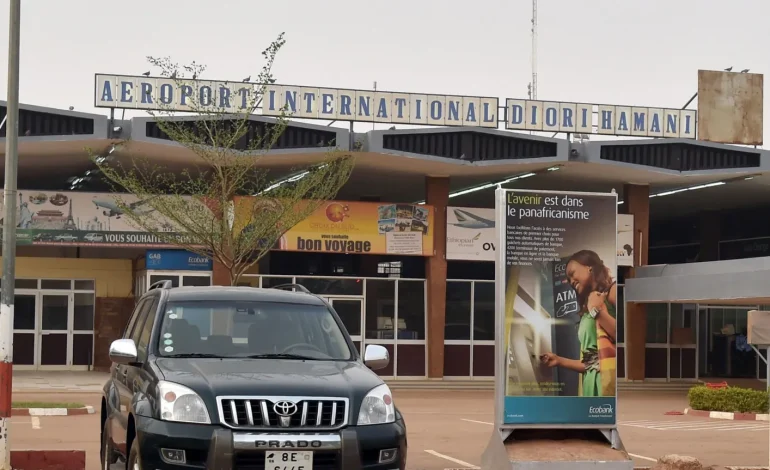
The latest jolt came at Niger’s Diori Hamani International Airport outside Niamey, where suspected jihadists launched a night attack from Wednesday into Thursday. Niger’s defence ministry said four military personnel were injured and 20 attackers were killed, with 11 arrests reported afterward. Heavy gunfire and loud explosions were heard nearby, and eyewitness accounts described the fear in plain, domestic terms.
“We didn’t sleep last night,” said one resident. “Our room and the whole house was shaking from the gunshots and explosions,” she said.
“Yesterday was the first time I have ever heard gunfire,” another woman said. “We were so scared.”
By Friday, the Islamic State group, through its Amaq information service, said it was behind what it called a “co-ordinated surprise attack” targeting “the military base” of the Niger army, claiming “major damage” without giving casualty figures. Airport operations returned to normal during the day, but the symbolism lingered: an international airport, a military base, and a capital city now drawn into the kind of targeting Sahel governments have long insisted they could prevent.
That drift toward capital-focused attacks isn’t arriving out of nowhere. In Mali, an al-Qaeda-linked coalition escalated pressure late last year with a fuel siege on Bamako, a tactic that hit daily life and embarrassed the state. The pattern matters because it speaks to momentum: when insurgent groups can shape logistics and perception, they start acting like they can shape outcomes. In that context, an attack on Niamey’s airport reads less like a one-off raid and more like a message about reach.
This is where outside powers, and the stories governments tell about them, become central. Niger’s military government head , General Abdourahamane Tiani, publicly thanked Russia for help in repelling the airport assault, while also accusing foreign presidents of backing those responsible.
“We commend all the defence and security forces… as well as Russian partners who defended their security sector with professionalism,” General Abdourahamane Tiani said on state radio. “We remind the sponsors of these mercenaries, notably Emmanuel Macron, Patrice Talon and Alassane Ouattara: we’ve heard them bark quite enough; now they should get ready to listen to us.”
In Benin, the response was blunt.
Wilfried Leandre Houngbedji, spokesperson for Benin’s government, said on Friday:
“[Tiani] is the only one to believe that nonsense.”
The accusations matter not because they are proven, they are not, based on what has been presented publicly, but because they are politically useful. In a region where juntas have increasingly built legitimacy around sovereignty and rupture with former partners, blaming France, Benin, or Côte d’Ivoire for violence can work as narrative fuel even when evidence is not offered. It shifts public attention outward and keeps the political story simple: enemies abroad, defenders at home.
Ulf Laessing, head of the Sahel programme at Germany’s Konrad Adenauer Foundation, puts that dynamic sharply, and his framing captures how Russia has positioned itself in Niger since almost three years ago:
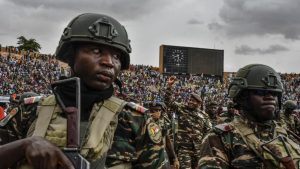
Russia has been Niger’s main partner since a coup in 2023, providing training and protection by the Africa Corps. The military government has ended the military partnerships and downgraded ties with the US and Europe. The Russian mercenaries were the ones who defended Niamey airport against the jihadist attack.
Jihadists linked to al Qaeda and Islamic State have started targeting capitals in the Sahel, after chasing away government forces from much of the countryside. Al Qaeda started late last year a fuel siege on the Malian capital Bamako, which hit Mali’s reputation. Emboldened by this success, Islamic State now attacked Niamey airport.
The withdrawal of US drones based in Agadez, France’s anti-terror force with jets at Niamey airport and European training missions have worsened the security situation, which can be seen in a rise of jihadists attacks and kidnappings of foreigners.
To distract from its own failures, Niger’s government regularly claims France is behind the rising violence. These claims are baseless.
The last sentence is where the Sahel’s information war shows its teeth: Niger’s leadership did not present evidence when it blamed Macron, Talon, and Ouattara. However, the claims are functioning politically regardless. In other words: even when accusations are unsubstantiated, they can still shape alliances, justify crackdowns, and harden the public mood against Western engagement.
Western governments spent years trying to build counterterror structures through deployments, training missions, and air assets. European missions trained forces; the UN ran a sprawling stabilization model elsewhere in the region. Yet a core fact remained visible even during that period: civilian harm, displacement, and humanitarian need kept climbing.
The UNHCR’s language from mid-2020 now reads like an early snapshot of a crisis that was already deepening fast. On 12 June 2020, UNHCR launched an appeal for US$ 186 million to expand shelter, education, and protection services, including responses to sexual and gender-based violence. The security picture described then was “extremely precarious,” driven by conflict, climate shocks, endemic poverty, chronic vulnerabilities, and a pandemic-strained state capacity, with warnings that displacement could spill south to coastal countries and north toward North Africa and Europe.
UN agencies and partners were calling on national forces and international militaries alike to protect civilians and ensure humanitarian access, against a backdrop that included reports of “very serious human right violations” attributed to national security forces in multiple Sahel countries.
That is the uncomfortable baseline for judging what came next. When Western military footprints were larger, insecurity remained entrenched and abuses were documented. When those footprints shrank (through coups, diplomatic ruptures, and withdrawals) the crisis did not ease.
Laessing argues withdrawals “have worsened the security situation,” pointing to rising attacks and kidnappings of foreigners. The sequence is important: Niger’s junta cut military ties with France after taking power in 2023 and moved closer to Russia, while Western cooperation narrowed under coup-related restrictions. Now, after the airport attack, the junta publicly credits “Russian partners” for professionalism on defence.
But the “protector” label, whether applied to Russia or the West, has always been fragile in the Sahel because the threat ecosystem punishes simple narratives. Militants can lose leaders and keep operating. States can gain new partners and still struggle to project force beyond capitals. And the humanitarian emergency sits underneath all of it, making every military claim feel incomplete if civilians remain unsafe and aid corridors remain constrained.
What Russia offers Niger, at least in the junta’s story, is clarity: training, protection, a partner that doesn’t condition security ties on democratic standards, and a posture of solidarity against Western pressure. What the Europe and the United States offered was cooperation framed through institutions, conditionality, and a broader humanitarian-development logic. The Sahel has lived inside both models. Neither has yet delivered the kind of stability that would make airports boring again.


The latest news in your social feeds
Subscribe to our social media platforms to stay tuned