





Seymour doubles down on colonisation remarks amid Waitangi Day backlash

New Zealand’s Deputy Prime Minister David Seymour has brushed aside criticism of his claim that colonisation was, on balance, positive for the country’s Indigenous Māori population, even as the remarks sparked public anger during one of the nation’s most symbolically charged events.
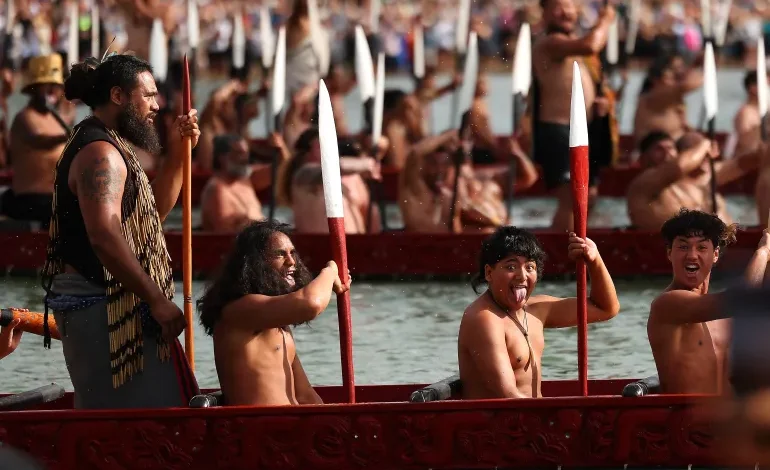
Tensions surfaced early on Friday at the Waitangi Treaty Grounds, where New Zealand’s founding document was signed in 1840. As Seymour stood to deliver a prayer at a dawn service marking Waitangi Day, dozens in the crowd booed and shouted, disrupting the ceremony at the historic site where representatives of the British Crown and more than 500 Māori chiefs once agreed on how the country would be governed.
The backlash followed comments Seymour made a day earlier during a Waitangi Day speech, an annual forum where Indigenous groups traditionally air grievances with the state. In that address, Seymour challenged what he described as a one-sided view of history.
“I’m always amazed by the myopic drone that colonisation and everything that’s happened in our country was all bad,” said Seymour, who leads the right-wing ACT Party and is himself a member of the Māori community. “The truth is that very few things are completely bad,” he added, according to local news site Stuff.
Asked about the hostile reception on Friday, Seymour dismissed those interrupting the service as “a couple of muppets shouting in the dark” and said the “silent majority up and down this country are getting a little tired of some of these antics”.
The tension did not end with Seymour. After his prayer, Labour Party leader Chris Hipkins was also met with loud jeers from parts of the crowd, underscoring how raw the political atmosphere around Waitangi Day has become.
A day earlier, Indigenous leader Eru Kapa-Kingi had delivered a blistering message to lawmakers, saying “this government has stabbed us in the front,” while the previous Labour government had “stabbed us in the back”.
Seymour’s comments land against a broader backdrop of distrust. His government has been accused by critics of trying to roll back special rights afforded to Māori, who number about 900,000 and were dispossessed of large areas of land during British colonisation. Māori communities today remain significantly more likely than non-Indigenous New Zealanders to experience poverty, poor health outcomes and imprisonment.
That criticism intensified last year when controversial legislation was introduced to reinterpret the principles of the Treaty of Waitangi and unwind policies aimed at addressing Indigenous inequality. The proposal triggered protests nationwide and ultimately failed after two of the three governing parties declined to support it.
Speaking on Friday, Prime Minister Christopher Luxon sought to strike a calmer tone, urging unity and renewed focus on addressing the challenges facing Māori communities. He also called for restraint in how the country debates its colonial past.
“We don’t settle our differences through violence. We do not turn on each other; we turn towards the conversation. We work through our differences,” Luxon said in a post on social media.

The latest news in your social feeds
Subscribe to our social media platforms to stay tuned