

Will Armenia’s opposition get JD Vance’s attention?
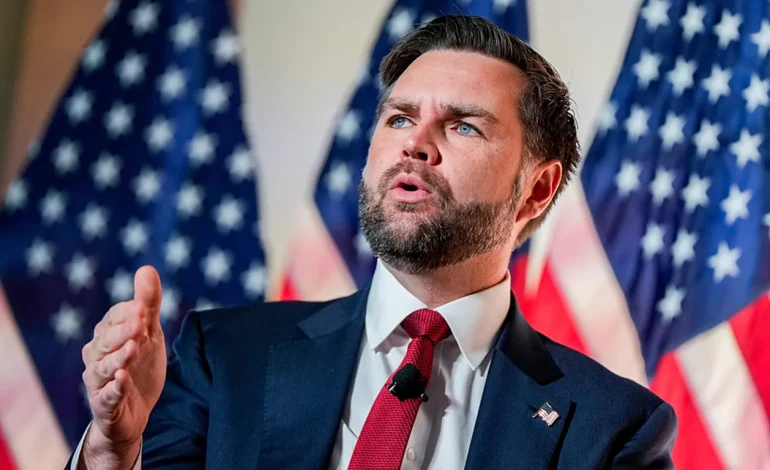

Armenian opposition is on the move – not just in the streets of Yerevan but on lecture stages and conference rooms in Paris, New York, and Washington. The goal is obvious: make the unresolved strings of the Armenia–Azerbaijan conflict impossible to ignore as US and European attention turns to the South Caucasus. Whether those appeals will actually reach – and move – US Vice-President J.D. Vance this February remains an open, high-stakes question.
Former Armenian human-rights ombudsperson Arman Tatoyan has been loudly courting Western institutions. His lecture at Columbia University on “Justice in Practice” (covering the ECHR, ICJ, ICC and specifically Armenia–Azerbaijan cases) – a stop timed to coincide with a broader tour of European and US engagements that includes Yale and the University of Pennsylvania. Tatoyan has also publicly asked Vice-President Vance, ahead of Vance’s trip to the region, to press Azerbaijan for the release of Armenian prisoners. The lecture was announced on February 5, 2026.
Meanwhile, US officials are not just passing through: multiple outlets report that a US delegation traveled to Armenia to prepare for Vance’s visit, and that Vance is expected to stop in both Armenia and Azerbaijan after attending the 2026 Winter Olympics. The timing – a high-profile US visit packed into a volatile moment in Yerevan – makes the opposition’s outreach deliberately opportunistic.
The opposition’s pitch centers on three hard items that Tatoyan and others are foregrounding: (1) the fate of Armenian prisoners and alleged hostages held in Azerbaijan, (2) alleged territory and border violations since 2021, and (3) broader human-rights claims tied to the Artsakh/Armenia-Azerbaijan dispute. These aren’t abstract policy asks; they’re raw, emotional, and politically mobilizing for big swathes of Armenian society.
But they’re also touchy for any visiting US official. Pressing too hard on Baku risks alienating an Azerbaijani partner that, for the US, sits at a complex intersection of energy, regional stability, and geopolitics. Conversely, doing nothing risks being painted at home in Yerevan as indifference to victims – and that is precisely the narrative Armenia’s opposition wants to harden before the June elections.
Short answer: yes – but whether Vance listens is another story.
Why reaching him is realistic
Tatoyan’s tour of universities and meetings in major Western capitals puts him within audible range of US elites, think-tanks and journalists who will relay the message forward. The fact that a US delegation has already been dispatched to Armenia to prepare Vance’s trip suggests US teams are absorbing local inputs now – which is the exact moment lobbyists and activists prefer. In other words: channels exist.
Why influence is limited
Formal US policy decisions (and even the tone of public remarks by a vice-president) are shaped by competing inputs: State Department assessments, White House priorities, congressional pressures, Turkey’s role, energy politics, and Washington’s calibration of relations with Baku. Vance’s schedule is also tied to the optics of a high-profile diplomatic route after the Olympics, not only to ad hoc appeals from opposition figures – which means Tatoyan’s requests arrive into a crowded, highly
If the goal is to move policy, the opposition should – and apparently is – doing three things at once:
- Humanize the ask – bring individual prisoner stories into US media fora and university auditoriums so they’re more than policy points. Personal stories are harder for visiting officials to shrug off.
- Seed domestic pressure in the US – meet congressional staffers and diaspora networks in Washington; public hearings or letters from US lawmakers carry more weight than op-eds alone. (There are already signs opposition figures are courting US audiences.)
- Provide actionable asks – don’t just demand “do something”; demand a narrow, feasible step (e.g., request that the US raise prisoners’ cases in bilateral meetings or press for independent monitoring access). Concrete asks are easier to slot into a prepared diplomatic itinerary.
Don’t read this only as a human-rights crusade. Armenia’s opposition is also jostling for narrative advantage ahead of parliamentary elections. Making Vance and other Western figures a sympathetic audience frames the opposition as the side that can “internationalize” Armenian grievances – a potent campaign message in a country that feels vulnerable. For the US, however, publicly chastising Baku risks fraying ties that both Republicans and Democrats have occasionally treated as transactional. Expect subtle, calibrated language rather than grand pronouncements.
Armenia’s opposition has built the right microphone: academic platforms, diaspora connections, and timely appeals on the eve of a senior US official’s regional swing. That greatly increases the odds that their messages reach Vance’s team. But converting hearing into action – a trained and immediate American response that wins Armenian prisoners’ release or reverses territorial encroachments – will require aligning those moral appeals with clear diplomatic levers the US is willing to use. Given the US balance-sheet in the region, what we’re likelier to see is attention and carefully worded concern, not an overnight course correction.
If nothing else, expect the Yerevan–Washington–Baku corridor to get noisier. And in international diplomacy, noise sometimes becomes leverage – but only if someone in power decides to tune their radio to the right frequency.



The latest news in your social feeds
Subscribe to our social media platforms to stay tuned