




With input from the New York Times, Reuters, CNBC, the Financial Times, and Bloomberg.
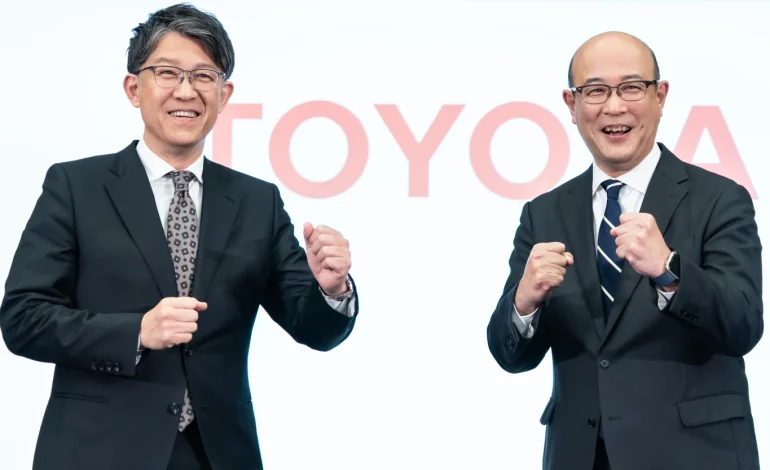
Toyota just shuffled its top brass — and it wasn’t a routine handoff. The world’s biggest automaker said Friday that CFO Kenta Kon will become CEO on April 1, with Koji Sato moving into a newly created vice-chairman role as chief industry officer. Translation: Kon will run the day-to-day business; Sato will spend more time lobbying and handling Toyota’s geopolitical headaches.
Why now? Because the heat is on from two directions. In the US, higher tariffs are biting: a deal with Washington left Japanese car exports facing a 15% levy — far above what Toyota used to pay and painful enough that governments (hello, Canada) are offering incentives to keep EV supply chains local. In China, Toyota faces furious competition from local EV players like BYD, plus fresh worries about Beijing threatening to curb rare-earth exports that Japanese industry relies on. Put that together and Toyota needs leaders who can move fast on finance, supply and politics.
Kon is a classic steady-hand pick. A longtime Toyota insider and former secretary to Akio Toyoda, he earned a rep for managing messy supply chains during the Covid era — Toyota famously stockpiled semiconductors early and kept plants running while peers idled. He also dug into the money side of the group’s software unit Woven by Toyota, getting a grip on its finances and speeding up software rollouts. Analysts say Kon is known for tight cost control and hard-nosed financial fixes (he’s even linked to the controversial Toyota Industries buyout plan).
Sato’s move outward makes sense, too. As vice chairman and chief industry officer he’ll take on the political heavy lifting — coordinating with the Japanese government, the auto lobby and international partners to shore up supply chains and push back on protectionist pressure. Industry watchers say separating operational leadership from industry diplomacy should speed decisions and let Toyota tackle two big tasks at once.
Numbers tell a mixed story. Toyota still sells like gangbusters — electrified vehicles (EVs + hybrids) made up nearly half of its retail sales in the first three quarters — and the company raised its full-year operating profit outlook by roughly 12%, helped by a weaker yen and cost cuts. Shares finished the day up about 2% after the announcement.
But the company is navigating a tricky tightrope: Toyota’s contrarian bet on hybrids and a slow-and-steady EV push has paid off as global EV demand cooled, yet Chinese rivals are gaining share in regions like Southeast Asia. The geopolitical angle complicates everything: tariffs in the US, raw-material threats from China, and pressure to keep manufacturing close to major markets all add up to a strategic headache that needs a CFO’s discipline and a lobbyist’s touch.
Kon kept things low-key at the press conference, saying he’ll focus on “money and numbers” and work with Toyota’s leadership to shape a plan. Sato framed the switch like a football move — club captain vs. national team coach — with each role playing to their strengths.
Bottom line: Toyota is shifting from product-first to a two-front response — tighten the purse strings and the supply chain at home, while turning up the diplomatic volume abroad. Whether that split leadership will be the right antidote to tariffs, rare-earth worries and a Chinese EV juggernaut remains the big question — but for now, the message is clear: Toyota is bracing for a nastier geopolitical game than it expected.



The latest news in your social feeds
Subscribe to our social media platforms to stay tuned