




Israel moves to tighten grip on West Bank, Palestinians warn of annexation push
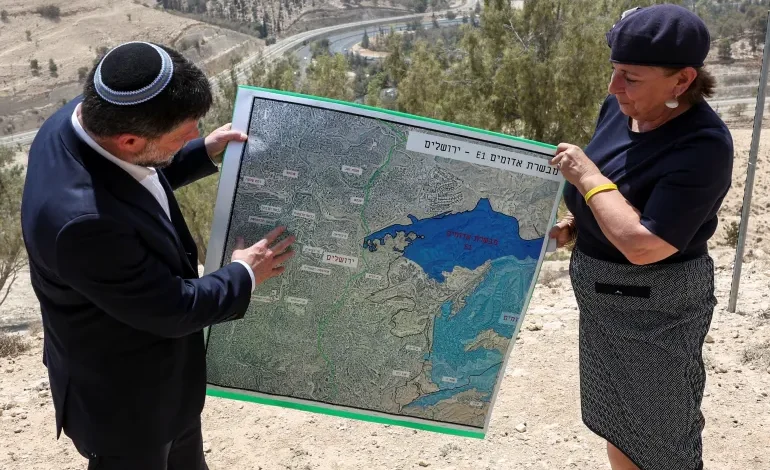

Israel’s security cabinet has approved a new set of measures designed to deepen Israeli control over the occupied West Bank, a move that has triggered sharp condemnation from Palestinian leaders and regional actors.
According to Israeli media, the rules ease restrictions on land purchases by Israeli settlers and expand the powers of Israeli authorities to enforce laws on Palestinians in the territory. Palestinian officials described the decision as a dangerous escalation that openly advances settlement expansion and land confiscation.
In a statement issued on Sunday, the office of Mahmoud Abbas called the move “dangerous” and an “open Israeli attempt to legalize settlement expansion.” The Palestinian presidency urged the United States and the United Nations Security Council to intervene immediately.
The reaction from Palestinian factions was swift. Hamas called on Palestinians in the West Bank to “intensify the confrontation with the occupation and its settlers,” framing the new measures as part of a broader effort to entrench Israeli dominance.
Jordan, a key regional stakeholder, also condemned the decision. Its foreign ministry said the rules were aimed at imposing “illegal Israeli sovereignty” over occupied land and further entrenching settlements, which are widely regarded as illegal under international law.
Israeli outlets including Ynet and Haaretz reported that the approved steps include scrapping long-standing regulations that prevented Jewish individuals from purchasing land in the occupied West Bank. The measures would also allow Israeli authorities to assume greater control over certain religious sites and expand supervision and enforcement in areas currently administered by the Palestinian Authority.
The West Bank, along with Gaza and occupied East Jerusalem, is claimed by Palestinians as part of a future independent state. While limited self-rule exists in some areas under the Palestinian Authority, much of the territory remains under direct Israeli military control.
Under existing agreements between Israel and the Palestine Liberation Organization, Palestinians are largely restricted to building in Areas A and B, while Area C, which remains under full Israeli control, has seen extensive settlement growth. Palestinian construction in Area C is frequently met with demolition orders from Israeli authorities.
Ibrahim noted that settlers owning or building on land in these areas violates both signed agreements and international law, which prohibits an occupying power from transferring its civilian population into occupied territory.
Hardline Israeli officials made little attempt to soften the message. A statement from the office of far-right Finance Minister Bezalel Smotrich declared:
“We will continue to bury the idea of a Palestinian state.” Defence Minister Israel Katz said Israel was “anchoring settlement as an inseparable part of Israel’s government policy.”
Palestinian Vice President Hussein al-Sheikh warned that the reported steps amounted to a grave violation of all signed agreements and international law, and risked eliminating any remaining prospects for a two-state solution.



The latest news in your social feeds
Subscribe to our social media platforms to stay tuned