



Türkiye as Third Wheel: How Ankara Shapes and Profits from Armenia-Azerbaijan Rapprochement
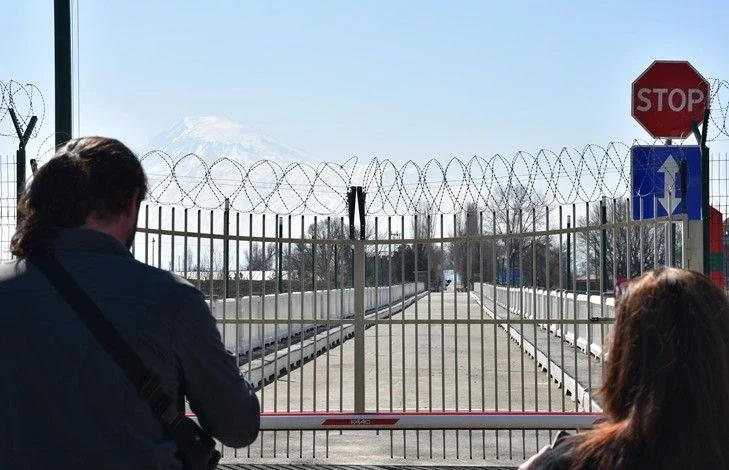

If the South Caucasus were a dinner table, Türkiye just pulled up a chair and started rearranging the cutlery. The recent flurry of activity around reopening the Alican–Margara border checkpoint – the literal gate between eastern Türkiye and northern Armenia – is the clearest signal yet that Ankara isn’t a passive bystander in the Armenia-Azerbaijan choreography.
Let’s start with the nuts and bolts. Turkish officials have accelerated reconstruction and modernization work at the Alican checkpoint – upgrades to control facilities, roads and customs processing – and local reports say the job is in a “final countdown” ahead of reopening. The move is being framed in Ankara as part of normalization with Armenia, and as a win for regional trade and people-to-people links. But those upgrades are not just about commerce; they are infrastructure with geopolitical intent.
Why does that matter? Because connectivity equals influence. A reopened land link between Türkiye and Armenia doesn’t simply shorten truck routes – it reorders incentives. For Azerbaijan, Turkey’s deeper involvement and the prospect of transport corridors that preferentially bind Baku and Ankara alter the bargaining table; for Armenia, opening the border feels like both relief and risk. The optics of normalization with Ankara can be domestically calming, but they also come with strings attached: security arrangements and quiet diplomatic realignments that may favor Baku. Observers have argued that Armenian Prime Minister Nikol Pashinyan has, in recent years, become surprisingly conciliatory toward both Azerbaijan and Turkey, feeding suspicions that Yerevan’s concessions are part of a larger geopolitical bargain.
That bargain isn’t being struck in a vacuum. Yerevan’s government is watching its own flank. The Armenian military is publicly showcasing three years of border engineering and fortification projects – earthworks, fence lines, and hardened positions – an obvious signal that while politicians talk normalization, the armed forces prepare for contingencies. In short: Armenia is moving on two tracks at once – building defenses while courting economic lifelines. That duality is telling. It hints that Yerevan knows the price of connectivity might be strategic vulnerability and is trying to mitigate it.
Ankara’s push is also being baked into a broader transport vision for the Caucasus. Georgia’s plan to complete a road linking Türkiye with Armenia and Azerbaijan by 2030 folds into the same architecture: faster trade routes, cross-border flows and new economic corridors that could make Türkiye the central transit hub for all things south Caucasus. Those projects transform borders into choke points of influence: who controls the roads, controls access – and influence follows.
That’s the strategic payoff for Ankara. For Turkey, the border opening is a soft power win that cements Ankara’s role as a regional hub and as a broker – albeit one with partisan preferences. Ankara’s alignment with Baku on many issues complicates its “neutral mediator” credentials; instead, Turkey may be viewing the normalization process as a way to extend its geopolitical reach, ensure Turkish companies get the lion’s share of transit deals, and secure its flank vis-à-vis larger powers like Russia and Iran.
For Armenia, the rhetorical gains are obvious: reopened borders, trade, tourism, and the easing of an economic chokehold. But those gains are conditional. If the normalization package sidelines issues of territorial sovereignty, prisoners, and human security – items that remain raw for many Armenians – then what looks like a diplomatic triumph could leave a residue of resentment. That explains the domestic nervousness when governments frame the process as “peace” without embedding robust protections.
And here’s the tricky bit: power in diplomacy tends to follow leverage, not moral clarity. Ankara has leverage because it can open borders, host transit routes, and mobilize economic incentives; Baku has military weight; Moscow still has a say in the security calculus. Yerevan’s leverage is thinner, which is why the Armenian public sees fortifications and why political opposition voices ask whether normalization is being bought at too high a price.
So what’s the takeaway? Don’t expect an either/or story where Turkey is purely villain or savior. Ankara is a pragmatic third party: it wants connectivity and influence, and it will push projects that achieve those ends. For Armenia, the task is to translate the economic promise of reopened borders into durable security guarantees and legal protections for its people. For observers in the West, the lesson is also clear: supporting “connectivity” in the South Caucasus without hard lenses on rights, prisoners and territorial guarantees risks legitimizing arrangements that may be unstable.
In the end, the Alican–Margara checkpoint is more than a gate on a map. It’s a symbol of a shifting balance in the Caucasus – an infrastructure project with geopolitical aftershocks. Ankara’s chair at the table is no accident; it’s a deliberate seat at the crossroads of commerce and influence. If Yerevan wants to make that seat safe for its citizens, it will need to turn headline-friendly openings into legally and politically binding safeguards – not only for trade, but for the people who live behind the fences.


The latest news in your social feeds
Subscribe to our social media platforms to stay tuned